

Maddy summaryHB 141, the Joe John Remembrance Act, removes an additional fee for special license plates designated for fire department and rescue squad members in North Carolina. The bill amends state law to formally eliminate the "additional fee" listed for these plates (which was already set to $0 in the current fee schedule), meaning eligible firefighters and rescue personnel will pay only the standard registration fee when obtaining or renewing these special plates. This change applies to plates issued or renewed on or after July 1, 2025. The bill does not create new benefits but codifies an existing fee structure for these specific special plates.
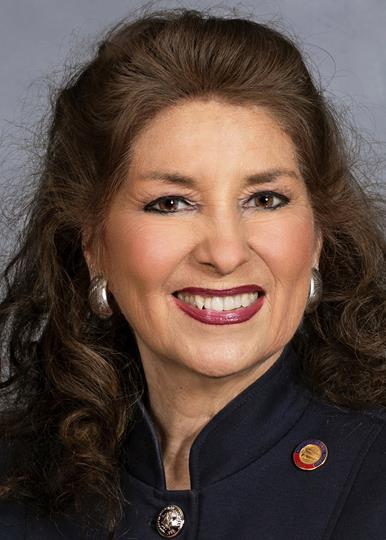
Rep. Donna White
Sponsored bills
Maddy summaryHB 7, the NC REACH Act, requires all students graduating with a baccalaureate degree from a UNC system university or an associate degree from a North Carolina community college to complete at least three credit hours of coursework in American history or government. This coursework must include reading key documents like the U.S. Constitution, Declaration of Independence, Federalist Papers, and Dr. Martin Luther King Jr.'s Letter from Birmingham Jail, plus a final exam worth 20% of the grade. Students may qualify for exemptions through AP/IB/Cambridge scores, dual enrollment, or prior equivalent coursework. The bill ensures these requirements do not increase total graduation credit hours or conflict with accreditation standards, with annual compliance reports due to the legislature starting in 2026.
Maddy summaryHB 647 expands North Carolina’s agricultural tax program to include land owned by qualified conservation organizations. It allows conservation holders (nonprofits dedicated to preserving farmland/forestland) to have land taxed at its current agricultural or forest use value, rather than its full market value, when they acquire it. To qualify, land must be appraised at present-use value upon transfer to the conservation holder, and the holder must continue using it for conservation purposes while assuming tax liability for any deferred taxes. This bill directly affects conservation groups and landowners transferring property to them, aiming to support long-term land preservation through tax incentives. The law takes effect for taxes due in 2026.
Maddy summaryHB 654 designates the week containing March 12 each year as "Girl Scouts Week" in North Carolina. This ceremonial bill recognizes Girl Scouts of the USA's history and the achievements of Gold Award recipients, who complete community-focused leadership projects. It does not create new policies, funding, or obligations - it simply establishes an annual observance period for celebration. The bill directly affects public recognition efforts by state and local governments, schools, and community groups.
Maddy summaryHB 300 establishes a program to reimburse owners of retired first responder dogs for veterinary care. It directly affects owners of canines that served with law enforcement, fire departments, or correctional agencies in roles like narcotics detection or search and rescue, after retiring on or after July 1, 2024. The bill requires registration of the dog and owner with the Department of Public Safety, then allows reimbursement of up to $1,500 annually for covered care - including routine check-ups, vaccinations, emergencies, surgeries, and euthanasia. Owners must submit itemized vet bills within 90 days of service.
Maddy summaryHB 571 appropriates $500,000 from the state General Fund to the Department of Public Safety for a grant program treating police officers diagnosed with PTSD. It directly affects North Carolina police officers who have received a clinical PTSD diagnosis. The key provision establishes a state-funded grant program to cover treatment costs, with funds allocated for the 2025-2026 fiscal year. The program becomes effective July 1, 2025, and focuses solely on providing financial support for treatment, not on expanding eligibility or altering diagnosis standards.
Maddy summaryHR 563 adopts the permanent rules for the North Carolina House of Representatives during the 2025 Regular Session. These rules establish procedural guidelines including session hours (e.g., no Friday sessions in January and February, adjournment by 10:00 PM on Mondays and 9:00 PM on other days), quorum requirements, and the order of business for legislative proceedings.
Maddy summaryThis bill creates a $17 million annual Tobacco Use Prevention Fund within North Carolina's Department of Health and Human Services, funded by a portion of the state's annual Tobacco Master Settlement Agreement payments. The fund directly targets youth (high and middle school students) by supporting community-based programs, evidence-based media campaigns, school initiatives, and tracking of e-cigarette use to prevent nicotine dependence. Key provisions include funding local health departments for youth education, launching health-risk media campaigns, supporting tobacco-free college campuses, and evaluating program effectiveness. The fund uses $17 million yearly from the $140 million settlement allocation, with up to 10% of funds allowed for administrative costs.
Maddy summaryThis bill's title ("Ensuring Patient Safety with Mail Order Medications") does not match its actual content. The bill, formally titled "AN ACT REVISING ABORTION-INDUCING DRUG LAWS," restricts the mailing of abortion-inducing drugs in North Carolina. It prohibits mailing such drugs to pregnant women unless a qualified physician provides in-person counseling 72 hours prior, all other informed consent requirements are met, and the drugs are FDA-approved. Violations carry $5,000 fines per offense or Class H felony charges, and the bill creates civil remedies allowing women, parents, or the Attorney General to sue for damages or injunctions. The bill is currently pending in committee (referred March 31, 2025) and would take effect December 1, 2025.
Maddy summaryHB 551 aims to improve access to Clubhouse model programs for North Carolinians with severe mental illness by creating a statewide reimbursement system for these services. It requires the state mental health agency to develop a plan by 2026 that includes incentives for Clubhouses to gain accreditation, consistent funding rates across regions, and staff training. The bill allocates $2.5 million in recurring funds starting July 2026 to support accredited Clubhouses for current programs, expansion, accreditation costs, and staff training. It also mandates Medicaid coverage for services under this new reimbursement system, directly affecting individuals with severe mental illness and Clubhouse providers.