

Maddy summaryHB 420 allocates $4.3 million annually to fund teacher recruitment programs like "Grow-Your-Own" and "2+2" pathways in high-need schools, targeting efforts to recruit and prepare new educators. It requires the State Board of Education to develop a teacher licensure and compensation reform plan by March 2026, including pathways for new teachers and retention strategies. The bill also funds a study to expand educator preparation programs to graduate 5,000 in-state teachers annually, with a focus on increasing diversity among educators. These provisions directly affect public schools, teacher preparation programs, and prospective teachers through new funding streams and policy requirements.
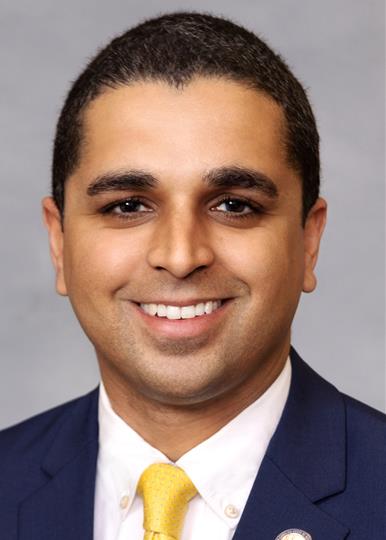
Rep. Dante Pittman
Sponsored bills
Maddy summaryHB 367 requires North Carolina's State Crime Laboratory to provide sexual assault victims with updates on the status of their examination kits. Victims will be notified if their kit cannot be tested, if testing is declined for reasons other than untestability, or if the kit is scheduled for destruction. The law mandates that the lab develop procedures for these notifications but specifies victims must provide and maintain current contact information. This law takes effect October 1, 2025, applying to all kits submitted before, on, or after that date.
Maddy summaryHB 361 allocates $1.8 million for training county register of deeds employees, $500,000 for a public awareness campaign about real property fraud, and $30 million in grants to county offices for technology upgrades. The grants will fund digitizing records, purchasing scanning equipment, upgrading software, enhancing digital security, and improving network systems to prevent deed and title fraud. An additional $1 million is reserved for county offices without existing fraud detection systems. The bill becomes effective July 1, 2025, directly affecting county register of deeds offices and the public through reduced fraud risks.
Maddy summaryHB 365, the Workforce Education Act, revises North Carolina's community college funding model to base allocations on student enrollment in workforce-focused programs like career training and continuing education, starting in 2025-2026. It creates an Enrollment Increase Reserve (funded with $6 million initially) to provide additional support to colleges experiencing enrollment growth exceeding 5% or 325 students, preventing funds from reverting to the general budget. The bill also expands funding for cooperative high schools in underserved areas, with tiered payments based on county development status (e.g., $740,000 for first high schools in "Tier One" regions). These changes directly affect community colleges, public school students accessing career programs, and participating high schools seeking to expand workforce education opportunities.
Maddy summaryHB 360, the Homeowner Protection Act, targets fraud involving residential property documents. It increases penalties for forging deeds, leases, or wills related to homes (making it a Class D felony instead of Class H) and creates an expedited court process for victims. Homeowners affected by fraudulent property records can file a "memorandum of possible fraud" to trigger a court hearing, where judges can void the false documents and clear title clouds. The law also requires recording offices to flag fraudulent instruments and prohibits fees for these protective filings. The bill is currently pending in the House Judiciary Committee.
Maddy summaryHB 296 establishes a $89.5 million program to provide financial assistance to North Carolina corn farmers who suffered crop losses due to 2024 disasters like drought and hurricanes in USDA-designated disaster counties. Farmers must verify losses using USDA forms or equivalent documentation within 45 days, with payments calculated using county yield averages and state price data. Funds can only be used for agricultural recovery expenses like replanting or equipment repair, and recipients must provide proof of eligible spending. The program builds on existing state disaster funds and requires strict documentation to prevent misuse, with potential audits and repayment for inaccurate claims.
Maddy summaryHB 245 modifies North Carolina's low-income housing tax credit program to prioritize affordable housing development in rural communities and counties with higher poverty rates. It requires the state housing committee to adopt allocation rules that favor projects within 10 miles of amenities (like grocery stores) in towns under 10,000 people, measure distances by straight-line radius (not driving routes), and use poverty levels as a tiebreaker when projects score equally. The bill directs the committee to publish proposed rules for public comment and hold hearings before finalizing annual allocation plans. This policy change redirects existing housing tax credits toward qualifying rural and high-poverty areas without creating new funding. The bill takes effect October 1, 2025, for future allocation plans.
Maddy summaryHJR 157 is a procedural resolution inviting Governor Josh Stein to address a joint session of the North Carolina General Assembly on March 12, 2025. It directs a committee of five House members and five Senate members to extend the invitation and specifies that the governor's cabinet, Council of State members, and state judges may attend. This resolution does not create new policy or affect any laws; it solely schedules a ceremonial address. The invitation is effective upon ratification, as noted in the resolution's text.
Maddy summaryHB 181 reinstates North Carolina's Earned Income Tax Credit (EITC) for working families with children, providing a state tax credit equal to 5% of the federal EITC amount. The credit is refundable, meaning eligible families receive cash payments even if they owe no state tax, directly benefiting low-to-moderate income households struggling with housing, childcare, and basic living costs. It applies to taxable years beginning January 1, 2025, and aligns with federal EITC eligibility criteria. The bill reenacts the credit after its prior expiration, creating a concrete policy change to supplement family income.
Maddy summaryThis bill proposes repealing a literacy test requirement from the North Carolina Constitution, which would affect all voters by removing a historical barrier to voting. The amendment must be approved by voters in the November 2026 election, with the ballot explicitly stating: "Constitutional amendment to remove the literacy test requirement... The federal Voting Rights Act of 1965 prohibits implementation of this requirement." If approved, the change takes effect upon certification by the State Board of Elections. The bill does not alter current voting procedures, as the literacy test has been prohibited by federal law since 1965.