

Maddy summaryThis bill officially renames the 2023 budget law to the "Current Operations Appropriations Act of 2024" and updates funding levels for the state's education system. It directly affects various institutions, including public universities, community colleges, and the University of North Carolina system, by specifying the exact amounts of state money they will receive for the 2024-2025 fiscal year. The legislation details how much money each entity gets after accounting for their own income, ensuring the state allocates its resources according to the approved budget plan.
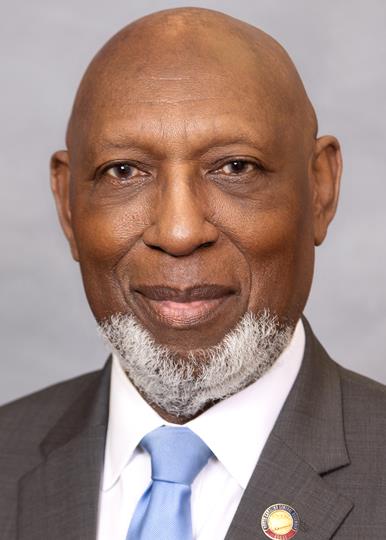
Rep. Shelly Willingham
Sponsored bills
Maddy summaryThis bill amends the composition of North Carolina's Medical Cannabis Production Commission to ensure a more diverse range of oversight. It establishes a 13-member body that includes representatives from law enforcement, agriculture, pharmacy, and medicine, alongside industry experts and patient advocates. A specific provision requires industry representatives to recuse themselves from license selection decisions if they have a personal or business connection to an applicant. The amendment also sets new term lengths and expiration dates for these commissioners to structure their service periods.
Maddy summaryThis amendment to House Bill 207 requires school principals or their designated representatives to accept detailed eyewitness accounts of incidents that could lead to student suspensions. The bill mandates that these accounts be submitted by the end of the school day following the incident, though they can still be accepted after that deadline. Eyewitness testimony can be provided in writing or orally, with the requirement that any oral statements be transcribed into writing by the school official. This change directly affects school administrators and students by formalizing the process for collecting immediate witness statements during disciplinary investigations.
Maddy summaryThis bill, titled the Health Care Omnibus, introduces several changes to North Carolina's healthcare regulations. It requires doctors and pharmacists to inform patients receiving opioid prescriptions about the risks of overdose, prevention methods, and the availability of reversal drugs. Additionally, the legislation clarifies that Medicaid benefits will continue for a limited time after individuals are released from prison or other incarceration facilities. The bill also expands access to mental health services by allowing reciprocal licensing for marriage and family therapists, reducing regulatory hurdles for master's level psychologists, and encouraging the use of tribal health facilities.
Maddy summaryThis bill creates a new legal process allowing property owners to request the immediate removal of unauthorized individuals from residential homes by contacting their local sheriff. To use this process, the owner must file a sworn complaint stating that the person is not a tenant or resident, has been asked to leave, and that no valid lease exists, after which the sheriff must act within 24 hours. The legislation also increases penalties for willful damage to residential property and prohibits fraudulent rental advertisements while requiring all leases to be in writing. Property owners who incorrectly use this removal process could face civil lawsuits, including triple damages based on the rent and legal fees.
Maddy summaryThis bill establishes a Physician Assistant Licensure Compact in North Carolina to make it easier for licensed PAs to practice across different states. Under the new rules, a PA holding a valid license in one participating state can obtain a temporary privilege to work in another participating state without applying for a full new license. The system requires PAs to follow the laws of the state where the patient is located and allows state boards to discipline practitioners who move between states. Additionally, the compact includes specific provisions to help active-duty military personnel and their spouses obtain practice privileges quickly when relocating.
Maddy summaryHB 1029 allows patients with life-threatening or severely debilitating illnesses to access custom-made investigational drugs, biological products, or devices that are tailored to their specific genetic profiles. To qualify, a patient must consult with a treating physician, confirm that standard FDA-approved treatments are unlikely to help, and provide written informed consent acknowledging the risks and potential costs. The bill permits manufacturers to offer these treatments for free or at the patient's expense while explicitly stating that health insurance plans are not required to cover these costs. Additionally, the legislation protects doctors from disciplinary action for recommending such treatments and ensures that a patient's heirs are not held financially responsible for any outstanding debts related to the therapy if the patient passes away.
Maddy summaryThis bill establishes an Interstate Medical Licensure Compact to allow physicians to obtain full, unrestricted medical licenses in multiple states more easily. It creates a streamlined application process for doctors who meet strict requirements, such as passing licensing exams within three attempts and having no criminal convictions or prior license discipline. The law clarifies that a physician must be licensed in the state where their patient is located during a medical visit and ensures that member states can still take disciplinary action against a doctor's license. Additionally, the bill includes provisions to provide practice authority for nurse practitioners and ensure flexibility for anesthesia services.
Maddy summaryThis bill creates a new grant program called "Increasing Engagement in STEM" to provide funding to North Carolina public schools for experiential science, technology, engineering, and math education. The program specifically targets sixth, seventh, and eighth-grade students and allows schools to use the money for teacher stipends, hiring third-party vendors, and hosting competitions. A total of $1 million is allocated to fund up to 20 school districts, with selection criteria designed to ensure geographic and population diversity across different school sizes. Schools must submit detailed plans outlining how they will use the funds and how they intend to sustain the programs after the grant period ends. The bill also requires the state superintendent to submit initial and final reports to a legislative committee detailing application results, student participation data, and performance outcomes.