

Maddy summaryHB 296 establishes a $89.5 million program to provide financial assistance to North Carolina corn farmers who suffered crop losses due to 2024 disasters like drought and hurricanes in USDA-designated disaster counties. Farmers must verify losses using USDA forms or equivalent documentation within 45 days, with payments calculated using county yield averages and state price data. Funds can only be used for agricultural recovery expenses like replanting or equipment repair, and recipients must provide proof of eligible spending. The program builds on existing state disaster funds and requires strict documentation to prevent misuse, with potential audits and repayment for inaccurate claims.
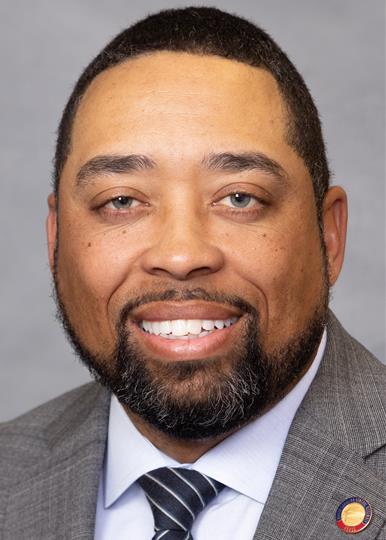
Rep. Ray Jeffers
Sponsored bills
Maddy summaryHB 299 increases the property tax exemption for disabled veterans in North Carolina from $45,000 to $54,000 of a home's appraised value. It directly affects qualifying disabled veterans who own and occupy their primary residence, allowing them to exclude a larger portion of their home's value from property taxes. The bill amends Section 105-277.1C of state law to reflect this higher exclusion limit, while maintaining that recipients cannot claim other property tax relief. This change takes effect for property taxes due on or after July 1, 2025.
Maddy summaryHB 293, the Marine Life Stewardship Act, prohibits the farming (aquaculture) of octopus for human consumption in North Carolina. It specifically bans businesses from raising, selling, possessing, or transporting farmed octopus, while excluding wild-caught octopus and octopus used solely for non-commercial research. Violations carry daily civil penalties up to $1,000. The law directly affects aquaculture businesses and retailers handling farmed octopus products within the state.
Maddy summaryHB 280 allocates $30,000 in one-time state funds to support the North Carolina Senior Tar Heel Legislature, a program for older residents to engage with state policy. The funding, from the General Fund for the 2025-2026 fiscal year, covers operational costs for this existing program established under state law. It directly affects the Senior Tar Heel Legislature by providing financial resources for its activities. The bill becomes effective July 1, 2025, and does not create new policy but enables the program's continued operation.
Maddy summaryHB 267 automatically expunges court records for certain eviction cases in North Carolina, directly affecting tenants (defendants) in summary ejectment proceedings. It requires clerks to automatically delete records 30 days after cases are voluntarily dismissed before a possession order is issued. For cases where defendants win on the merits or lose but wait three years, they may petition for expungement after proving housing stability (e.g., consistent rent payments and no new eviction filings). The bill takes effect October 2025, with required court forms to be developed by September 2025.
Maddy summaryHB 224 renames the "North Carolina Gaming Education Revenue Fund" to the "Indian Gaming Education Revenue Fund" and allocates specific recurring and one-time funds for tribal communities in North Carolina. The bill directs $2 million annually to the North Carolina State Commission of Indian Affairs for operations, $5.25 million annually to seven non-gaming tribes (including the Coharie, Lumbee, and Haliwa-Saponi) for cultural, educational, and economic development, and $400,000 annually to four Urban Indian Organizations for similar purposes. It also provides $100,000 yearly to support the State Advisory Council on Indian Education and $1.1 million nonrecurring funds for specific tribal school projects like the Haliwa-Saponi Tribal School. The bill becomes effective July 1, 2025, with all funds to be used for designated community development purposes.
Maddy summaryHB 263 restores local government authority to change zoning to less dense or fewer permitted uses (down-zoning) in Durham and Person Counties and the Cities of Durham and Roxboro, without requiring written consent from all affected property owners. The bill rewrites state law to allow counties or cities to initiate down-zoning amendments directly, reversing a previous requirement (from S.L. 2024-57) that mandated owner consent. This change applies retroactively to December 11, 2024, meaning zoning ordinances affected by the prior law will revert to their pre-December 11 status. The bill directly affects local governments’ zoning powers and property owners in the specified jurisdictions, without altering other zoning processes.
Maddy summaryHB 253 restores Henderson County's authority to implement down-zoning (reducing development density or permitted land uses) with a key exception: it requires written consent from all affected property owners unless the down-zoning serves farmland preservation in agricultural districts or floodplain mitigation in FEMA-designated flood areas. The bill directly affects Henderson County property owners and local government officials, limiting down-zoning actions without consent except for these two specific purposes. It applies only to Henderson County, including its municipalities, and takes effect retroactively to December 11, 2024, to revert zoning changes made after that date under previous law. The bill defines "down-zoning" as decreasing density, reducing permitted uses, or creating nonconformities on land.
Maddy summaryHB 243 allows Durham City and Durham County to use electronic methods (like their websites) for public hearing notices required under state law, instead of traditional methods like mail or physical postings. It directly affects Durham's local government, enabling them to adopt ordinances for electronic notices while maintaining existing requirements for mail notices to specific groups and property postings. The bill does not change current notice schedules or override state laws mandating certain notice methods, and it applies exclusively to Durham City and County. This is a procedural change to how public notices are delivered, not a policy shift on the underlying issues discussed at hearings.
Maddy summaryHB 241 allocates $15.8 million in one-time state funds for specific projects in Person County and nearby areas. It provides $10 million for Roxboro’s wastewater plant repairs, $800,000 for Person County’s splash pad construction, and $5 million for Piedmont Community College’s health/trades center equipment. The funds are directed to these specific entities via grants from the Office of State Budget and Management for the 2025-2026 fiscal year. The bill becomes effective July 1, 2025, with no policy changes beyond the funding allocations.