

Maddy summaryHouse Bill 110 establishes the National Guard Student Loan Repayment Program in North Carolina. This program provides student loan repayment awards to active members of the North Carolina National Guard, incentivizing them to begin or complete a term of service of at least three years. Awards cannot exceed the recipient's total student loan debt or $50,000 for a three-year service term, with potential for additional funds for longer service. Recipients must sign an agreement to repay a portion of the award if they voluntarily terminate their service early. The bill appropriates over $25.5 million to a new fund for the program for the 2025-2026 fiscal year.
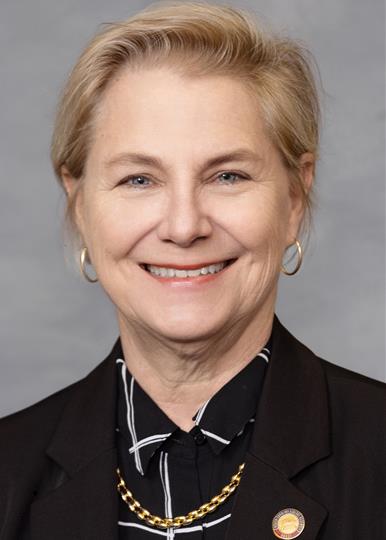
Rep. Deb Butler
Sponsored bills
Maddy summaryHouse Bill 703 allows State veterans cemeteries to sell monuments and memorials directly to honor individuals interred within them. This bill permits the sale of items such as memorial trees, granite or marble markers, and benches, though not headstones. State veterans cemeteries can establish stylistic guidelines for these items and must not charge more than the market rate. The funds generated from these sales will be retained by the selling cemetery and dedicated solely to its maintenance, improvement, and care. This act becomes effective on October 1, 2025.
Maddy summaryHouse Bill 610 directs the Department of Public Instruction to conduct a study on the feasibility of requiring each local school district to maintain at least one school operating on a year-round calendar for grades kindergarten through 12. The study will examine administrative and operational costs, transportation challenges, and potential barriers to establishing these schools. It will also assess anticipated student enrollment if year-round options were more accessible. The Department can work with a third-party for this research and must report its findings and any recommendations to the Joint Legislative Education Oversight Committee by January 15, 2027.
Maddy summaryHouse Bill 592, known as the Toxic-Free Medical Devices Act of 2025, aims to prohibit the use of a chemical called DEHP in certain medical devices within North Carolina. Specifically, it bans the manufacturing, selling, and distributing of intravenous solution containers and intravenous tubing that are intentionally made with DEHP. The prohibition for IV solution containers takes effect on January 1, 2030, and for IV tubing on January 1, 2035. The bill also prevents replacing DEHP with other similar chemicals in these devices and sets limits for unintentionally present DEHP, while exempting certain blood-related products. Violations of these provisions could lead to administrative penalties.
Maddy summaryHB 734, titled "Modernize Debt Settlement Prohibition," aims to prohibit debt settlement and debt adjusting services in North Carolina. The bill reclassifies these activities as unfair trade practices and clarifies their definitions. It makes engaging in debt adjusting or debt settlement a Class 2 misdemeanor and expands civil remedies for debtors. The bill grants superior courts the authority to enjoin such practices and assess civil penalties. However, it exempts certain individuals and transactions, such as a creditor acting without cost to the debtor or an attorney acting within an attorney-client relationship.
Maddy summaryHouse Bill 635 requires certain large group health benefit plans to provide coverage for fertility diagnostic care, treatment, and preservation services. This bill directly affects individuals covered by these plans, aiming to increase their access to fertility-related medical care. Key provisions include mandatory coverage for at least three in vitro fertilization (IVF) cycles per insured, provided procedures follow American Society of Reproductive Medicine guidelines and are performed at licensed facilities. However, the requirements do not apply to plans offered by religious institutions or self-insured group health plans, and explicitly exclude experimental procedures or nonmedical costs for donor gametes or surrogacy.
Maddy summaryHB 634 updates North Carolina laws to enhance parity in health insurance coverage for mental health and addiction recovery. It requires all health benefit plans to provide benefits for mental health conditions that are no less favorable than those for physical illnesses, including applying the same financial limits. A key provision mandates that medical necessity determinations for substance use disorders must rely solely on the most recent American Society of Addiction Medicine criteria. The bill also requires the State Health Plan for Teachers and State Employees to comply with these new utilization review standards and updates terminology from "chemical dependency" to "substance use disorder" in relevant statutes.
Maddy summaryHB 69, the Military and Veterans Educational Promise Act, provides two key benefits for military-affiliated individuals and veterans at North Carolina's University of North Carolina (UNC) schools. First, it requires UNC institutions to allow eligible military members (including reservists) and their spouses to defer admission for up to five years (for active duty) or two years (for reserve service) upon enrollment notice. Second, it establishes in-state tuition rates for honorably discharged veterans who served at least 90 days in the military, graduated from a North Carolina high school after 2004, had a North Carolina duty station, or received a Purple Heart. The bill applies to all UNC institutions beginning in the 2025-2026 academic year.
Maddy summaryHouse Bill 213, titled "Post NC Veterans' Benefits," requires employers in North Carolina to display a notice about veterans' benefits. This bill mandates that employers with five or more persons working in a room post this information in a conspicuous place. The Commissioner of Labor will provide a digital or printed form of this notice. The poster must include details on services such as benefits and claims, employment and training, housing assistance, and how to request military records, with the Department of Labor consulting the Department of Military and Veterans Affairs to create it.
Maddy summaryThis bill revives and expands a program that allows eligible retired educators to return to work in high-need schools. It defines "high-need retired teachers" as beneficiaries of the Teachers' and State Employees' Retirement System who meet specific retirement and service criteria, and are reemployed by local boards of education. A key provision ensures that earnings from this reemployment do not count against post-retirement earnings limits, allowing these teachers to receive both their full retirement allowance and a salary. The Department of Public Instruction is tasked with certifying these teachers, and local boards must report their employment status to the Retirement System.