

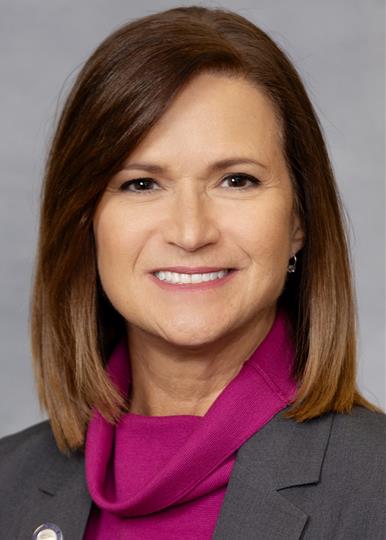
Photo of Celeste Cairns
R North Carolina House · District 13 On the 2026 ballot

Rep. Celeste Cairns

Compare
Total votes
1,281
all sessions
Attendance
99%
14 missed
Near the chamber average
With party
98%
of cast votes
Near the chamber average
Bipartisan score
1%
crosses aisle rarely
Near the chamber average
Sponsored
201
bills & resolutions
Near the chamber average
Committees
8
assignments
201 bills and resolutions

Sponsored bills

Total
201
Primary
15
Co-sponsor
186
This page
201
matching current filters
Co-sponsor HB 380
In committee · North Carolina House · Co-sponsor
Conscientious Objections to Vaccine Mandates.

Maddy summaryHB 380 would allow North Carolina students to opt out of school vaccination requirements by submitting a written statement citing personal beliefs (a "conscientious objection"), rather than requiring proof of religious affiliation. It amends immunization reporting rules to include "conscientious objection" as a formal exemption category alongside medical and religious exemptions for public schools and colleges. Parents or guardians would need to provide this written statement instead of religious documentation to exempt their child from vaccination mandates. The policy change applies to public schools and colleges starting in the 2026-2027 school year.

In committee Mar 13, 2025 1 co-sponsor
Co-sponsor HB 137
In committee · North Carolina House · Co-sponsor
Gabe Torres Act.

Maddy summaryHB 137, the "Gabe Torres Act," expands death benefits under North Carolina's Public Safety Employees' Death Benefits Act to include public safety workers (like police, fire, and emergency personnel) who are killed while traveling to or from work. The bill amends the law to define "official duties" to explicitly cover commuting between home and work, as well as travel for training or responding to emergencies. It also appropriates $300,000 in recurring funds for these expanded benefits, effective July 1, 2025. This change directly affects eligible families of covered public safety employees who die during work-related travel, ensuring they qualify for death benefits previously limited to on-duty incidents.

In committee Mar 12, 2025 1 co-sponsor
Primary HB 276
In committee · North Carolina House · Lead sponsor
Align Benefits for Firefighters with Cancer.

Maddy summaryHB 276 expands the definition of "killed in the line of duty" for firefighters to include deaths caused by specific cancers that previously qualified them for benefits under North Carolina's Firefighters' Cancer Insurance Program. The bill adds seven specific cancers (like mesothelioma and testicular cancer) to the list and includes any cancer diagnosis that already provided benefits under the existing program. It also formally links the Firefighters' Health Benefits Pilot Program to the Cancer Insurance Program, ensuring consistent coverage, and appropriates $2 million annually for related death benefits starting July 1, 2025. This change directly affects firefighters diagnosed with covered cancers and their families, who will now qualify for death benefits under the Public Safety Employees' Death Benefits Act.

In committee Mar 12, 2025 0 co-sponsors
Co-sponsor HB 52
Passed · North Carolina House · Co-sponsor
Protect Those Who Serve and Protect Act of 2025.

Maddy summaryHB 52, the "Protect Those Who Serve and Protect Act of 2025," increases penalties for assaults against public safety personnel and their animals. It creates a new Class I felony offense for throwing, spraying, or projecting substances (like water) at public safety officers or law enforcement/search and rescue animals while they are on duty or due to their role. The bill also prohibits intentionally pointing laser devices at these protected individuals or animals during duty. These changes update existing assault laws to explicitly cover a wider range of emergency workers (including firefighters, medical staff, National Guard members, and school employees) and add specific protections for animals used in public safety.

Passed Mar 12, 2025 1 co-sponsor
Co-sponsor HB 100
In committee · North Carolina House · Co-sponsor
Expand Religious Property Tax Exemption.

Maddy summaryHB 100 expands North Carolina's property tax exemption for religious organizations by allowing them to temporarily exempt newly acquired undeveloped land adjacent to their currently tax-exempt property. The bill permits this exemption for up to five years if the religious organization certifies it will use the land exclusively for religious purposes or develop it for that purpose within that timeframe. The land cannot exceed twice the size of the organization's existing contiguous exempt property. If the certification requirements aren't met within five years, the land loses its exemption and becomes taxable. The law takes effect for taxes due on or after July 1, 2026.

In committee Mar 12, 2025 1 co-sponsor
Co-sponsor HB 2
Passed · North Carolina House · Co-sponsor
Entry Fees for Interscholastic Sports Events.

Maddy summaryHB 2 requires North Carolina public high schools to accept cash for admission to interscholastic athletic events and provide free entry to seniors with a Tar Heel Card (issued by the Department of Health and Human Services). It directly affects students, families, and seniors attending high school sports events by changing payment rules for admission fees. The bill mandates that schools must accept cash at the gate and honor Tar Heel Cards for free admission upon presentation. These requirements apply starting the 2025-2026 school year. The law amends state education rules governing athletic activity fees.

Passed Mar 6, 2025 1 co-sponsor
Co-sponsor HB 296
In committee · North Carolina House · Co-sponsor
Corn Farmer Recovery Act - Phase I.

Maddy summaryHB 296 establishes a $89.5 million program to provide financial assistance to North Carolina corn farmers who suffered crop losses due to 2024 disasters like drought and hurricanes in USDA-designated disaster counties. Farmers must verify losses using USDA forms or equivalent documentation within 45 days, with payments calculated using county yield averages and state price data. Funds can only be used for agricultural recovery expenses like replanting or equipment repair, and recipients must provide proof of eligible spending. The program builds on existing state disaster funds and requires strict documentation to prevent misuse, with potential audits and repayment for inaccurate claims.

In committee Mar 6, 2025 1 co-sponsor
Co-sponsor HB 299
In committee · North Carolina House · Co-sponsor
Increase Disabled Veteran Property Tax Benefit.

Maddy summaryHB 299 increases the property tax exemption for disabled veterans in North Carolina from $45,000 to $54,000 of a home's appraised value. It directly affects qualifying disabled veterans who own and occupy their primary residence, allowing them to exclude a larger portion of their home's value from property taxes. The bill amends Section 105-277.1C of state law to reflect this higher exclusion limit, while maintaining that recipients cannot claim other property tax relief. This change takes effect for property taxes due on or after July 1, 2025.

In committee Mar 6, 2025 1 co-sponsor
Co-sponsor HB 280
In committee · North Carolina House · Co-sponsor
Support for the Senior Tar Heel Legislature.

Maddy summaryHB 280 allocates $30,000 in one-time state funds to support the North Carolina Senior Tar Heel Legislature, a program for older residents to engage with state policy. The funding, from the General Fund for the 2025-2026 fiscal year, covers operational costs for this existing program established under state law. It directly affects the Senior Tar Heel Legislature by providing financial resources for its activities. The bill becomes effective July 1, 2025, and does not create new policy but enables the program's continued operation.

In committee Mar 5, 2025 1 co-sponsor
Co-sponsor HB 281
In committee · North Carolina House · Co-sponsor
Restore Down-Zoning/Multiple Municipalities.

Maddy summaryHB 281 restores local government authority to initiate "down-zoning" in six North Carolina municipalities (Morehead City, Beaufort, Bogue, Cape Carteret, Cedar Point, and Newport) without requiring written consent from all affected property owners. The bill amends state law to clarify that down-zoning - defined as reducing development density, limiting permitted land uses, or creating nonconforming features - can be enacted by a municipality itself. This reverses a prior change (S.L. 2024-57) that required property owner consent, making the new rule retroactive to December 11, 2024. The law directly affects property owners and developers in these specific towns by changing how zoning changes can be implemented.

In committee Mar 5, 2025 1 co-sponsor
Showing 111 to 120 of 201 bills
Previous 1 … 11 12 13 … 21 Next