

Maddy summaryHB 296 establishes a $89.5 million program to provide financial assistance to North Carolina corn farmers who suffered crop losses due to 2024 disasters like drought and hurricanes in USDA-designated disaster counties. Farmers must verify losses using USDA forms or equivalent documentation within 45 days, with payments calculated using county yield averages and state price data. Funds can only be used for agricultural recovery expenses like replanting or equipment repair, and recipients must provide proof of eligible spending. The program builds on existing state disaster funds and requires strict documentation to prevent misuse, with potential audits and repayment for inaccurate claims.
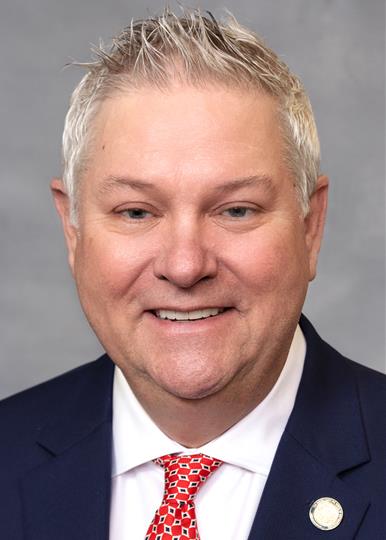
Rep. Chris Humphrey
Sponsored bills
Maddy summaryHJR 157 is a procedural resolution inviting Governor Josh Stein to address a joint session of the North Carolina General Assembly on March 12, 2025. It directs a committee of five House members and five Senate members to extend the invitation and specifies that the governor's cabinet, Council of State members, and state judges may attend. This resolution does not create new policy or affect any laws; it solely schedules a ceremonial address. The invitation is effective upon ratification, as noted in the resolution's text.
Maddy summaryHB 130 establishes a $475 million program to provide financial assistance to North Carolina farmers who suffered crop losses from natural disasters in 2024. It directly affects farmers in counties designated by the USDA as disaster areas, requiring verified losses of eligible agricultural commodities (like crops, livestock, or specialty plants) planted but not harvested by January 1, 2024. The program uses county and state yield/price averages to calculate payments, mandates submission of USDA Form 578 or equivalent documentation within 30 days, and allocates funds from state reserves (Stabilization, IT, and Economic Development) to cover verified losses. Farmers must provide documentation for verification, and the Department of Agriculture may audit claims to ensure proper use of funds, with refunds required for inaccurate information.
Maddy summaryHB 120 appropriates $1,040,514 annually for fiscal years 2025-2026 and 2026-2027 to expand North Carolina's Project C.A.R.E. program. The bill directly funds support services for family caregivers of individuals living with Alzheimer's disease or related dementias. It provides recurring state funding to the Division of Aging and Adult Services to enhance existing caregiver assistance programs. The legislation becomes effective July 1, 2025, without altering eligibility or service requirements.
Maddy summaryHB 145 appropriates $50 million in one-time state funds to the University of North Carolina at Chapel Hill (UNC-CH) for the development of a diabetes research institute. This bill directly affects UNC-CH as the recipient of the funds and will support diabetes research activities at the university. The funds are designated for the 2025-2026 fiscal year and become effective July 1, 2025. The legislation is a straightforward funding allocation with no policy changes beyond the specified financial commitment.
Maddy summaryThis bill proposes repealing a literacy test requirement from the North Carolina Constitution, which would affect all voters by removing a historical barrier to voting. The amendment must be approved by voters in the November 2026 election, with the ballot explicitly stating: "Constitutional amendment to remove the literacy test requirement... The federal Voting Rights Act of 1965 prohibits implementation of this requirement." If approved, the change takes effect upon certification by the State Board of Elections. The bill does not alter current voting procedures, as the literacy test has been prohibited by federal law since 1965.
Maddy summaryHB 36 requires North Carolina's Department of Veterans and Military Affairs to improve maintenance at all four state veterans cemeteries, directly affecting veterans' families and cemetery operations. The bill mandates addressing specific issues like headstone installation delays, equipment damage to graves, drainage problems, debris, and poor grounds appearance, while allowing military groups to volunteer for upkeep. It also directs the department to review and adjust funeral service policies, including chapel-only options, service duration, attendee limits, and grave visitation rules during services. The department must submit a report on these changes to legislative committees by October 1, 2025.
Maddy summaryHB 12 would require North Carolina and all its local governments to observe Eastern Standard Time year-round, eliminating the biannual clock changes for daylight saving time. This bill directly affects state agencies, local municipalities, and residents by keeping the state on standard time permanently, as permitted under federal law (the Uniform Time Act of 1966). The key provision amends state law to mandate year-round standard time, aligning with a federal provision that allows states to forgo daylight saving time. The bill would take effect on March 8, 2026, if enacted. This is a procedural change to time observance, not a new policy affecting services or regulations.
Maddy summaryThis procedural bill updates the House's committee structure by adding "Appropriations, Agriculture and Natural and Economic Resources" to the list of standing committees. It directly affects House members who serve on these committees and the administrative organization of legislative work. The change is purely organizational, with no policy or funding implications. The bill was adopted on January 29, 2025, and modifies Rule 27 of the House's Temporary Rules.
Maddy summaryThis is a commemorative resolution (not a policy bill) honoring former North Carolina House Representative Joseph "Joe" Robert John, Sr., who served District 40 from 2017-2025 and died January 20, 2025. The resolution expresses the House's appreciation for his public service, extends sympathy to his family, and formally recognizes his contributions to North Carolina's judiciary, criminal justice, and community. It has no policy impact or new legal provisions - its purpose is solely to memorialize his career and legacy. The resolution was adopted unanimously by the House on January 29, 2025.