

Maddy summaryHB 39 excludes motor vehicles owned by veterans with a 100% disability rating certified by the U.S. Department of Veterans Affairs from North Carolina property tax. It amends state tax law to add these vehicles as a designated exempt class under G.S. 105-275. The exclusion applies to vehicles registered on or after January 1, 2026. This policy directly affects eligible disabled veterans who own motor vehicles, reducing their property tax burden. The bill does not change eligibility criteria or tax rates for other vehicle classes.
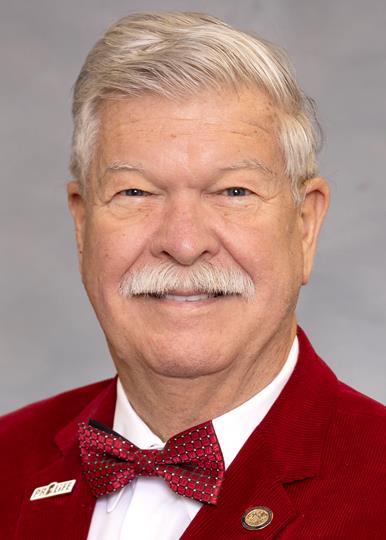
Rep. Mike Clampitt
Sponsored bills
Maddy summaryHB 36 requires North Carolina's Department of Veterans and Military Affairs to improve maintenance at all four state veterans cemeteries, directly affecting veterans' families and cemetery operations. The bill mandates addressing specific issues like headstone installation delays, equipment damage to graves, drainage problems, debris, and poor grounds appearance, while allowing military groups to volunteer for upkeep. It also directs the department to review and adjust funeral service policies, including chapel-only options, service duration, attendee limits, and grave visitation rules during services. The department must submit a report on these changes to legislative committees by October 1, 2025.
Maddy summaryHB 9 prevents North Carolina counties and cities from creating local rules about sport shooting ranges or firearm discharge on private property. The bill explicitly blocks local governments from regulating where shooting ranges can be built (after 1997) or restricting firearm use on private land with the owner's permission, as long as projectiles don’t cross property lines. It directly affects local governments by invalidating conflicting ordinances and property owners who may use firearms on their land. The law becomes effective immediately upon passage, making any existing local rules about these issues unenforceable.
Maddy summaryThis procedural bill updates the House's committee structure by adding "Appropriations, Agriculture and Natural and Economic Resources" to the list of standing committees. It directly affects House members who serve on these committees and the administrative organization of legislative work. The change is purely organizational, with no policy or funding implications. The bill was adopted on January 29, 2025, and modifies Rule 27 of the House's Temporary Rules.
Maddy summaryThis is a commemorative resolution (not a policy bill) honoring former North Carolina House Representative Joseph "Joe" Robert John, Sr., who served District 40 from 2017-2025 and died January 20, 2025. The resolution expresses the House's appreciation for his public service, extends sympathy to his family, and formally recognizes his contributions to North Carolina's judiciary, criminal justice, and community. It has no policy impact or new legal provisions - its purpose is solely to memorialize his career and legacy. The resolution was adopted unanimously by the House on January 29, 2025.
Maddy summaryThis resolution directs North Carolina's Secretary of State to formally request Congress to call a constitutional convention aimed at imposing term limits on members of the U.S. House of Representatives and the U.S. Senate. The bill specifies that this application will be combined with similar requests from other states to reach the two-thirds threshold required to trigger the convention, while remaining separate from applications for other constitutional changes. It establishes this request as a continuing application that remains active until enough states have submitted identical petitions. Ultimately, the measure does not change any current laws but serves as an official step in the process of potentially amending the U.S. Constitution.
Maddy summaryThis amendment to House Bill 10 allocates $278,994 annually from the state's General Fund to hire two full-time jail inspectors for the 2023-2025 fiscal period. The funds are directed to the Department of Health and Human Services to support the Division of Health Services Regulation in its construction section. These positions become effective on July 1, 2023, and the amendment also updates the bill's title to reflect the addition of these inspector roles.
Maddy summaryThis bill allows patients with life-threatening or severely debilitating conditions in North Carolina to access custom-made investigational drugs, biological products, or devices that are not yet approved by the federal government. To qualify, a patient must have a doctor confirm that standard FDA-approved treatments are unlikely to help and must provide written informed consent acknowledging the risks and potential costs. The law requires that the patient or their guardian understands they are personally responsible for any expenses related to the treatment unless a separate contract states otherwise. Additionally, the bill clarifies that using these individualized treatments may temporarily remove a patient's eligibility for hospice care, though that eligibility can be restored if the treatment stops.
Maddy summaryHB 593 is a procedural amendment that modifies the text of a larger bill containing various local laws for North Carolina. The amendment specifically restructures the formatting of a section regarding the reallocation of $7 million in state funds to Duplin County for a senior resource center and a sheriff's office facility. Additionally, it clarifies the language for a provision that transfers approximately 62 acres of former state quarry land to the City of Monroe for one dollar, noting that the city assumes all costs and risks associated with the property. This change does not alter the substantive policy decisions but adjusts how the bill is written to ensure clarity and compliance with state statutes.
Maddy summaryThis bill, known as the SHALOM Act, adds a new section to North Carolina law that officially adopts the International Holocaust Remembrance Alliance's definition of antisemitism. The law requires state agencies and organizations to use this definition as a guide for training, education, and identifying hate crimes or discrimination against Jewish people. It also establishes a framework for tracking and reporting incidents of antisemitism within the state. The legislation includes a specific provision stating that adopting this definition does not violate free speech rights protected by the U.S. and state constitutions.