

Maddy summaryHB 104 allows Buncombe County Schools to adopt an earlier school start date (no earlier than August 19, instead of the standard August 26) if the district meets "good cause" criteria - specifically, if they've had eight or more school closure days annually due to weather or emergencies during four of the last ten years. The bill amends a state law to grant this specific waiver for Buncombe County only, without changing statewide calendar requirements. It applies only to Buncombe County Schools beginning with the 2025-2026 school year and does not alter closing dates or instructional day minimums. This is a targeted local flexibility measure, not a statewide policy change.
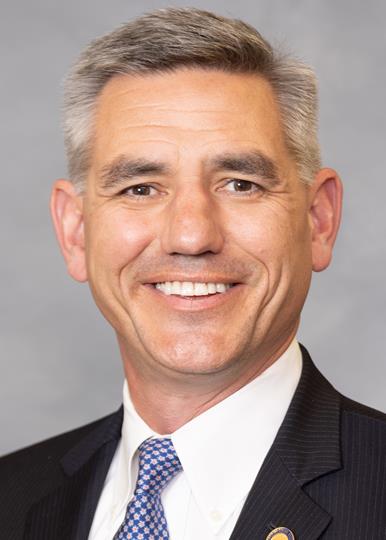
Rep. Brian Turner
Sponsored bills
Maddy summaryHB 31 would amend North Carolina's State Human Resources Act to make every statewide general election day a paid holiday for state employees. This change would add election days to the current list of paid holidays (which includes Martin Luther King Jr.'s Birthday and Veterans Day), while maintaining the limit of 13 paid holidays per year. The bill directly affects state workers, ensuring they receive paid time off on election days without reducing the total number of paid holidays. It does not change election dates or voting procedures, only the employment benefits for state employees on those days. The legislation is currently pending in committee review.
Maddy summaryHB 131 reinstates a 35% tax credit for businesses and homeowners who install solar energy systems in North Carolina. Businesses can claim the credit over five years (with a $2.5 million maximum per installation), while homeowners receive capped credits based on system type (e.g., $1,400 for water heating, $3,500 for space heating). The credit applies to equipment placed in service in the state and expires for new installations after 2017, though projects meeting 2015 construction milestones qualify for extension. This bill renews a previously expired tax incentive program for solar energy adoption.
Maddy summaryHB 129, the "Judge Joe John Nonpartisan Judicial Elections Act," reestablishes nonpartisan elections for all North Carolina judicial offices, including Supreme Court justices, Court of Appeals judges, and superior and district court judges. The bill requires candidates to run without party labels, with primaries held only when more than two candidates file for an office, and winners elected based on highest vote totals (using a random draw only in tie situations). It also restores public financing for judicial campaigns, aiming to reduce partisan influence in judicial races. This bill directly affects judicial candidates, voters, and the election process for all statewide and local judicial positions in North Carolina.
Maddy summaryThis bill proposes repealing a literacy test requirement from the North Carolina Constitution, which would affect all voters by removing a historical barrier to voting. The amendment must be approved by voters in the November 2026 election, with the ballot explicitly stating: "Constitutional amendment to remove the literacy test requirement... The federal Voting Rights Act of 1965 prohibits implementation of this requirement." If approved, the change takes effect upon certification by the State Board of Elections. The bill does not alter current voting procedures, as the literacy test has been prohibited by federal law since 1965.
Maddy summaryHB 36 requires North Carolina's Department of Veterans and Military Affairs to improve maintenance at all four state veterans cemeteries, directly affecting veterans' families and cemetery operations. The bill mandates addressing specific issues like headstone installation delays, equipment damage to graves, drainage problems, debris, and poor grounds appearance, while allowing military groups to volunteer for upkeep. It also directs the department to review and adjust funeral service policies, including chapel-only options, service duration, attendee limits, and grave visitation rules during services. The department must submit a report on these changes to legislative committees by October 1, 2025.
Maddy summaryHB 12 would require North Carolina and all its local governments to observe Eastern Standard Time year-round, eliminating the biannual clock changes for daylight saving time. This bill directly affects state agencies, local municipalities, and residents by keeping the state on standard time permanently, as permitted under federal law (the Uniform Time Act of 1966). The key provision amends state law to mandate year-round standard time, aligning with a federal provision that allows states to forgo daylight saving time. The bill would take effect on March 8, 2026, if enacted. This is a procedural change to time observance, not a new policy affecting services or regulations.
Maddy summaryHB 10 establishes a bipartisan committee to study modernizing North Carolina's travel allowances for state employees, teachers, and officials like legislators. The seven-member committee - appointed by legislative leaders and the governor - will examine federal reimbursement rates, consult with hospitality and HR experts, and review historical travel policies. It must submit recommendations to lawmakers by March 15, 2026, but does not change current allowance amounts. This is a procedural study bill, not a policy change.
Maddy summaryHB 20, the "Fair Maps Act," proposes amending the North Carolina Constitution to establish an independent redistricting process. It would create a Citizens Redistricting Commission to redraw congressional and state legislative districts after each federal census, removing the General Assembly and Governor from the process. The bill requires districts to be contiguous, avoid splitting counties, and ensure equal population representation, with changes taking effect only after voter approval in 2026. This directly affects all North Carolina voters by changing how electoral districts are drawn for state and federal offices. The amendment must be ratified by voters in November 2026 before it becomes effective.