

Maddy summaryHB 490 revises North Carolina's community college funding model to prioritize enrollment in workforce-focused programs. It requires the State Board of Community Colleges to allocate base funding plus additional funds based on full-time student enrollment in curriculum, workforce training, and Basic Skills courses, with weighted funding for high-demand fields. The bill also creates an "Enrollment Increase Reserve" to fund colleges with enrollment growth exceeding 5% in targeted programs and permits community colleges to add up to a 10% tuition surcharge for eligible courses, with funds restricted to instructional costs. These changes directly affect community colleges and students in workforce education, effective July 1, 2025.
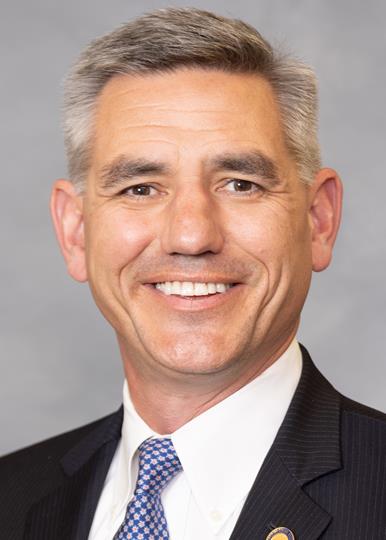
Rep. Brian Turner
Sponsored bills
Maddy summaryHB 493 creates confidential reporting and resolution procedures for workplace harassment in North Carolina's General Assembly, affecting all legislators, staff (including part-time/temporary employees), volunteers, and pages. It requires mandatory annual training on preventing harassment and discrimination, establishes clear consequences for violations, and mandates a confidential investigation process handled by an independent third party. The bill appropriates $250,000 to fund training materials, infrastructure, and the independent investigator for the 2025-2027 fiscal years. These changes apply to all workplace interactions, including legislative events and business-related activities, with specific disciplinary actions ranging from warnings to expulsion for legislators.
Maddy summaryHB 484 authorizes North Carolina's African American Heritage Commission to study creating monuments and markers honoring the state's civil rights history, including sites related to the Student Nonviolent Coordinating Committee, sit-ins, and desegregation efforts. The bill directly affects the Commission, which must hold public hearings and report findings by May 2026, and North Carolinians by commemorating local contributions to the civil rights movement. Key provisions include appropriating $500,000 for the Commission to place markers along the state's Civil Rights Trail and conducting feasibility studies on permanent monuments. The bill becomes effective July 1, 2025, with funding allocated for the 2025-2026 fiscal year.
Maddy summaryHB 467 reenacts North Carolina's low-income housing tax credit program, allowing developers to claim tax credits for constructing or rehabilitating affordable housing. It specifies credit percentages (30%, 20%, or 10%) based on the income level of households (50% or less of area median income for 30% credit, 40% for 10% in high-income areas) and the location's income designation (low, moderate, or high-income county/city). Developers can receive credits either as a direct tax refund or a loan from the Housing Finance Agency, with affordability requirements applying for the full credit compliance period. This directly affects developers building qualifying low-income housing projects across North Carolina.
Maddy summaryHB 474, titled "Right to Use Contraception," declares that North Carolina recognizes the right to use contraception to prevent pregnancy as a fundamental liberty. It directly affects all residents who use contraception by stating the state has "no legitimate governmental interest in limiting the freedom to use contraception." The bill amends state law to add a new Article 44, explicitly prohibiting state restrictions on contraceptive access for pregnancy prevention. This is a declarative policy change, not a funding or program measure, and would become effective upon enactment.
Maddy summaryHB 473 protects patients' and healthcare providers' rights to access and provide assisted reproductive technology (ART), including in vitro fertilization (IVF), by prohibiting state interference. It defines ART broadly and explicitly states that fertilized eggs or embryos outside the uterus are not considered "human beings" under North Carolina law. The bill also appropriates $500,000 annually (starting July 2025) from the state General Fund to increase Medicaid maternal support services (the Baby Love Program), matching $913,000 in federal funds for the 2025-2027 biennium. This legislation directly affects patients seeking ART, healthcare providers offering these services, and Medicaid beneficiaries receiving maternal support.
Maddy summaryHB 47, the Disaster Recovery Act of 2025 - Part I, allocates $524 million from the Helene Fund to support recovery efforts in North Carolina counties impacted by Hurricane Helene. The bill directs funds to specific programs including home reconstruction ($120 million), agricultural crop loss assistance ($200 million), road and bridge repairs ($100 million), small business infrastructure grants ($55 million), debris removal ($20 million), fire department equipment ($10 million), and tourism promotion ($4 million). These resources directly assist residents, farmers, local governments, and businesses in designated hurricane-affected counties by addressing immediate rebuilding needs and supporting economic recovery. The bill requires programs to align with federal disaster recovery guidelines to maximize potential federal reimbursement, with reporting requirements for certain initiatives.
Maddy summaryHB 456, the "No Surprises for Ambulance Services Act," prevents unexpected high costs for ambulance services by requiring health insurance companies to cover both emergency and non-emergency ground ambulance transport without surprise bills. Specifically, it caps out-of-network cost-sharing (like copays or deductibles) for ambulance services at 110% of what would apply for in-network providers, ensuring patients aren’t charged more for using an ambulance outside their insurance network. This directly affects insured individuals who use ambulance services, especially in emergencies or when they cannot choose a network provider. The law also mandates insurers to clearly disclose coverage details for emergency services, including cost-sharing and how to access care.
Maddy summaryHB 446 prevents law enforcement from sharing booking photographs (taken during initial arrest) with websites or publications that require payment to remove the photos. It requires those "pay-to-remove" sites to delete such photos within seven business days if the person was not convicted (and provides proof of dismissal, acquittal, or expungement). Sites that fail to comply face civil penalties, including $100 per day for each day the photo remains visible. This directly affects individuals arrested but not convicted and "pay-to-remove" online platforms.
Maddy summaryHB 21 creates a voluntary designation on North Carolina driver's licenses for individuals with autism spectrum disorder (ASD), as defined by state law. People with a medical diagnosis of ASD can request this designation by providing acceptable documentation, such as a healthcare professional's certification, to the Division of Motor Vehicles. The designation appears only in the license record and is accessible solely to law enforcement during interactions to promote safety - no other use is permitted. Individuals may add or remove the designation at any time without affecting their license eligibility or rights.