

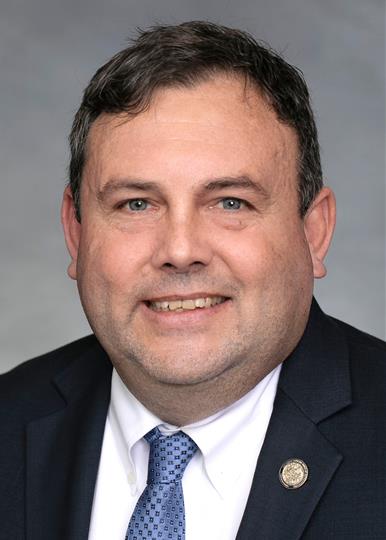
Photo of Eric Ager
D North Carolina House · District 114 On the 2026 ballot

Rep. Eric Ager

Compare
Total votes
542
all sessions
Attendance
99%
8 missed
Near the chamber average
With party
94%
of cast votes
Lower than 81% of chamber peers
Bipartisan score
3%
crosses aisle rarely
Higher than 79% of chamber peers
Sponsored
603
bills & resolutions
Higher than 92% of chamber peers
Committees
9
assignments
603 bills and resolutions

Sponsored bills

Total
603
Primary
24
Co-sponsor
579
This page
603
matching current filters
Co-sponsor HB 1157
In committee · North Carolina House · Co-sponsor
Red Wolf Special Registration Plate.

Maddy summaryThis bill authorizes the North Carolina Division of Motor Vehicles to issue a special "Red Wolf" license plate for vehicle owners who wish to support the conservation of this native species. The plates will feature an image of a red wolf and carry an additional $30 fee, with specific portions of those funds directed to the North Carolina Wildlife Resources Commission for conservation, research, and habitat restoration efforts. To help launch the program, the state has appropriated $15,000 for plate design and production, while North Carolina State University is tasked with promoting the plate to its campus community and will report on its marketing efforts by September 2027.

In committee May 4, 2026 1 co-sponsor
Co-sponsor HB 1139
In committee · North Carolina House · Co-sponsor
Learning and Enrichment in Afterschool Programs.

Maddy summaryThis bill creates a new advisory council and grant program in North Carolina to support high-quality after-school activities for children and youth up to age 18. The legislation establishes a dedicated fund that will receive state appropriations, federal money, private donations, and any future legal settlements from social media companies, with the Department of Public Instruction managing the distribution of these funds. Eligible organizations, such as community groups and schools, can apply for grants to run structured programs that focus on positive youth development, provided they serve rural or underserved areas and meet specific quality standards. The program includes a two-year limit on individual grants, requires regular evaluation of participant outcomes, and allows for renewal based on performance, while ensuring that new funding supplements rather than replaces existing resources.

In committee May 4, 2026 1 co-sponsor
Co-sponsor HB 1144
In committee · North Carolina House · Co-sponsor
Dominique Moody Safety Act.

Maddy summaryThis bill establishes a Child Welfare Case Escalation Team to provide an extra layer of safety review for juveniles with complex histories of abuse or neglect. The team, composed of state and local representatives, will be activated when cases meet specific risk criteria, such as multiple prior reports, patterns of medical neglect, or a history involving child fatalities. Once triggered, the team will conduct a thorough assessment of the case, identify gaps in services, and collaborate with county social services to develop improved safety plans. This new mechanism aims to ensure consistent quality assurance and better protect vulnerable children by addressing chronic issues that may have been missed in previous interventions.

In committee May 4, 2026 1 co-sponsor
Co-sponsor HB 1168
In committee · North Carolina House · Co-sponsor
Limit Electric Utilities Historic Fuel Cost Recovery.

Maddy summaryThis bill directs North Carolina's Utilities Commission to adjust electricity rates to reflect fuel costs that utilities incurred after a previous rate-setting period ended. It requires the commission to include these recent fuel expenses in rate calculations, provided they were reasonable and prudently spent, while explicitly excluding costs from before that earlier period. The law also mandates that any difference between what utilities collected and what they actually spent on fuel be corrected over a 12-month period with interest applied. Additionally, the bill allocates $10,000 in state funds to the commission to support the administrative work needed to implement these changes, which will take effect on July 1, 2026.

In committee May 4, 2026 1 co-sponsor
Co-sponsor HR 1177
In committee · North Carolina House · Co-sponsor
Consumer Protection Artificial Intelligence Bill of Rights.

Maddy summaryThis House resolution encourages Congress to allow states like North Carolina to regulate artificial intelligence for consumer protection purposes. It asserts that state governments should retain the authority to investigate and enforce laws against unfair or deceptive practices involving AI systems. The bill opposes any federal restrictions that would prevent states from applying their existing consumer protection rules to new technologies. Ultimately, it aims to ensure that local laws remain effective in addressing commercial abuses regardless of whether artificial intelligence is used.

In committee May 4, 2026 1 co-sponsor
Co-sponsor HB 1140
In committee · North Carolina House · Co-sponsor
State Employee Bereavement Leave/Up To 40 Hrs.

Maddy summaryThis bill establishes a paid bereavement leave program for state employees, public school staff, and community college workers in North Carolina, effective July 1, 2026. It grants up to 40 hours of paid time off for the death of an immediate family member and up to eight hours for the death of a colleague who worked at the same agency within the past year. The legislation requires employees to provide documentation of the death and mandates that leave for family members be used within 180 days, while also allocating $2 million from the state budget to fund these benefits.

In committee May 4, 2026 1 co-sponsor
Co-sponsor HB 1150
In committee · North Carolina House · Co-sponsor
NC Constitutional Rights Act/Funds.

Maddy summaryThis bill creates a new legal pathway in North Carolina allowing individuals to sue anyone, including federal officials, for violating their rights under the U.S. Constitution. It establishes a civil cause of action that permits victims to seek monetary compensation, court orders to stop the violation, and payment for legal fees. The law explicitly states that it does not allow lawsuits against the state itself or waive the state's immunity from being sued. Additionally, the bill appropriates $150,000 to fund public education efforts about these new rights, with the main provisions taking effect on October 1, 2026.

In committee May 4, 2026 1 co-sponsor
Co-sponsor HB 1148
In committee · North Carolina House · Co-sponsor
Universal Pre-K.

Maddy summaryThis bill allocates $200 million in recurring state funds to expand access to the North Carolina Pre-K program for all income-eligible four-year-olds. The additional money is directed to the Department of Health and Human Services to ensure these children can participate in the program starting in the 2026-2027 fiscal year. The legislation becomes effective on July 1, 2026, and does not alter existing eligibility criteria or program requirements.

In committee May 4, 2026 1 co-sponsor
Co-sponsor HB 1178
In committee · North Carolina House · Co-sponsor
The NC Teacher Pay Competitiveness Act.

Maddy summaryHB 1178, known as the NC Teacher Pay Competitiveness Act, establishes a permanent salary increase plan for public school teachers in North Carolina to help the state compete with neighboring regions. The bill creates a new salary schedule that begins in the 2026-2027 school year and mandates annual raises of 3.67% until 2033, after which increases will be tied to federal employment cost data. Additionally, the legislation provides specific monthly bonuses for teachers with advanced certifications or degrees and adjusts funding for the Opportunity Scholarship program.

In committee May 4, 2026 1 co-sponsor
Co-sponsor HB 1147
In committee · North Carolina House · Co-sponsor
Intellectual and Developmental Disabilities Omnibus.

Maddy summaryThis bill aims to improve support for people with intellectual and developmental disabilities in North Carolina through three main changes. It mandates a minimum wage increase of $18 per hour for direct care workers by raising Medicaid reimbursement rates for providers and facilities, with funds appropriated starting in fiscal year 2026-2027. Additionally, the legislation adds at least 1,000 slots to the state's Medicaid waiver program and requires the creation of a ten-year plan to address unmet service needs. Finally, it seeks to remove income and asset limits for the state's Medicaid buy-in program for workers with disabilities, allowing more individuals to qualify for coverage regardless of their earnings or savings.

In committee May 4, 2026 1 co-sponsor
Showing 41 to 50 of 603 bills
Previous 1 … 4 5 6 … 61 Next