

Maddy summaryHouse Bill 432 aims to provide various forms of property tax relief to North Carolina homeowners. It increases the property tax exclusion amounts for qualifying elderly or disabled homeowners and expands the exclusion for disabled veterans, allowing more of their home's value to be exempt from taxation. The bill also establishes a new "Homeowner Advantage Property Tax Relief Program" designed to cap the annual increase in a permanent residence's taxable value, based on inflation and a cumulative limit. To qualify for this program, homeowners must have occupied their residence for at least two years. Additionally, the bill creates an "Elderly Property Tax Homestead Circuit Breaker Program" and exemptions from the forced sale of a homestead.
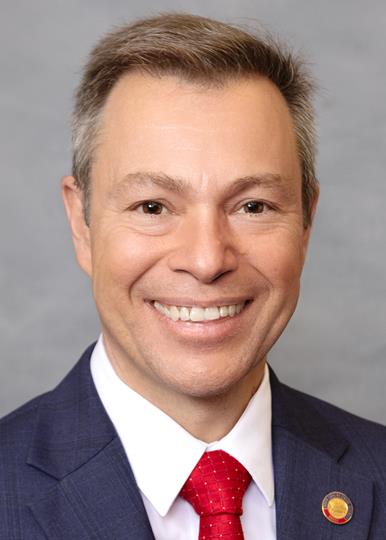
Rep. Paul Scott
Sponsored bills
Maddy summaryThis bill designates "The Andy Griffith Show" as the official television show of the State of North Carolina. This symbolic act recognizes the cultural impact of the show and its connection to the state.
Maddy summaryHB 734, titled "Modernize Debt Settlement Prohibition," aims to prohibit debt settlement and debt adjusting services in North Carolina. The bill reclassifies these activities as unfair trade practices and clarifies their definitions. It makes engaging in debt adjusting or debt settlement a Class 2 misdemeanor and expands civil remedies for debtors. The bill grants superior courts the authority to enjoin such practices and assess civil penalties. However, it exempts certain individuals and transactions, such as a creditor acting without cost to the debtor or an attorney acting within an attorney-client relationship.
Maddy summaryHB 69, the Military and Veterans Educational Promise Act, provides two key benefits for military-affiliated individuals and veterans at North Carolina's University of North Carolina (UNC) schools. First, it requires UNC institutions to allow eligible military members (including reservists) and their spouses to defer admission for up to five years (for active duty) or two years (for reserve service) upon enrollment notice. Second, it establishes in-state tuition rates for honorably discharged veterans who served at least 90 days in the military, graduated from a North Carolina high school after 2004, had a North Carolina duty station, or received a Purple Heart. The bill applies to all UNC institutions beginning in the 2025-2026 academic year.
Maddy summaryHouse Bill 272, known as "The Sergeant Mickey Hutchens Act," allows certain law enforcement, probation/parole, and correctional officers in North Carolina to purchase additional retirement service credit. Officers who hold an advanced law enforcement or corrections certificate and have at least five years of membership service can buy up to four years of creditable service. This purchase applies to members of the Teachers' and State Employees' Retirement System or the Local Governmental Employees' Retirement System. To do so, they must pay a lump sum covering the full cost of the increased retirement system liability and an administrative fee, with the option for their employer to contribute to this cost.
Maddy summaryHB 695 amends the allocation of 911 funds to support the state's VIPER public safety radio network. This bill requires the 911 Board to allocate a minimum of 20% of total 911 service charges to the State Highway Patrol. These funds are designated for the support and maintenance of the VIPER system, specifically for its role in 911 services, ensuring interoperability among 911 systems, and facilitating first responder dispatch. This change aims to enhance emergency communications and dispatch capabilities throughout the state and becomes effective July 1, 2025.
Maddy summaryThis bill revives and expands a program that allows eligible retired educators to return to work in high-need schools. It defines "high-need retired teachers" as beneficiaries of the Teachers' and State Employees' Retirement System who meet specific retirement and service criteria, and are reemployed by local boards of education. A key provision ensures that earnings from this reemployment do not count against post-retirement earnings limits, allowing these teachers to receive both their full retirement allowance and a salary. The Department of Public Instruction is tasked with certifying these teachers, and local boards must report their employment status to the Retirement System.
Maddy summaryHB 218 requires the North Carolina Division of Motor Vehicles (DMV) to include a request for emergency contact information on applications for drivers' licenses, learners' permits, and identification cards. This applies to both new applications and renewal applications. Providing this emergency contact information will be optional for the applicant. The act is set to become effective on October 1, 2026.
Maddy summaryHB 939 allows North Carolina public school districts to hire or accept volunteer chaplains, with specific requirements for their employment. School districts must adopt a policy covering certified training (via organizations like the National School Chaplain Association), services provided, continuing education, and discipline procedures. The bill mandates criminal background checks for chaplains before service, reviewed by the Superintendent of Public Instruction, and shields chaplains from civil liability for normal duties (except gross negligence). It explicitly states that hiring chaplains does not endorse any religion. The law takes effect for the 2025-2026 school year.
Maddy summaryHB 919 prohibits banks and other financial institutions from denying services or discriminating based on protected characteristics like political views, religious beliefs (unless for religious purposes), or social credit scores tied to lawful activities (e.g., firearm ownership, energy use, or environmental compliance). It bans using subjective criteria without full disclosure to customers and requires annual compliance reports under penalty of perjury. Financial institutions must also avoid discriminatory pricing based on environmental, social, or governance factors unless justified by actuarial standards. Individuals harmed by violations can pursue legal action for damages or injunctions.