

Maddy summaryHB 729, titled the "Farmland Protection Act," makes several changes related to solar energy development. It reduces the property tax exclusion for solar energy electric systems from 80% to 40% of their appraised value, which will increase the taxable value of these systems. The bill also prohibits the construction of new utility-scale solar projects that are not qualifying facilities under federal law, unless they are sited on specific types of land such as brownfields, non-agricultural land, or clear-cut timberland. Additionally, it updates the effective dates for requirements regarding financial assurance and decommissioning plans for utility-scale solar projects, affecting both existing and new facilities.
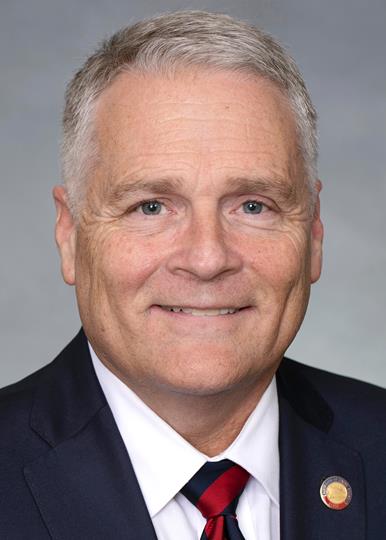
Rep. Kelly Hastings
Sponsored bills
Maddy summaryThis House Resolution elects six individuals - Wendy Floyd Murphy, Kellie Hunt Blue, John A. Fraley, Carolyn Coward, Reginald Ronald Holley, and Dr. M. Lee Barnes - to the Board of Governors of The University of North Carolina. Their terms on the board will commence on July 1, 2025, and end on June 30, 2029.
Maddy summaryHB 69, the Military and Veterans Educational Promise Act, provides two key benefits for military-affiliated individuals and veterans at North Carolina's University of North Carolina (UNC) schools. First, it requires UNC institutions to allow eligible military members (including reservists) and their spouses to defer admission for up to five years (for active duty) or two years (for reserve service) upon enrollment notice. Second, it establishes in-state tuition rates for honorably discharged veterans who served at least 90 days in the military, graduated from a North Carolina high school after 2004, had a North Carolina duty station, or received a Purple Heart. The bill applies to all UNC institutions beginning in the 2025-2026 academic year.
Maddy summaryThis bill requires North Carolina state agencies and local governments to only purchase U.S. and North Carolina flags made entirely in the United States using domestically grown or produced materials. It prohibits using public funds for any U.S. or state flags not 100% manufactured in America from domestic materials. The rule applies to all new flag purchases starting October 1, 2025. It directly affects all government offices responsible for buying flags with public money.
Maddy summaryHB 791, the Women's Safety and Protection Act, defines "biological sex" (based on physical characteristics at birth) and "gender" in North Carolina law and mandates that single/multiple occupancy restrooms, changing facilities, and sleeping quarters in state-funded facilities (including public schools, prisons, domestic violence centers, and juvenile facilities) be designated for use by one biological sex at a time. The bill requires facilities to have policies ensuring only one biological sex uses these spaces simultaneously, with exceptions for family use, maintenance, medical emergencies, or safety threats. It specifically prohibits students from sharing sleeping quarters with individuals of another biological sex in public schools unless family members or with parental permission. The law applies to all covered facilities receiving state funds, including public schools and domestic violence centers, and subjects its provisions to "intermediate scrutiny" under constitutional review.
Maddy summaryHB 15 clarifies that including property in a non-financially constrained comprehensive transportation plan does not require disclosure as a "material fact" in real estate transactions. It removes the obligation for sellers, agents, or buyers to disclose this detail when selling, leasing, or exchanging property, covering transactions listed under North Carolina law (G.S. 47E-1). The bill also prohibits knowingly making false statements about such property inclusions. It directly affects real estate transactions involving properties near planned transportation projects, changing disclosure requirements effective October 1, 2025.
Maddy summaryHB 300 establishes a program to reimburse owners of retired first responder dogs for veterinary care. It directly affects owners of canines that served with law enforcement, fire departments, or correctional agencies in roles like narcotics detection or search and rescue, after retiring on or after July 1, 2024. The bill requires registration of the dog and owner with the Department of Public Safety, then allows reimbursement of up to $1,500 annually for covered care - including routine check-ups, vaccinations, emergencies, surgeries, and euthanasia. Owners must submit itemized vet bills within 90 days of service.
Maddy summaryHB 426 establishes the Workforce Diploma Program to help North Carolina adults aged 21+ without high school diplomas earn diplomas while gaining job skills. The program requires approved providers to offer courses combining diploma requirements with career training, including employability certifications and industry credentials. Participants receive milestone-based funding up to $7,500 per person, with payments tied to completing half-credits, certifications, or diplomas. The program mandates annual reports tracking participant outcomes like diplomas earned, credits, and workforce credentials. It appropriates $5 million for implementation starting July 2025.
Maddy summaryHB 579, the NC House Public Access Act of 2025, allocates $91,000 (one-time) and $4,000 annually to install video and audio recording equipment in North Carolina House committee rooms and the chamber. This enables the public to view live legislative sessions online and access recorded sessions for 10 years via the internet. The bill requires committees to maintain audio minutes and written records if they opt not to record video, with advance notice to the public. It directly affects North Carolina residents seeking greater transparency in legislative proceedings.
Maddy summaryHB 16 requires the North Carolina General Assembly to display the national motto "In God We Trust" directly above and behind the dais for the Speaker of the House and President of the Senate, aligning with the U.S. House of Representatives' display. The bill mandates the Legislative Services Officer to implement this, first using private gifts or donations for costs, and if none are provided within 90 days, using state funds. It becomes effective July 1, 2025. This is a procedural bill affecting legislative chamber decor, not a substantive policy change.