

Maddy summaryHB 353, the Fair Minimum Wage Act, raises North Carolina's state minimum wage in staged increases, starting at $10 per hour on January 1, 2026, and reaching $18 per hour by January 1, 2030. After 2030, the wage will automatically adjust annually based on inflation using the Consumer Price Index. The bill directly affects hourly workers and employers across North Carolina, requiring higher pay for all covered employees. It also adds provisions allowing workers to recover unpaid wages plus interest, attorney fees, and court costs if employers fail to pay correctly.
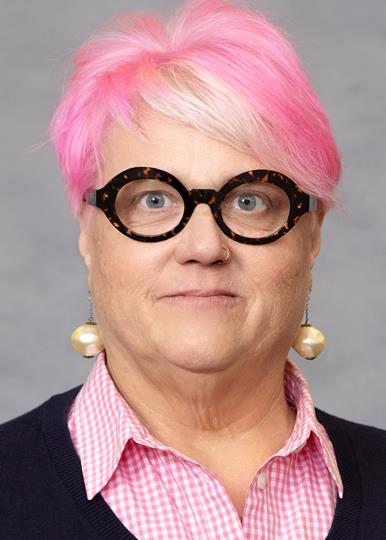
Rep. Allison Dahle
Sponsored bills
Maddy summaryHB 350 requires North Carolina firearm owners to report lost or stolen firearms to local law enforcement or the State Bureau of Investigation within 24 hours of discovery. Owners must provide specific details like the firearm’s make, model, serial number, and circumstances of the loss or theft. Law enforcement must then enter key details into the National Crime Information Center database. Violations are punishable as a Class 3 misdemeanor for a first offense, escalating to a Class I felony for repeat violations. The law takes effect December 1, 2025.
Maddy summaryHB 341 increases property tax relief for disabled veterans in North Carolina by expanding the homestead exclusion on their primary residence. The bill sets exclusion amounts based on disability rating: $100,000 for 70%+ disability, $75,000 for 50-69%, $50,000 for 30-49%, and $25,000 for 10-29%. Surviving spouses qualify for the greater of the veteran’s exclusion amount or $45,000, provided the veteran’s death resulted from a service-connected condition. This policy directly affects qualifying disabled veterans and their surviving spouses who own and occupy their primary residence, effective for taxes due in 2025.
Maddy summaryHB 322 modifies North Carolina's public records law to require the General Assembly to follow the same record retention and disposal rules as other state agencies. It mandates that legislative records must be preserved for at least 10 years after a legislator leaves office (or until they have no further official use, whichever is longer) and requires the Legislative Services Officer to work with the Department of Natural and Cultural Resources to create an inventory of these records. The bill repeals previous exemptions that allowed the General Assembly to unilaterally control its own records and ensures these records are subject to public access standards. This directly affects North Carolina legislators, their offices, and the Department of Natural and Cultural Resources, which will oversee record preservation and public access.
Maddy summaryHB 327 appropriates $16.564 million in one-time state funds to the Town of Hope Mills for specific capital projects. The bill directs $13.134 million toward building a new community center and $3.43 million to redesign and renovate the Hope Mills Senior Center to meet accessibility standards (ADA compliance). These funds are allocated for the 2025-2026 fiscal year and become effective July 1, 2025. The bill directly affects Hope Mills residents through their local government, which will manage the construction and renovation work.
Maddy summaryHB 325 establishes a two-year pilot program (2025-2026 and 2026-2027) to fund public school field trips to North Carolina's Legislative Building. It provides up to $2,000 per school for transportation costs (bus rental, fuel, driver pay) to participating schools, prioritizing those in counties designated as "Tier 1" under state law. The program is funded with $1.5 million annually from the General Fund, requiring schools to submit budget applications by October 1 and reporting usage to the legislature by February 15 each year. The bill directly affects public school units statewide, with priority given to schools in designated underserved counties.
Maddy summaryHB 316 reenacts North Carolina's Child Tax Credit to help families cover child care costs, with reimbursement percentages based on income and child age (e.g., 7-13% for dependents aged 6-12). It allocates $200 million annually to expand the NC Pre-K program, adding 32,000 slots for 4-year-olds, and $35 million to increase subsidized child care funding. The bill also requires public schools to provide free lunches at no cost to students through state funding tied to school nutrition evaluations. Additionally, it mandates a report on creating a high school child care apprenticeship program. The bill directly affects families with children, public schools, and child care providers across North Carolina.
Maddy summaryHB 317 restores the City of High Point's authority to initiate down-zoning without requiring written consent from all affected property owners. It reverses a prior law (S.L. 2024-57) that mandated such consent for down-zoning actions. The bill applies exclusively to High Point and takes effect retroactively to December 11, 2024, meaning any down-zoning ordinances adopted after that date will operate under the restored authority. Down-zoning refers to reducing permitted density, limiting land uses, or creating nonconforming conditions on properties.
Maddy summaryHB 285 appropriates $52.5 million from North Carolina's Highway Fund to the Southeast Regional Airport Authority for Laurinburg-Maxton Airport improvements. The funds are allocated specifically: $28 million for a runway extension, $15 million for general airport capital projects, and $9.5 million for water and sewer infrastructure. The bill requires quarterly spending reports to legislative committees and takes effect July 1, 2025.
Maddy summaryHB 273 creates the Brushy Mountains State Natural Area (BMSNA) in Alexander, Caldwell, and Wilkes counties, adding it to North Carolina's state parks system. The bill appropriates $500,000 total ($250,000 one-time and $250,000 annual) from the General Fund for initial land acquisition, site development, and operating costs at BMSNA, using existing funding sources like the Land and Water Conservation Fund. This directly affects residents and visitors in those three counties by establishing a new protected natural area. The funding becomes effective July 1, 2025, for the 2025-2026 fiscal year.