

Maddy summaryHB 918, the "Standardized Testing Choice Act," establishes new requirements for standardized testing in North Carolina, beginning in the 2025-2026 academic year. It mandates that the University of North Carolina system accept scores from the SAT, ACT, or Classic Learning Test (CLT) interchangeably for admissions and state-funded scholarships, including concordant minimum scores. The bill also requires local school administrative units to offer eighth through tenth-grade students the opportunity to take the CLT10, in addition to the PSAT/NMSQT or PreACT, at no cost. These provisions directly affect students applying to UNC institutions and those in North Carolina high schools.
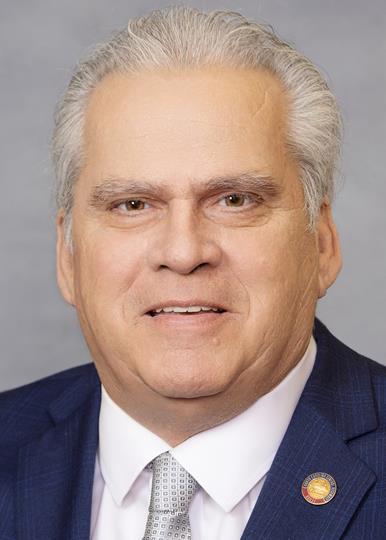
Rep. John Torbett
Sponsored bills
Maddy summaryHouse Bill 971 establishes a pilot program for Annual Career Development Plans in 12 selected North Carolina middle and high schools. This program will affect students entering seventh grade in those schools during the 2025-2026 and 2026-2027 school years, continuing until their high school graduation. Students will create and annually update individual plans with assistance from school counselors, aiming to align them for on-time graduation and college or career readiness. Parents are encouraged to participate and will receive information regarding their child's plan, course offerings, and financial aid options for postsecondary education.
Maddy summaryHouse Bill 516, the "Motorcycle Road Guard Safety Act," creates a system allowing certified individuals to direct traffic for motorcycle groups. To become a motorcycle road guard, a person must be at least 18 years old, possess a valid driver's license, and successfully complete a certification course developed by the Division of Motor Vehicles. Certified road guards must meet specific safety standards and are required to notify and obtain consent from the chief of police in each city where they plan to direct traffic. The Division of Motor Vehicles will adopt rules to implement these new provisions.
Maddy summaryHB 246, also known as "Liam's Law," increases penalties for specific driving offenses. The bill elevates reckless driving that causes serious bodily injury to a Class I felony. For street racing, it establishes new felony classifications for causing serious injury (Class F felony) or death (Class B2 felony), and mandates longer driver's license revocations, including permanent revocation for fatalities. Additionally, the bill increases the penalty for hit-and-run offenses that result in death to a Class D felony. These provisions directly affect drivers involved in such incidents.
Maddy summaryHB 707 prohibits North Carolina state agencies and local governments from purchasing small drones (under 55 pounds) made or assembled by foreign vendors linked to China or Russia, or listed on U.S. sanctions lists. The bill directly affects all state and local government entities that buy drone technology, banning the use of state funds for such purchases starting July 1, 2027. Key provisions define "covered foreign entities" as those tied to Chinese/Russian governments, on U.S. sanctions lists, or controlled by those nations. This law aims to restrict drone acquisitions from specific foreign sources without altering existing drone usage policies.
Maddy summaryHB 848 establishes a pilot program for Cleveland County Schools (2025-2026 through 2030-2031) that allows flexibility in staffing to improve student outcomes. It permits up to 50% of teachers per school and 25% district-wide to be unlicensed, provided they complete specific training on disability education, behavior management, and safety protocols. The program requires annual reporting on staffing, class sizes, fund usage, and student success metrics to oversight committees. It directly affects Cleveland County Schools' hiring practices, teacher qualifications, and resource allocation for K-3 classrooms and NC Pre-K programs. The pilot ends December 2031 unless extended.
Maddy summaryHB 872 protects school employees who use reasonable force to maintain safety in specific situations, such as stopping disturbances, preventing injury, or removing weapons. It creates a legal presumption that such force is reasonable in investigations or court, shifting the burden to prove otherwise to the claimant. The bill prohibits retaliation, dismissal, or license revocation against staff for using reasonable force in line with school policies, even if criminal allegations arise (as long as force was reasonable and no conviction occurs). This directly affects teachers, administrators, and other school personnel by reducing legal risks when responding to safety threats on school property.
Maddy summaryHB 845 requires state agencies and local governments to install visible, accessible water safety rescue equipment - including ring life buoys meeting federal safety standards - at public docks, piers, and shoreline access points. The law mandates that buoys be placed within 200 feet of shorelines, stored in bright orange/yellow stations, and not permanently secured, with specific requirements for buoyant lines and retroreflective marking. It also appropriates $25,000 for the Wildlife Resources Commission and provides up to $500 grants to local governments in economic tier one areas to cover installation costs. The bill takes effect July 1, 2025, directly affecting public water access facilities owned by state or local entities.
Maddy summaryHB 596 establishes the Standard Course of Study Advisory Commission (SCOS Commission) to advise North Carolina's State Board of Education on academic standards. The 18-member commission includes teachers, principals, parents, school administrators, business representatives, and university officials to provide stakeholder input. It will recommend standards for core subjects like math, science, and civics that must be grade-specific, measurable, and aligned with college readiness requirements. These recommendations will guide updates to curriculum, testing, and teacher training programs used across public schools statewide.
Maddy summaryHB 595 restricts certain curriculum content in North Carolina public schools, directly affecting K-12 students and their parents. It bans instruction on gender identity, sexual activity, or sexuality in grades K-6 (except answering student questions) and requires parental written consent for such topics in grades 7-12. The bill mandates that schools provide age-appropriate health education materials, including 60-day parental review periods for materials related to sexual health, HIV/AIDS prevention, and reproductive health. It also specifies that human growth education in 4th and 5th grades must be single-sex, scientifically based, and require annual parental consent.