

Maddy summaryHB 669 establishes a temporary reimbursement program for North Carolina volunteer firefighters, allowing them to be paid back for mileage to emergency scenes and costs of personal equipment used during responses. The program, funded by $1 million for 2025-2026, reimburses at the IRS business mileage rate and covers equipment like safety gear used to secure scenes or treat individuals. Volunteer organizations must collect claims within 60 days, and the Division of Emergency Management will oversee the program until it ends June 30, 2026. A report to lawmakers by that date will evaluate participation and recommend whether to expand or make the program permanent.
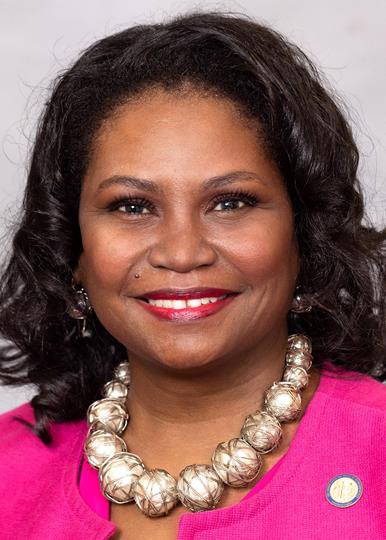
Rep. Aisha Dew
Sponsored bills
Maddy summaryHB 728, the "Shared Investment in Our Heroes Act," increases North Carolina's property tax exemption for disabled veterans' homes from $45,000 to $75,000 starting in 2025, directly benefiting veterans with 100% service-connected disabilities and their surviving spouses. It allows veterans to prequalify for the exemption before purchasing a home and excludes their primary vehicle from property taxes. Local governments will be reimbursed up to 50% of revenue loss from these changes to offset financial impacts. The bill aims to provide immediate tax relief for disabled veterans while ensuring local fiscal stability through shared state-local funding.
Maddy summaryHB 709 establishes a pilot program to fund additional teacher assistants in North Carolina public schools for kindergarten through third grade. It provides $14.8 million annually (2025-2027) to cover the cost of teacher assistants based on specific ratios: one assistant per K-2 class and one per three third-grade classes. The program will select 16 schools (eight districts, one district school and one charter school per district) to participate, with funds distributed based on average class size and salary costs. The bill aims to directly support early-grade classrooms by increasing adult-to-student ratios, effective July 1, 2025.
Maddy summaryHB 724 establishes the NC-Federal Alignment for Critical Technologies Task Force (NC-FACT) within North Carolina's Department of Commerce. The task force, composed of state agency staff and potentially partners from UNC institutions or the private sector, must study ways to improve collaboration between state, federal, and private entities in science and technology. It is required to develop economic strategies focused on attracting out-of-state investment and streamline resources for tech industries, then submit annual reports with actionable recommendations to the legislature by April 1 each year. The bill creates a study group with specific research duties and reporting requirements but does not enact direct funding or regulatory changes.
Maddy summaryHB 704 establishes the Asian American and Pacific Islander (AAPI) Heritage Commission within North Carolina’s Department of Natural and Cultural Resources. The commission, composed of nine members appointed by the Governor and General Assembly, advises on preserving, promoting, and interpreting AAPI history, arts, and culture through programs, school education, and statewide collaboration. It receives $250,000 annually from 2025-2027 to fund operations, including a director and associate director. The bill directly affects the department and AAPI communities by creating a formal structure to advance cultural preservation and awareness. It becomes effective July 1, 2025.
Maddy summaryHB 706 changes how North Carolina allocates public school capital funds by eliminating the use of the Department of Commerce's economic development tier designations. Instead, it requires funding to be based on either a county's adjusted property value (with specific matching percentages) or HUD-designated poverty areas. The bill affects all public K-12 schools, community colleges, and UNC institutions receiving state education funds, prohibiting agencies from using Commerce's economic tiers for allocation starting in the 2025-2026 school year. It also repeals prior sections allowing tier-based funding and mandates equal per-school allocations for certain cooperative high schools. The law takes effect July 1, 2025, for new grant applications.
Maddy summaryHB 686, the Safe Cosmetics Act, prohibits the sale or distribution of cosmetic products in North Carolina containing specific restricted substances - such as PFAS, heavy metals, parabens, phthalates, formaldehyde, and asbestos - as intentionally added chemicals, nonfunctional by-products, or nonfunctional contaminants above measurable limits. The bill defines "practical quantification limit" as the lowest reliably measurable concentration and requires manufacturers to provide a compliance certificate if the Board of Agriculture suspects violations. It directly affects cosmetic manufacturers and retailers selling products in North Carolina, mandating adherence to these chemical restrictions starting January 1, 2026. The law aims to reduce consumer exposure to chemicals linked to health concerns by banning them in cosmetics above specified thresholds.
Maddy summaryHB 738 restores specific definitions for wetland protections in North Carolina by repealing prior legislative changes and reinstating the 2010 North Carolina Wetland Assessment Manual definitions. It explicitly defines "isolated wetlands" to include those confirmed by the U.S. Army Corps of Engineers before June 2020 and wetlands classified as basins or bogs under the state's 2010 manual (excluding man-made stormwater features). The bill also clarifies that "wetlands" include waters meeting federal definitions (33 C.F.R. § 328.3 and 40 C.F.R. § 230.3) and the reinstated isolated wetland category. This directly affects developers, landowners, and local governments by determining which projects require wetland permits under state law. The policy change reinstates pre-2020 regulatory boundaries without creating new restrictions.
Maddy summaryHB 750 appropriates $2.5 million annually (2025-2027) to fund grants for nonprofit community health centers in North Carolina. These grants enable centers to purchase and distribute long-acting reversible contraceptives (LARCs), such as IUDs or implants, specifically for underserved, uninsured, or low-income patients. LARCs are defined as FDA-approved, temporary contraceptive methods requiring no daily user action (e.g., pills) and a prescription. The bill establishes a competitive grant process administered by the Department of Health and Human Services, targeting expanded access to these contraceptives without altering existing patient eligibility rules.
Maddy summaryHB 710 establishes a three-year pilot program to fund mental health crisis units in North Carolina public schools. It allocates $2 million total (up to $250,000 annually per district) to select up to eight school districts starting in 2025-2026, prioritizing those with high student mental health needs or trauma history. Each participating district must staff units with at least a school nurse, social worker, and licensed counselor to provide crisis intervention during school hours and rotate across schools. The program requires annual reports on participating districts and student mental health impacts, ending June 30, 2028.