

Maddy summaryHB 881 bans the manufacture, use, and distribution of PFAS (per- and poly-fluoroalkyl substances) in North Carolina, directly affecting businesses that currently use these chemicals in products like firefighting foam, non-stick coatings, or food packaging. The law requires companies discharging wastewater to disclose PFAS and 1,4-dioxane levels and remove them if feasible, while public water systems must notify customers about PFAS detected in drinking water by June 2025. It establishes civil penalties of up to $25,000 for violations, with stricter fines for repeat offenses. The bill focuses on preventing contamination and protecting public health through these concrete regulatory changes.
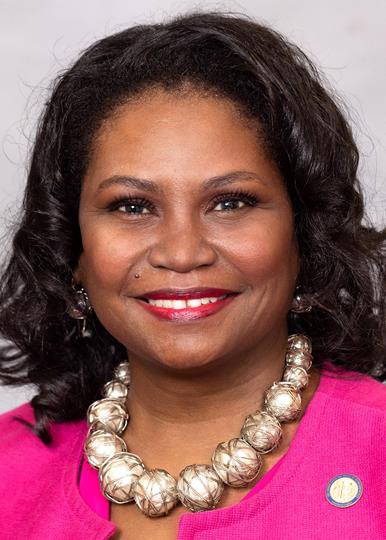
Rep. Aisha Dew
Sponsored bills
Maddy summaryHB 871, the North Carolina Microplastics Study Act, directs the North Carolina Collaboratory at UNC Chapel Hill to study the impacts of microplastics (tiny plastic particles 1 nanometer to 5 millimeters in size) in the state’s waters. The bill requires the Collaboratory to identify microplastics, research their ecological and health effects, develop standardized testing methods, and create a risk assessment framework by collaborating with state agencies like the Department of Environmental Quality. The study must produce a comprehensive report with recommendations for reducing plastic pollution, including potential policy changes, by July 2026. The $150,000 allocated funds the research, public engagement, and report development, but the bill itself does not impose new regulations or directly affect businesses or residents.
Maddy summaryHB 835 requires North Carolina public schools to include age-appropriate lessons about Asian American and Pacific Islander contributions in all K-12 courses starting in the 2026-2027 school year. The bill mandates curriculum covering specific topics, including early immigrant labor (e.g., railroad construction), historical challenges faced by Asian communities, roles in the 1960s Civil Rights Movement, and contributions to government, arts, sciences, and North Carolina's development. It directly affects all students and educators in North Carolina's public school system by integrating these topics into standard coursework. The law specifies that lessons must be tailored to students' age levels and cover the listed historical and cultural elements.
Maddy summaryHB 839 updates North Carolina's Advanced Teaching Roles (ATR) program for public schools. It requires classroom excellence teachers to serve 20% more students than prior years, allows ATR schools to exceed K-3 class size limits for up to three years with state funding, and increases salary supplements to $10,000 for adult leadership teachers (up to 25% of ATR school teachers) and $3,000 for classroom excellence teachers (up to 10% of ATR school teachers). The bill applies to participating ATR schools beginning the 2025-2026 school year.
Maddy summaryHB 856 clarifies that deed restrictions, covenants, or similar agreements cannot prohibit the installation of solar collectors (for water heating, space heating/cooling, or electricity) on residential properties. It specifically voids restrictions that prevent solar installations, while allowing reasonable rules about placement or screening if they reduce efficiency by 10% or less. This affects homeowners in single-family homes or similar residential properties (excluding certain condos in multi-story buildings) and their homeowners' associations. The law applies to agreements recorded after it takes effect, ensuring solar access without blocking reasonable maintenance or visibility rules.
Maddy summaryHB 883 establishes a grant program for North Carolina school districts to cover extraordinary costs for students with disabilities, particularly for placements outside regular schools (like private special education programs or homebound settings). School districts can apply for 75% reimbursement of eligible costs - such as specialized staff salaries, materials, or private school tuition - provided these costs exceed four times the state average per-pupil expenditure for disabilities. The bill requires annual IEP reviews, mandates that districts maintain legal responsibility for students in private placements, and directs the Department of Public Instruction to report on placements and costs by March 2026. It appropriates $1 million for the 2025-2026 fiscal year to fund this program.
Maddy summaryHB 863 appropriates $582 million in state funds to address unmet recovery needs in Western North Carolina following Hurricane Helene. It directly affects residents and businesses in the impacted area by funding affordable housing repairs, disaster-related home improvements, business grants, park restoration, flood protection, and emergency services. Key provisions include $105 million for local housing grants (covering repairs, homelessness assistance, and mortgage help), $75 million for stream restoration and food banks, and a $75,000 business grant program for eligible companies with sales tax declines. The funds are distributed across state agencies like Housing Finance, Agriculture, and Public Safety to support physical recovery and economic stabilization.
Maddy summaryHB 880 appropriates $1 million in recurring state funds from the General Fund to support the NC A&T Aggie Academy, a laboratory school at North Carolina A&T State University. This funding, effective July 1, 2025, provides additional resources for the school's operations as a University of North Carolina laboratory school. The bill directly affects the Aggie Academy's students, staff, and programs by securing ongoing financial support. It does not create new policies but allocates existing state funds for a specific educational institution.
Maddy summaryHB 865 clarifies North Carolina's dangerous dog laws by removing the automatic classification of any dog trained for dog fighting as "dangerous." Instead, it requires local animal control authorities to make individual case-by-case determinations about whether such dogs pose a threat. This change directly affects owners of dogs bred or trained for fighting, shifting oversight from a blanket rule to tailored assessments. The bill takes effect October 1, 2025, and does not alter existing definitions for dogs that have attacked people or caused severe injury.
Maddy summaryHB 840 modifies North Carolina's school grading system to provide separate "achievement" and "growth" scores for all public schools, replacing a single combined score. Achievement grades reflect current student performance (based on test scores, graduation rates, and proficiency), while growth grades measure how much students improved over time using the EVAAS system. Schools earn an overall performance grade combining 80% achievement and 20% growth scores, displayed on school websites and report cards. This affects all North Carolina public schools (K-12), their administrators, and parents, who will receive detailed grade breakdowns for each school annually. The bill does not create new funding rewards but changes how school performance is measured and reported.