

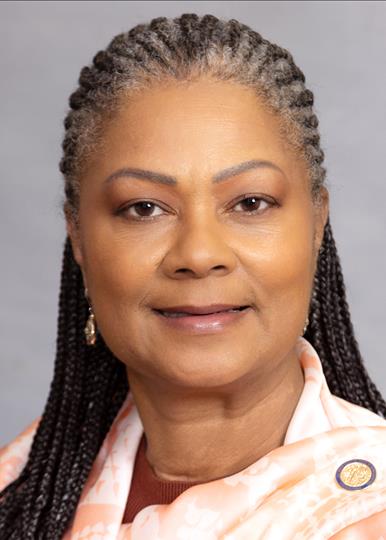
Photo of Carla Cunningham
I North Carolina House · District 106

Rep. Carla Cunningham

Compare
Total votes
8,814
all sessions
Attendance
87%
1,114 missed
Lower than 77% of chamber peers
With party
-
no party-line votes scored
Bipartisan score
-
no party-line votes scored
Sponsored
2,260
bills & resolutions
Near the chamber average
Committees
20
assignments
2,260 bills and resolutions

Sponsored bills

Total
2,260
Primary
174
Co-sponsor
2,086
This page
2,260
matching current filters
Primary HB 329
Passed · North Carolina House · Lead sponsor
Tobacco and Hemp on Nonpublic School Grounds.

Maddy summaryHB 329 encourages nonpublic schools in North Carolina, including private church schools and other qualified nonpublic schools, to adopt policies that prohibit the use of tobacco and hemp products on their school grounds. The bill amends existing state statutes to add this encouragement. It suggests that these schools use the current requirements for public schools as guidance when developing their own policies. This legislation aims to promote smoke-free and hemp-free environments within nonpublic educational settings.

Passed Apr 28, 2025 0 co-sponsors
Co-sponsor HB 635
In committee · North Carolina House · Co-sponsor
Increase Access to Fertility Treatment.

Maddy summaryHouse Bill 635 requires certain large group health benefit plans to provide coverage for fertility diagnostic care, treatment, and preservation services. This bill directly affects individuals covered by these plans, aiming to increase their access to fertility-related medical care. Key provisions include mandatory coverage for at least three in vitro fertilization (IVF) cycles per insured, provided procedures follow American Society of Reproductive Medicine guidelines and are performed at licensed facilities. However, the requirements do not apply to plans offered by religious institutions or self-insured group health plans, and explicitly exclude experimental procedures or nonmedical costs for donor gametes or surrogacy.

In committee Apr 17, 2025 1 co-sponsor
Co-sponsor HB 824
In committee · North Carolina House · Co-sponsor
Expand Treatment Access/Opioid Use Disorder.

Maddy summaryHB 824 aims to expand access to treatment for opioid use disorder and overdose for individuals covered by health benefit plans. It requires health insurers to cover specific healthcare services provided by pharmacists, such as testing and medication administration, if those services are within a pharmacist's scope of practice. The bill also mandates coverage for all FDA-approved prescription drugs for opioid disorder and overdose, prohibiting prior authorization for these medications. Additionally, it updates state laws to ensure mental health benefits in health plans are no less favorable than physical health benefits, aligning with federal requirements.

In committee Apr 17, 2025 1 co-sponsor
Co-sponsor HB 634
In committee · North Carolina House · Co-sponsor
Parity Enhancement for Addiction Recovery.

Maddy summaryHB 634 updates North Carolina laws to enhance parity in health insurance coverage for mental health and addiction recovery. It requires all health benefit plans to provide benefits for mental health conditions that are no less favorable than those for physical illnesses, including applying the same financial limits. A key provision mandates that medical necessity determinations for substance use disorders must rely solely on the most recent American Society of Addiction Medicine criteria. The bill also requires the State Health Plan for Teachers and State Employees to comply with these new utilization review standards and updates terminology from "chemical dependency" to "substance use disorder" in relevant statutes.

In committee Apr 17, 2025 1 co-sponsor
Co-sponsor HB 272
Passed · North Carolina House · Co-sponsor
The Sergeant Mickey Hutchens Act.

Maddy summaryHouse Bill 272, known as "The Sergeant Mickey Hutchens Act," allows certain law enforcement, probation/parole, and correctional officers in North Carolina to purchase additional retirement service credit. Officers who hold an advanced law enforcement or corrections certificate and have at least five years of membership service can buy up to four years of creditable service. This purchase applies to members of the Teachers' and State Employees' Retirement System or the Local Governmental Employees' Retirement System. To do so, they must pay a lump sum covering the full cost of the increased retirement system liability and an administrative fee, with the option for their employer to contribute to this cost.

Passed Apr 16, 2025 1 co-sponsor
Co-sponsor HB 820
In committee · North Carolina House · Co-sponsor
Prescription Eye Drop Early Refill Coverage.

Maddy summaryHouse Bill 820 requires health benefit plans in North Carolina to provide coverage for early refills of prescription eye drops. This means insurers cannot deny a refill for a 30-day supply if at least 21 days have passed since the last fill, or if the patient has used 70% of the medication according to their healthcare provider's instructions. The bill also specifies that the requested refill must not exceed the total number of refills indicated on the original prescription. These requirements apply to all health benefit plans, including the State Health Plan, with an effective date of October 1, 2025, or the subsequent plan year.

In committee Apr 16, 2025 1 co-sponsor
Co-sponsor HB 399
In committee · North Carolina House · Co-sponsor
NC Board of Nursing Licensure Fees.

Maddy summaryHB 399 increases fees for nursing licensure applications, renewals, and reinstatements with most fees doubling (e.g., registered nurse application fees rise from $75 to $150, renewal fees from $100 to $200). It directly affects nurses seeking initial licensure, renewing licenses, or reinstating lapsed licenses in North Carolina. The bill establishes a 20% annual cap on future fee increases and specifies no refunds will be issued. These changes apply to all applications, renewals, or reinstatements processed on or after October 1, 2025. The bill does not alter nursing practice standards or create new regulatory requirements.

In committee Apr 15, 2025 1 co-sponsor
Co-sponsor HB 558
In committee · North Carolina House · Co-sponsor
Criteria for Prepaid Health Plan Contract Procurement.

Maddy summaryHB 558 updates how North Carolina selects Medicaid health plans by limiting statewide contracts to four and allowing up to 12 regional contracts through local health providers. It requires the state to prioritize bids from local providers and those with high provider satisfaction scores from existing contracts. The bill also mandates staggered contract terms (3-5 years) to prevent coverage gaps during transitions. These changes directly affect Medicaid health plan contractors and the Division of Health Benefits, aiming to stabilize coverage and improve provider relationships.

In committee Apr 15, 2025 1 co-sponsor
Co-sponsor HB 944
In committee · North Carolina House · Co-sponsor
Community Health Services/Mecklenburg County/Fund.

Maddy summaryHB 944 appropriates $1.5 million from the state General Fund to the Department of Health and Human Services for a directed grant to Care Ring, Inc., a nonprofit community health clinic in Mecklenburg County. The funding supports the clinic’s operations to provide primary care services to medically vulnerable residents facing geographic, economic, or other barriers to care. This grant specifically targets patients who would otherwise be unable to access necessary primary care due to these challenges. The bill directs all funds to be used for the clinic’s core operations during the 2025-2026 fiscal year.

In committee Apr 14, 2025 1 co-sponsor
Co-sponsor HB 938
In committee · North Carolina House · Co-sponsor
Right to Repair Digital Electronics Act.

Maddy summaryHB 938, the Right to Repair Digital Electronics Act, requires manufacturers of digital electronics sold or used in North Carolina to provide independent repair shops and product owners with free access to diagnostic tools, repair information, and service parts at fair and reasonable prices. It mandates that manufacturers make available the same diagnostic software, firmware updates, and repair documentation they provide to their own authorized repair networks. The law prohibits manufacturers from forcing authorized repair providers to use proprietary formats if standardized alternatives exist, while protecting trade secrets and existing repair agreements. This directly affects independent repair businesses, owners of digital devices (like smartphones and computers), and manufacturers selling such products in the state.

In committee Apr 14, 2025 1 co-sponsor
Showing 71 to 80 of 2,260 bills
Previous 1 … 7 8 9 … 226 Next