

Maddy summaryHB 536 modifies North Carolina's Physical Therapy Practice Act by establishing a new Board of Examiners to regulate the profession. The Board will consist of eight members (including a medical doctor, four physical therapists, two physical therapist assistants, and a public member) appointed to oversee licensing, discipline, and continuing education requirements for physical therapists and assistants. The bill clarifies that physical therapy practice excludes surgery, chiropractic, or medical diagnosis, and specifies that the Board may investigate complaints confidentially while making disciplinary decisions public. This legislation directly affects licensed physical therapists, physical therapist assistants, and the public by setting standards for practice, licensure, and professional conduct in North Carolina.
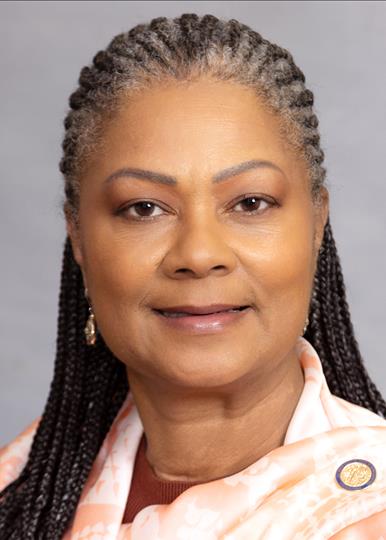
Rep. Carla Cunningham
Sponsored bills
Maddy summaryHB 315 creates new criminal offenses for wrongfully entering restricted business areas (like secure storage rooms) and for stealing or fraudulently obtaining gift cards. It directly affects businesses (by protecting secure areas), gift card holders (by criminalizing theft of their cards), and individuals who commit these acts. Key provisions include classifying unauthorized building entry as a misdemeanor or felony based on prior offenses, defining gift card theft as a Class 1 misdemeanor for cards under $1,000 (or felony for higher value), and expanding "organized retail theft" to include conspiracy around gift cards with penalties tied to total value stolen. The law takes effect December 1, 2025, and applies to offenses committed after that date.
Maddy summaryThis bill authorizes the University of North Carolina system to finance specific capital improvement projects, such as dormitory renovations and new construction, using non-state funds like gifts, grants, and hospital receipts. It allows the university to issue special obligation bonds to cover these costs and includes a mechanism for the Director of the Budget to adjust project funding if necessary. Additionally, the legislation standardizes the residency determination process for admission to the North Carolina School of Science and Mathematics and revises tuition grant rules for graduates of that school and the UNC School of the Arts. These changes aim to support university infrastructure development and ensure equitable access to specialized science and arts programs for North Carolina residents.
Maddy summaryHB 369, the Parking Lot Reform and Modernization Act, restricts local governments from mandating minimum parking space sizes (beyond 9x20 feet) or numbers for new developments, effective July 2025. It also bans the future purchase or import of pavement sealants containing high levels of polycyclic aromatic hydrocarbons (PAHs), effective January 2026. The bill clarifies stormwater rules for redevelopment sites, stating that existing stormwater controls cannot be retroactively required for redeveloped properties unless new impervious area is created, and allows local governments to offer incentives for stormwater capture. These provisions directly affect developers, property owners, and local governments managing zoning, parking, and stormwater regulations in North Carolina.
Maddy summaryThis bill establishes an Interstate Compact for School Psychologists in North Carolina, allowing licensed professionals to practice in other participating states without facing repetitive licensing requirements. The legislation creates a commission to oversee the agreement and defines specific rules for mobility, including provisions for military families and standards for professional conduct. Additionally, the bill allocates funds to support a virtual training program for school psychologists. By streamlining the licensure process, the measure aims to increase the availability of qualified mental health services in schools across member states.
Maddy summaryThis bill creates a new process for homeowners in North Carolina to file complaints about disputes with their homeowners associations, managed by the Department of Justice. Homeowners can submit complaints online, by phone, or mail, providing details about the dispute, the association, and any management companies involved. The Department will collect this information, notify the association to respond, and publish a searchable summary of complaints on its website while redacting personal data. The bill also requires the Department to submit annual reports to state committees detailing the number and nature of complaints, but explicitly prohibits the Department from creating new rules or acting as a judge in these disputes.
Maddy summaryHB 165 establishes the Child and Family Welfare Ombudsman Office within North Carolina's Department of Health and Human Services, directly serving foster parents, birth families, and resource parents navigating the state's child welfare system. The office will investigate complaints about foster care licensing, placement, and adoption processes; provide educational resources; mediate conflicts; and protect whistleblowers reporting violations. It requires confidentiality for all communications and mandates annual public reports on trends and complaints handled. Funded with $137,000 for 2025-2026 and $145,000 for 2026-2027, the office must begin operations by January 1, 2026.
Maddy summaryThis bill modifies the North Carolina Principal Fellows Program to clarify how forgivable scholarship loans are administered and to set specific rules for grant funding. It designates the Authority to manage loan agreements and repayment monitoring while requiring the Commission to select up to eight grant recipients annually for principal preparation and two recipients for innovative training development. The legislation also establishes reporting requirements for grant recipients, mandating the collection of data on student achievement, job placement rates, and retention in high-need schools. Additionally, the bill allows the use of administrative funds from the Trust Fund to cover program operations, staff salaries, and evaluation costs, with limits set at the greater of two percent of appropriated funds or one hundred sixty thousand dollars per year.
Maddy summaryHB 451 requires North Carolina public schools to provide parents and legal guardians with an annual information packet about type 1 and type 2 diabetes at the start of each school year. The packet must include descriptions of diabetes types, risk factors, warning signs, screening processes, and recommendations to consult healthcare providers for diagnosis or treatment planning. Schools must also ensure staff are trained to support students with diabetes through individualized care plans. The law, effective July 1, 2025, includes $10,000 in state funds to help schools develop implementation guidance. It directly affects all parents/guardians of students in North Carolina public schools.
Maddy summaryThis bill, known as the Mike Clampitt 1st Responder Tax Fairness Act, aims to expand tax exemptions for volunteer fire departments and rescue squads in North Carolina. Specifically, it allows these independent groups, which have two or fewer paid employees and are already exempt from state income tax, to avoid paying a highway use tax on specific emergency vehicles like fire trucks, forest firefighting units, and other emergency service vehicles. The change applies to vehicles when a certificate of title is issued on or after July 1, 2026, ensuring these organizations can acquire necessary equipment without incurring this particular tax. By broadening the existing exemption, the legislation directly benefits volunteer responders who operate outside of local government units.