

Maddy summaryHB 172 allows Camden County Schools to begin the academic year as early as the Monday closest to August 19 (instead of August 26) if the district demonstrates "good cause" through documented school closures (eight days per year over four of the last ten years) due to weather, power failures, or other emergencies. The bill amends state law to permit this calendar adjustment while ensuring schools still meet required instructional days. It applies exclusively to Camden County Schools and takes effect for the 2025-2026 school year. The change does not affect other schools with existing modified calendars.
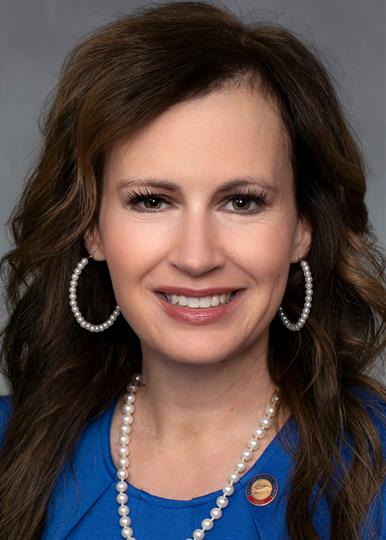
Rep. Tricia Cotham
Sponsored bills
Maddy summaryHB 161 restores local government authority to initiate down-zoning in Randolph County and its municipalities without requiring written consent from all affected property owners. The bill amends state law to allow counties or towns to change zoning to reduce development density, limit permitted land uses, or address nonconforming properties - without needing individual property owner approval. This directly affects property owners whose land might be subject to down-zoning changes under Randolph County or municipal zoning rules. The law applies retroactively to December 11, 2024, and takes effect upon passage.
Maddy summaryHB 168, the North Carolina CROWN Act, prohibits employment discrimination based on hair texture or protective hairstyles like braids, locks, or twists. It explicitly adds these characteristics to the definition of "race" under North Carolina's anti-discrimination law, covering all employers and job applicants. The bill also strengthens protections by banning retaliation against employees who report such discrimination. It applies to all public and private employers statewide upon becoming law.
Maddy summaryHB 164 requires parental or guardian consent before releasing autopsy records for children under 18. It makes all autopsy-related materials - including photos, videos, and reports - confidential, except when disclosure is needed for public health, research, legal compliance, or to address safety concerns. If parents withhold consent, a court may override this through a special proceeding after reviewing factors like public interest and privacy intrusion. The bill also allows public access to autopsy recordings (with supervision) unless parents request confidentiality under this law. It applies to all child deaths under 18 in North Carolina, affecting medical examiners, families, and entities seeking autopsy records.
Maddy summaryHB 31 would amend North Carolina's State Human Resources Act to make every statewide general election day a paid holiday for state employees. This change would add election days to the current list of paid holidays (which includes Martin Luther King Jr.'s Birthday and Veterans Day), while maintaining the limit of 13 paid holidays per year. The bill directly affects state workers, ensuring they receive paid time off on election days without reducing the total number of paid holidays. It does not change election dates or voting procedures, only the employment benefits for state employees on those days. The legislation is currently pending in committee review.
Maddy summaryHB 76, titled "Protect Access to Assisted Reproductive Technology," establishes legal protections for patients and healthcare providers regarding fertility treatments. The bill prohibits North Carolina or its local governments from banning, unreasonably limiting, or interfering with patients' access to assisted reproductive technology (ART) - including in vitro fertilization (IVF) - or healthcare providers' ability to offer evidence-based information or perform ART services. Key provisions define "assisted reproductive technology" broadly and clarify that the law does not override existing health and safety regulations for medical facilities. This directly affects individuals seeking fertility care and healthcare providers offering such services within North Carolina. The bill does not create new funding or services but ensures state-level barriers cannot restrict access to these medical treatments.
Maddy summaryHB 61 increases penalties for assaulting certain emergency personnel with a firearm in North Carolina. It reclassifies assaults against law enforcement officers, probation/parole officers, National Guard members, detention facility staff, emergency medical technicians, medical responders, firefighters, and law enforcement telecommunicators as a Class B1 felony (instead of Class D) when committed during their duties. The bill specifically targets firearm assaults, making them punishable by more severe prison sentences. This law takes effect December 1, 2025, for offenses occurring on or after that date.
Maddy summaryHB 60 increases Medicaid dental reimbursement rates from 35% to 46% of average dentist charges (2023 rates) to align with neighboring states. The bill allocates $52 million annually from North Carolina's General Fund, matched by $95 million in federal funds, to cover this rate increase starting July 1, 2025. It directly affects dentists who accept Medicaid patients and Medicaid beneficiaries seeking dental care, aiming to boost provider participation and prevent costly emergency treatments. The change addresses years of stagnant rates that reduced dental provider enrollment in Medicaid.
Maddy summaryHB 39 excludes motor vehicles owned by veterans with a 100% disability rating certified by the U.S. Department of Veterans Affairs from North Carolina property tax. It amends state tax law to add these vehicles as a designated exempt class under G.S. 105-275. The exclusion applies to vehicles registered on or after January 1, 2026. This policy directly affects eligible disabled veterans who own motor vehicles, reducing their property tax burden. The bill does not change eligibility criteria or tax rates for other vehicle classes.
Maddy summaryHB 55 appropriates $250,000 annually from the General Fund to the Department of Health and Human Services for the Autism Society of North Carolina's IGNITE Program. The funds will support activities and education groups designed to help young adults with autism develop independence and social skills during their transition to adulthood. This recurring funding applies to the 2025-2027 fiscal biennium and becomes effective July 1, 2025. The bill directly affects the Autism Society of North Carolina and the young adults with autism it serves through the IGNITE Program.