

Maddy summaryHB 121 provides local boards of education with additional flexibility in adopting their school calendars. It removes the current state-mandated earliest opening date for students (the Monday closest to August 26) and the latest closing date (the Friday closest to June 11). This change allows local boards to determine the specific opening and closing dates for public schools under their authority. The bill directly affects public schools and students in North Carolina and would apply starting with the 2025-2026 school year.
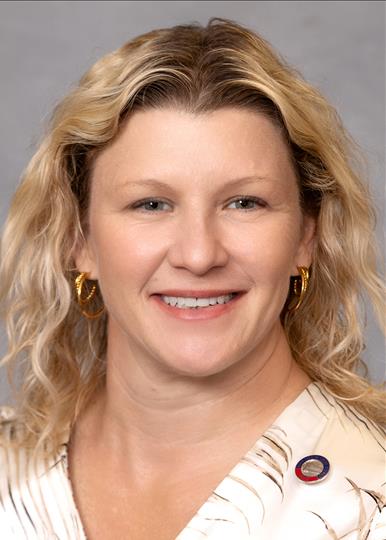
Rep. Laura Budd
Sponsored bills
Maddy summaryHouse Bill 520 aims to protect North Carolina citizens and businesses from deceptive telemarketing practices, particularly those involving misleading caller ID. The bill establishes that a telephone number is the property of the subscriber and prohibits telephone solicitors from misrepresenting the origin of a call or transmitting misleading caller identification information. It also prevents telephone carriers from knowingly providing subscriber numbers to entities that will violate these provisions. Individuals who receive calls in violation of the misleading caller ID rules can sue for civil damages, including an additional $10,000 fine for each knowing violation. Knowing violations of the caller ID provision are also classified as a Class H felony.
Maddy summaryJesse's Law (HB 896) mandates specific training for professional personnel involved in child custody proceedings in North Carolina. It requires judges, magistrates, judicial officers, and court personnel, including guardian ad litems and mediators, to complete trauma-informed and culturally appropriate training. This training focuses on the dynamics, signs, and impact of domestic violence and child abuse, including child sexual abuse. Professionals must complete an initial 20 hours of training and 15 hours every five years, based on evidence-based research. The bill aims to improve the ability of these individuals to recognize and respond to abuse and trauma when making child custody decisions.
Maddy summaryHouse Bill 283 establishes the Small Business Investment Grant (SBIG) Program within the One North Carolina Fund, designed to provide financial assistance to eligible small businesses looking to establish or expand facilities in the state. The bill allocates up to $10 million from the Fund to this new account. Through the SBIG Program, competitive grants are offered to businesses meeting specific criteria, such as having 250 or fewer employees or less than $5 million in annual revenue, investing $10-$30 million, and creating new jobs with competitive wages. Grants are capped at $500,000 annually per recipient, up to $2.5 million total, over a maximum of five years. Additionally, the bill renames the "One North Carolina Small Business Account" to the "Small Business Research and Technology Account," which continues to support federal SBIR/STTR grant incentive and matching programs.
Maddy summaryHB 953 establishes a Study Committee to examine the pay rates of assistant district attorneys, assistant public defenders, and private assigned counsel in North Carolina. This 12-member committee, comprising legislators, judicial representatives, and legal professionals, will research current pay structures, compare them to other states, and analyze factors affecting attorney recruitment and retention, including cost-of-living. The committee is tasked with studying various pay models and will report its findings and legislative recommendations to the General Assembly by March 2026 and March 2027.
Maddy summaryHB 94 allows disabled veterans and their unremarried surviving spouses to prequalify for the disabled veteran property tax homestead exclusion. This means individuals can apply to determine their eligibility for the tax benefit before they purchase a permanent residence. Applicants submit a prequalification form with their disability certification, and the county assessor must notify them of their eligibility within 30 days. The bill aims to help taxpayers and lenders account for this tax relief when making home purchase decisions. After prequalification, a separate application for the exclusion is still required once a permanent residence is acquired.
Maddy summaryThis bill creates a new State Infrastructure Bank Board in North Carolina to manage federal, state, and private funding for transportation, water, and sewer infrastructure projects. The Board will be composed of six state officials including the Secretaries of Commerce, Transportation, and Environmental Quality, along with the State Treasurer, Auditor, and Budget Officer, and will operate independently within the Department of Commerce. It authorizes the Board to provide loans and financial assistance to local governments and toll authorities for infrastructure development, requiring repayment with interest and security based on project revenues or other assets. The legislation also establishes specific accounting procedures for the bank's funds, outlines rules for loan approval, and transfers existing infrastructure bank funds to this new Board, with an effective date of July 1, 2025.
Maddy summaryHB 297, titled "Breast Cancer Prevention Imaging Parity," aims to ensure equal health insurance coverage for different types of breast cancer imaging. The bill mandates that health benefit plans apply the same cost-sharing requirements (like deductibles and copayments) for diagnostic and supplemental breast examinations, such as MRIs and ultrasounds, as they do for routine screening mammograms. This ensures individuals needing these additional medically necessary tests do not face higher out-of-pocket costs compared to standard screenings. It also maintains existing coverage for cervical cancer screenings and includes provisions for high-deductible health plans.
Maddy summaryHB 934, the "Artificial Intelligence Regulatory Reform Act," establishes new regulations related to artificial intelligence and deepfakes. The bill creates a new criminal offense for the unlawful creation or distribution of "deepfakes" - images or videos created to deceive - without consent, when done to cause harm or influence an election. It also grants civil liability immunity to developers of artificial intelligence products when a "learned professional" uses their product to provide services. Under this provision, the learned professional would be solely responsible for any damages to their client resulting from errors generated by the AI product. This legislation affects individuals who create or distribute deepfakes, as well as AI product developers, licensed professionals, and their clients.
Maddy summaryHB 866 requires courts to issue an "automatic order" when a claim for equitable distribution is filed by divorcing spouses. This order immediately prohibits both parties from selling, transferring, or hiding assets, incurring new unreasonable debts, or changing beneficiaries on insurance policies without mutual consent or a court order. It aims to preserve marital and children's assets and existing insurance coverage until a final division of property is determined. The Administrative Office of the Courts will develop a standard form for this automatic order.