

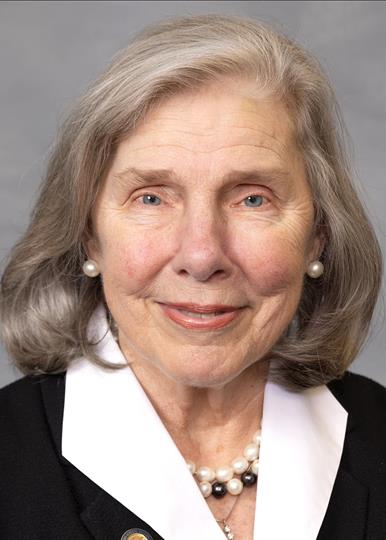
Photo of Becky Carney
D North Carolina House · District 102 On the 2026 ballot

Rep. Becky Carney

Compare
Total votes
9,177
all sessions
Attendance
92%
705 missed
Higher than 91% of chamber peers
With party
97%
of cast votes
Near the chamber average
Bipartisan score
2%
crosses aisle rarely
Near the chamber average
Sponsored
942
bills & resolutions
Higher than 91% of chamber peers
Committees
15
assignments
942 bills and resolutions

Sponsored bills

Total
942
Primary
58
Co-sponsor
884
This page
942
matching current filters
Co-sponsor HB 451
In committee · North Carolina House · Co-sponsor
Diabetes Education for Parents.

Maddy summaryHB 451 requires North Carolina public schools to provide parents and legal guardians with an annual information packet about type 1 and type 2 diabetes at the start of each school year. The packet must include descriptions of diabetes types, risk factors, warning signs, screening processes, and recommendations to consult healthcare providers for diagnosis or treatment planning. Schools must also ensure staff are trained to support students with diabetes through individualized care plans. The law, effective July 1, 2025, includes $10,000 in state funds to help schools develop implementation guidance. It directly affects all parents/guardians of students in North Carolina public schools.

In committee May 19, 2026 1 co-sponsor
Co-sponsor HB 1019
Passed · North Carolina House · Co-sponsor
Mike Clampitt 1st Responder Tax Fairness Act.

Maddy summaryThis bill, known as the Mike Clampitt 1st Responder Tax Fairness Act, aims to expand tax exemptions for volunteer fire departments and rescue squads in North Carolina. Specifically, it allows these independent groups, which have two or fewer paid employees and are already exempt from state income tax, to avoid paying a highway use tax on specific emergency vehicles like fire trucks, forest firefighting units, and other emergency service vehicles. The change applies to vehicles when a certificate of title is issued on or after July 1, 2026, ensuring these organizations can acquire necessary equipment without incurring this particular tax. By broadening the existing exemption, the legislation directly benefits volunteer responders who operate outside of local government units.

Passed May 18, 2026 1 co-sponsor
Co-sponsor HB 1131
died · North Carolina House · Co-sponsor
More Adult Protective Services Staff to Address Elder Abuse.

Maddy summaryThis bill proposes to allocate $2,178,000 in state funds to hire at least 25 additional Adult Protective Services workers across North Carolina counties starting in the 2026-2027 fiscal year. The money is intended specifically to cover salaries and benefits for new staff who will investigate reports of elder abuse, neglect, and exploitation, with distribution based on factors like case volume and the number of seniors in each area. The legislation explicitly prohibits using these funds to replace existing staff or for any purpose other than paying the new workers. Although the bill was withdrawn from committee in May 2026, its primary function is to increase state funding for local social services agencies to address a growing demand for elder abuse investigations.

died May 13, 2026 1 co-sponsor
Co-sponsor HB 1154
In committee · North Carolina House · Co-sponsor
Expand the FarmSHARE Food Hub Program.

Maddy summaryThis bill allocates $6 million in state funds to expand two food assistance programs in North Carolina for the 2026-2027 fiscal year. The first $4 million supports FarmSHARE, which provides grants to buy locally grown food and distribute it for free to food-insecure individuals and households. The second $2 million funds the Double Up Food Bucks Program, allowing people receiving nutrition assistance to use their benefits to purchase fresh fruits and vegetables at farmers markets and other local retailers. Both programs require the state department to submit annual reports detailing participation numbers, distribution metrics, and financial data to legislative oversight committees. The legislation takes effect on July 1, 2026.

In committee May 13, 2026 1 co-sponsor
Co-sponsor HB 1193
In committee · North Carolina House · Co-sponsor
Rep. Mike Clampitt Bone Marrow Donation Act.

Maddy summaryHB 1193, known as the Mike Clampitt Bone Marrow Donation Act, designates November as Marrow Donation Awareness Month in North Carolina. The bill requires the Department of Health and Human Services and the Department of Motor Vehicles to promote bone marrow donation by posting public service announcements online and displaying them at driver license offices. Additionally, the legislation appropriates $100,000 to fund a state-wide public awareness campaign for this initiative, with the law taking effect on July 1, 2026.

In committee May 12, 2026 1 co-sponsor
Primary HB 1166
In committee · North Carolina House · Lead sponsor
Reorganize and Fund Rare Disease Advisory Council.

Maddy summaryHB 1166 reorganizes the North Carolina Advisory Council on Rare Diseases by moving it from the University of North Carolina at Chapel Hill to the Department of Health and Human Services. The bill establishes a 19-member council with diverse representation, including physicians, researchers, patients, caregivers, and industry representatives, who will advise state officials on research, diagnosis, treatment, and education for rare diseases. It also provides funding for the council's operating expenses and sets rules for membership terms, meetings, and the selection of a chair.

In committee May 12, 2026 0 co-sponsors
Co-sponsor HB 1074
In committee · North Carolina House · Co-sponsor
Prescription Drug Expenses Tax Deduction.

Maddy summaryThis North Carolina bill allows taxpayers to deduct up to $5,000 of unreimbursed costs for prescribed medications and pharmacy fees from their state income tax. The deduction applies to expenses not covered by tax-advantaged accounts like Flexible Spending or Health Savings Accounts and prevents double-dipping if a federal deduction is already claimed for the same year. Effective for tax years starting on or after January 1, 2026, the measure directly affects individuals paying out-of-pocket for prescription drugs who itemize their state taxes.

In committee May 12, 2026 1 co-sponsor
Co-sponsor HB 433
Signed into law · North Carolina House · Co-sponsor
State Fiscal Recovery Fund/NC Pandemic Recovery Office Revisions.

Maddy summaryHouse Bill 433 allows licensed registered nurses (RNs) to serve as school nurses in North Carolina public schools. The bill prohibits the State Board of Education from requiring a four-year degree for school nurse employment. It specifies that RNs with at least two years of experience in a hospital or health clinic can work as school nurses without needing additional certifications or licenses. These qualified registered nurses will be paid under the certified school nurse pay scale.

Signed into law May 12, 2026 1 co-sponsor
Co-sponsor HB 390
Passed · North Carolina House · Co-sponsor
Medicaid Prepaid Health Plan Practices.

Maddy summaryHouse Bill 390, titled "Alleviate the Dangers of Surgical Smoke," establishes new standards for surgical smoke evacuation in North Carolina. This bill requires all licensed hospitals and ambulatory surgical facilities to adopt and implement policies mandating the use of a smoke evacuation/filtering system during surgical procedures likely to generate surgical smoke. A smoke evacuation/filtering system is defined as equipment that captures, filters, and eliminates surgical smoke at its origin. The Department of Health and Human Services is authorized to take adverse action against facilities that violate these new requirements. This act is scheduled to become effective on January 1, 2026.

Passed May 12, 2026 1 co-sponsor
Primary HB 1228
In committee · North Carolina House · Lead sponsor
Down-Zoning/Historic Districts-Mecklenburg County.

Maddy summaryThis bill clarifies that designating a historic district in Mecklenburg County does not count as "down-zoning" under state law. By making this distinction, the legislation ensures that local governments can create historic districts without needing the written consent of every property owner within the area, a requirement that currently applies to other types of down-zoning. The law also prohibits waiting periods that prevent applicants from resubmitting denied development requests. These changes apply retroactively to December 11, 2024, and affect only Mecklenburg County.

In committee May 7, 2026 0 co-sponsors
Showing 11 to 20 of 942 bills