

Maddy summaryHB 621 appropriates $1.5 million from North Carolina's General Fund for the 2025-2026 fiscal year to provide a directed grant to Safe Alliance, Inc. for its Umbrella Center in Charlotte. The funds will directly support the center's services for victims of domestic violence, sexual assault, child abuse, elder abuse, and human trafficking by enabling additional land acquisition and a deceleration lane. The bill requires the funds to be used specifically for expanding these victim services and infrastructure. It becomes effective July 1, 2025, and is currently pending in the House Appropriations Committee.
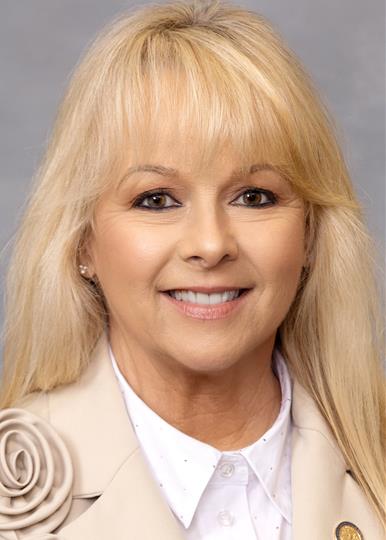
Rep. Julia Greenfield
Sponsored bills
Maddy summaryHB 608 amends North Carolina's computer trespass law to add automatic minimum damages for unauthorized copying of protected health information (like medical records) or government employee personnel files (including SSNs, medical history, and salary details). It establishes a $5,000 minimum penalty per violation for breaches involving either type of sensitive data, replacing the previous requirement to prove actual damages. The law directly affects healthcare providers, government employers, and anyone handling such data, ensuring victims can recover at least $5,000 per incident without proving financial loss. The bill takes effect July 1, 2025, and applies to offenses committed after that date.
Maddy summaryHB 599 provides a 7.5% across-the-board salary increase for all North Carolina Forest Service (NCFS) employees, directly affecting approximately 500+ state workers. The bill appropriates $2.6 million for the 2025-2026 fiscal year (effective July 1, 2025) and an additional $5.2 million for 2026-2027 (effective July 1, 2026) from the state general fund. These increases are funded through recurring annual appropriations, meaning the funding is guaranteed each year. The bill requires no new policy changes but allocates specific state budget resources to adjust employee compensation.
Maddy summaryHB 619, the Health Care Security Act, repeals a law that would have ended Medicaid expansion coverage in North Carolina if federal funding dropped below 90%. This change directly affects the state's Medicaid expansion population, ensuring their coverage remains secure regardless of federal funding fluctuations. The bill removes a specific statutory trigger (G.S. 108A-54.3C) that previously threatened automatic discontinuation of benefits. It does not create new programs or alter eligibility but prevents coverage loss due to federal funding changes. The act becomes effective upon enactment.
Maddy summaryHB 579, the NC House Public Access Act of 2025, allocates $91,000 (one-time) and $4,000 annually to install video and audio recording equipment in North Carolina House committee rooms and the chamber. This enables the public to view live legislative sessions online and access recorded sessions for 10 years via the internet. The bill requires committees to maintain audio minutes and written records if they opt not to record video, with advance notice to the public. It directly affects North Carolina residents seeking greater transparency in legislative proceedings.
Maddy summaryHB 589, "The Second Look Act," allows North Carolina courts to reduce prison sentences for certain inmates who have served significant time. It directly affects people sentenced under specific laws (like those for violent crimes) who have served at least 10 years in prison or 50% of their sentence if under 10 years. Courts must consider factors like the person’s age, rehabilitation progress, community safety, and victim input before reducing a sentence. The bill takes effect December 1, 2025, and applies to requests filed after that date.
Maddy summaryHB 583 allows North Carolina law enforcement agencies to destroy unclaimed firearms (after 180 days of storage) or firearms confiscated following certain convictions, directly affecting police departments managing large inventories. The bill requires agencies to publish a 180-day notice in a local newspaper before disposing of unclaimed firearms, with a 30-day claim period afterward. Firearms without legible identification numbers or deemed unsafe may be destroyed, while those with valid IDs can be sold to licensed dealers, with proceeds funding public schools. This addresses the storage burden of over 74,000 firearms held by police, reducing risks of theft or accidents from long-term storage. The law amends existing statutes to streamline disposal without requiring court orders for most cases.
Maddy summaryHB 611 requires North Carolina public schools to increase full-time assistant principal positions based on student enrollment, directly affecting all local school districts. It mandates funding to achieve specific student-to-assistant-principal ratios: 1:90 students in the 2025-2026 school year ($23.56 million) and 1:80 students starting in 2026-2027 ($57.57 million), with funds supplementing but not replacing existing budgets. The bill, effective July 2025, directs the Department of Public Instruction to allocate these funds through the school building administration allotment. This policy change aims to support school operations and develop future principals by expanding administrative staffing.
Maddy summaryHB 603 creates a $40 million revolving loan fund within North Carolina's Housing Finance Agency to cover preconstruction costs (like land surveys, permits, and site work) for workforce housing projects. It directly affects developers building housing affordable to households earning 60%-120% of local median income, requiring them to contribute 20%-35% in project equity. The fund reserves 80% of loans for high-priority counties (tier 1-2) and 20% for other counties, with each loan capped at $1 million. The program requires annual reporting on loan details and becomes effective July 1, 2025.
Maddy summaryHB 604 creates two grant programs to support economic development: the Rural Community Development Grant Program and the Downtown Revitalization Grant Program. Both programs allocate $40 million each from the state budget for 2025-2026, providing grants to local governments (counties and municipalities) to fund projects that improve community amenities like grocery stores, childcare, parks, or downtown infrastructure. Grants require a 1:1 local match, max $2 million per award, and must align with comprehensive plans for revitalization or community growth. The programs aim to reverse rural depopulation, attract business investment, and enhance downtown livability through targeted, competitive funding.