

Maddy summaryHB 738 restores specific definitions for wetland protections in North Carolina by repealing prior legislative changes and reinstating the 2010 North Carolina Wetland Assessment Manual definitions. It explicitly defines "isolated wetlands" to include those confirmed by the U.S. Army Corps of Engineers before June 2020 and wetlands classified as basins or bogs under the state's 2010 manual (excluding man-made stormwater features). The bill also clarifies that "wetlands" include waters meeting federal definitions (33 C.F.R. § 328.3 and 40 C.F.R. § 230.3) and the reinstated isolated wetland category. This directly affects developers, landowners, and local governments by determining which projects require wetland permits under state law. The policy change reinstates pre-2020 regulatory boundaries without creating new restrictions.
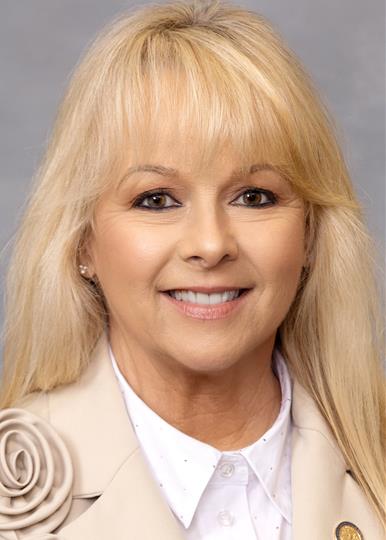
Rep. Julia Greenfield
Sponsored bills
Maddy summaryHB 742, the "North Carolina Healthy Schools Act of 2025," requires all public schools to adopt green cleaning policies using environmentally sensitive cleaning products when cost-effective. Public school units (including charter, regional, and local districts) must follow guidelines established by the Department of Public Instruction (DPI), which will create annual standards for eco-friendly products and distribute them to schools. Schools unable to adopt the policy due to increased costs must provide annual written notifications to DPI instead. The law applies starting the 2025-2026 school year, with nonpublic schools having 50+ students encouraged - but not required - to follow similar practices.
Maddy summaryHB 722 requires North Carolina courts to first assess a defendant's ability to pay before imposing criminal court costs and fees. It modifies rules for collecting specific costs like failure-to-appear fees ($200), crime lab services ($600 max), and digital forensics fees, requiring judges to determine affordability before assessment. The bill also mandates that courts provide 15 days' notice to government entities (like crime labs or prosecutors) before waiving or reducing fees, ensuring affected parties can object. This directly affects defendants convicted in criminal cases and government entities that collect or rely on these fees.
Maddy summaryHB 141, the Joe John Remembrance Act, removes an additional fee for special license plates designated for fire department and rescue squad members in North Carolina. The bill amends state law to formally eliminate the "additional fee" listed for these plates (which was already set to $0 in the current fee schedule), meaning eligible firefighters and rescue personnel will pay only the standard registration fee when obtaining or renewing these special plates. This change applies to plates issued or renewed on or after July 1, 2025. The bill does not create new benefits but codifies an existing fee structure for these specific special plates.
Maddy summaryHB 752 establishes two new funds to support transportation infrastructure: a $50 million Rail Fund for railroad upgrades, connections, and equipment, and an Airport Fund for airport capital improvements and flight incentives. The Rail Fund prioritizes projects that boost economic growth, with 60% of annual allocations reserved for matching federal grants and 30% for planning. The Airport Fund limits 80% of funds to capital projects (like runway upgrades), 17% to attract strategic flights, and up to 20% to safety improvements. Both funds require competitive allocation based on projected job creation and economic impact, with annual reports to lawmakers. This bill directly affects rail operators, airports, and industries relying on transportation networks across North Carolina.
Maddy summaryHB 625 creates a new parole pathway for North Carolina inmates serving life sentences without parole, allowing potential release after 20 years if they complete specific requirements. Inmates must earn a high school equivalent or college degree, complete vocational training, and work through correctional programs. Those who qualify would serve a 5-year parole term, with violations risking return to prison and a 5-year parole ban. The law applies retroactively to inmates already serving 20+ years by August 1, 2025, and becomes effective on that date.
Maddy summaryHB 630 restores a sales tax refund program for North Carolina's public school districts. It allows local school administrative units to receive annual refunds for sales tax paid on direct purchases of tangible property and services (like supplies or equipment), excluding items such as electricity, telecom, or food. The refund amount is capped at $13.3 million per year for all districts combined. The bill takes effect July 1, 2025, and adjusts state funding to reflect the restored refund program.
Maddy summaryHB 651 reduces parent cost-sharing for subsidized child care in North Carolina by lowering the copayment rate from 10% to 7% of gross family income. This change directly affects families enrolled in state-subsidized child care programs who pay a portion of their care costs. The bill appropriates $25 million annually from the General Fund for the 2025-2027 fiscal biennium to fund this reduction, effective July 1, 2025. It also specifies adjusted copayment rates for blended-rate and part-time care scenarios.
Maddy summaryHB 643 clarifies North Carolina's firearm storage law (G.S. 14-315.1) to explicitly include both loaded and unloaded firearms stored near ammunition. It directly affects households with minors by requiring owners to store firearms - whether loaded or unloaded - in a way that prevents unsupervised minor access, addressing a court case where an unloaded gun next to ammo led to a teen's accidental death. The bill amends the statute to specify that storage "in a condition that the firearm can be discharged" covers scenarios where firearms are accessible with ammunition, aligning with the law's intent to prevent harm. The change takes effect December 1, 2025, for offenses committed on or after that date.
Maddy summaryHB 646 is a constitutional amendment that would permanently ban all slavery and involuntary servitude in North Carolina, removing the current exception allowing forced labor as punishment for crimes. If approved by voters in the November 2026 election, the amendment would change the state constitution to state that slavery and involuntary servitude are "forever prohibited" without any exceptions. This change would directly affect incarcerated individuals by ending the legal basis for requiring prison labor as punishment. The amendment requires voter approval through a statewide referendum before taking effect.