

Maddy summaryHB 786, the "Working Families Act," reduces child care costs for low-income families by lowering parent copayments from 10% to 7% of income (effective 2025), reinstates a refundable state child tax credit with income-based payments (effective 2025), and phases up North Carolina’s minimum wage to $15/hour by 2030 with annual inflation adjustments. It also increases income limits for property tax relief, creates a homebuyers’ assistance program for public servants (like firefighters and EMTs) as first-time buyers, and establishes a paid family leave insurance program funded through an employer grant program. The bill directly affects working families, hourly workers, public-sector employees, and households using subsidized child care or property tax relief. Key mechanisms include phased wage increases, income-tiered tax credits, and targeted housing support, all designed to reduce financial strain on low-to-moderate-income households.
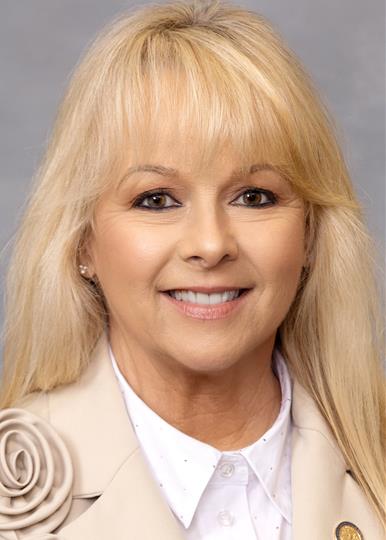
Rep. Julia Greenfield
Sponsored bills
Maddy summaryHB 760 requires tattoo artists in North Carolina to complete annual bloodborne pathogen training compliant with OSHA standards (29 C.F.R. § 1910.1030) to obtain or renew their state tattooing permits. This applies directly to all tattoo artists seeking permits from the Department of Health and Human Services, excluding licensed physicians and their supervised staff who perform tattooing as part of medical practice. The bill mandates that permit applications (both new and renewal) must include proof of this training, which the Department will verify before issuing or renewing permits. The requirement becomes effective October 1, 2025, for all permit applications received on or after that date.
Maddy summaryHB 774 ("School Breakfast for All") mandates that all North Carolina public schools (pre-K through 12) provide free breakfast to every student, eliminating costs for families. It establishes a Farm-to-Table Initiative requiring schools to partner with local farmers for fresh, locally sourced ingredients in breakfast meals. The bill allocates $39 million in recurring state funds for the 2025-2026 fiscal year to cover program costs, while requiring annual reports on participation rates, costs, and impacts on student health and academic performance. This directly affects all public school students, school districts, and North Carolina agricultural producers.
Maddy summaryHB 766 appropriates $1.87 million to fund expanded Teen Mental Health First Aid (tMHFA) training for North Carolina high school students in grades 9-12 (ages 14-18). The bill directly affects students by providing evidence-based training to help them recognize, understand, and respond to peers' mental health and substance use challenges. Key provisions include funding for the Department of Health and Human Services to scale up tMHFA programs statewide, building on a pilot that trained 1,519 teens and showed a 50% increase in teens' willingness to seek adult support. The training focuses on connecting peers to trusted adults during crises, addressing high rates of unmet mental health needs among teens (64% don’t seek help, per the bill’s rationale).
Maddy summaryHB 753 allows eligible North Carolina law enforcement officers aged 59.5 or older to continue receiving retirement benefits while remaining actively employed. Retired officers who separated from service for at least six months may return to duty and retain their retirement benefits. The bill requires employers to cover both employee and employer retirement contributions during this period and clarifies that beneficiaries remain eligible for death benefits under specific conditions. It directly affects current and retired state/local law enforcement officers meeting age and service criteria.
Maddy summaryHB 755 provides a sales tax exemption for qualifying North Carolina nonprofits, including hospitals, federally tax-exempt community organizations, volunteer fire departments, and university-affiliated groups. To qualify, nonprofits must obtain a state sales tax exemption number, with annual limits of $31.7 million for state tax and $13.3 million for local tax. The exemption covers most goods and services purchased for nonprofit activities but excludes electricity, telecommunications, alcohol, and certain other items. Real property contractors must provide documentation to retailers when buying materials for nonprofit projects to ensure proper tax treatment.
Maddy summaryHB 689 allows North Carolina high school graduates who attended NC public or nonpublic schools for four consecutive years before graduation to pay in-state tuition at state colleges and universities, provided they hold a NC driver's license, have a Social Security number, and enroll immediately after high school. It directly affects qualifying NC high school graduates who would otherwise pay out-of-state tuition rates. Key provisions include requiring proof of NC residency through driver's license and school attendance records each semester, with all application information kept confidential. The bill takes effect for the 2025-2026 academic year and does not change residency status for other purposes.
Maddy summaryHB 721 appropriates $500,000 from the General Fund to fund Muddy Sneakers, Inc.'s fifth-grade science programs, which provide hands-on field instruction aligned with state science standards. It also allocates $2.75 million to St. Gerard House to support its autism treatment programs. The funding is designated for the 2025-2026 fiscal year, with the Muddy Sneakers funds being recurring and the St. Gerard House grant nonrecurring. The bill directly affects fifth-grade students in North Carolina public schools and individuals receiving autism services through St. Gerard House.
Maddy summaryHB 733, the "Everybody Eats Act," would allow North Carolina to bypass federal rules that block food assistance benefits for people convicted of certain drug-related felony offenses (Class H or I). It requires individuals to complete substance abuse treatment or avoid new drug offenses for six months after release or conviction to qualify for benefits, and extends the period for renewing eligibility from less than a year to 12 months. The bill directly affects formerly incarcerated individuals with specific drug felony convictions who meet treatment or offense-free conditions. It makes no changes to federal law but adjusts North Carolina's program implementation for food assistance and temporary aid.
Maddy summaryHB 688 creates a dedicated annual appropriation of $100,000 from the state General Fund to the Parks and Recreation Trust Fund specifically for inclusive playground projects. It directly affects local governments, public schools, and public authorities (as defined in state law) seeking to build or adapt playgrounds to meet the needs of people with disabilities. The bill provides grants of up to $5,000 per project, requiring recipients to match each $5 in state funds with $1 in local funds. This funding operates separately from other Trust Fund allocations, ensuring dedicated resources for accessibility improvements without reducing existing funding for state parks or coastal access. The bill becomes effective July 1, 2025.