

Maddy summaryHouse Bill 520 aims to protect North Carolina citizens and businesses from deceptive telemarketing practices, particularly those involving misleading caller ID. The bill establishes that a telephone number is the property of the subscriber and prohibits telephone solicitors from misrepresenting the origin of a call or transmitting misleading caller identification information. It also prevents telephone carriers from knowingly providing subscriber numbers to entities that will violate these provisions. Individuals who receive calls in violation of the misleading caller ID rules can sue for civil damages, including an additional $10,000 fine for each knowing violation. Knowing violations of the caller ID provision are also classified as a Class H felony.
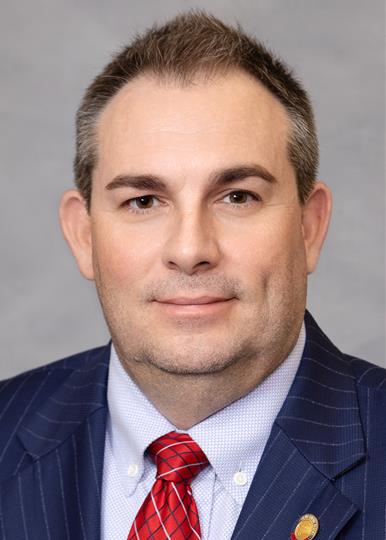
Rep. John Bell
Sponsored bills
Maddy summaryHouse Bill 283 establishes the Small Business Investment Grant (SBIG) Program within the One North Carolina Fund, designed to provide financial assistance to eligible small businesses looking to establish or expand facilities in the state. The bill allocates up to $10 million from the Fund to this new account. Through the SBIG Program, competitive grants are offered to businesses meeting specific criteria, such as having 250 or fewer employees or less than $5 million in annual revenue, investing $10-$30 million, and creating new jobs with competitive wages. Grants are capped at $500,000 annually per recipient, up to $2.5 million total, over a maximum of five years. Additionally, the bill renames the "One North Carolina Small Business Account" to the "Small Business Research and Technology Account," which continues to support federal SBIR/STTR grant incentive and matching programs.
Maddy summaryThis bill creates a new State Infrastructure Bank Board in North Carolina to manage federal, state, and private funding for transportation, water, and sewer infrastructure projects. The Board will be composed of six state officials including the Secretaries of Commerce, Transportation, and Environmental Quality, along with the State Treasurer, Auditor, and Budget Officer, and will operate independently within the Department of Commerce. It authorizes the Board to provide loans and financial assistance to local governments and toll authorities for infrastructure development, requiring repayment with interest and security based on project revenues or other assets. The legislation also establishes specific accounting procedures for the bank's funds, outlines rules for loan approval, and transfers existing infrastructure bank funds to this new Board, with an effective date of July 1, 2025.
Maddy summaryHJR 1007 is a joint resolution that sets the adjournment and reconvening dates for the 2025 General Assembly. It directs the House of Representatives and the Senate to adjourn on Thursday, April 17, 2025, and reconvene on Monday, April 28, 2025, at 12:00 noon.
Maddy summaryHB 985 increases the criminal penalty for assaulting a school employee or volunteer in North Carolina. It reclassifies such assaults from a Class A1 misdemeanor to a Class I felony when the incident occurs while the individual is performing their duties or as a result of their duties. The bill broadly defines "school employee or volunteer" to include staff, independent contractors, and adult volunteers involved in school activities. It also protects school personnel from civil or criminal liability for taking reasonable actions to end student fights. Finally, the bill updates supervisor reporting requirements for assaults and prohibits intimidating employees from reporting these incidents.
Maddy summaryHB 945 requires North Carolina public schools to specify whether incidents of sexual assault, harassment, or other violence occurred on school buses when submitting reports to the State Board of Education. It increases reporting frequency from annual to biannual (at the end of each school quarter) and establishes a Class I felony penalty for school employees or board members who fail to report such incidents. The bill directly affects local school boards, administrators, and staff who must comply with these reporting requirements. The State Board will compile and publish these reports, excluding sensitive minor identifiers, starting with the 2025-2026 school year. This law aims to improve tracking of violence on school buses through standardized reporting and enforcement.
Maddy summaryHB 895 creates North Carolina's Emergency Citizen Pilot Training Program, which establishes certification standards for volunteer pilots to assist in disaster response. The program, administered by the Division of Emergency Management, will train pilots on safe emergency operations (including flight paths, communication, and coordination with state/federal teams), require a $500 fee per participant, and maintain a registry of certified pilots who complete continuing training to maintain active status. It directly affects volunteer pilots who qualify, granting them certification to participate in disaster efforts and providing new leave rights from civilian jobs during emergencies. The bill also expands the definition of "emergency management worker" to include certified pilots and requires the program to be operational by January 1, 2027.
Maddy summaryHB 972 allocates $15.76 million in one-time state funds to Wayne County for specific public projects, directly affecting local schools, infrastructure, and community programs. Key provisions include $5 million for Rosewood Middle School capital improvements, $2 million for Dillard Middle School athletic track upgrades, $750,000 for Union Station revitalization, and smaller grants for water/sewer upgrades, the sheriff's training facility, and local organizations like Wayne County United Way. The bill also provides separate funding for court-related positions in Wayne County and neighboring areas, including a new public defender district. All funding is designated for specific, named projects with no broad policy changes.
Maddy summaryHB 780 appropriates $2 million to expand the All Pro Dad program in North Carolina through Family First, Inc., funding school-based chapters, father-child engagement events, and parenting resources. It also creates the "Responsible Fatherhood NC" program under the Department of Health and Human Services, requiring a nonprofit manager to run a statewide media campaign, provide father-focused resources, and promote existing fatherhood initiatives. The bill directs grants to community organizations addressing fathers' needs - such as employment, child support, and parenting skills - with priority given to areas facing high unemployment, incarceration, or single-parent households. The program directly supports North Carolina fathers and their children, aiming to improve family well-being through increased paternal involvement.
Maddy summaryHB 382 allows North Carolina's Wildlife Resources Commission to issue elk hunting permits through a raffle and an auction for the 2026 season. Residents can enter a $20-per-ticket raffle (max 30 tickets for $500), while a nonprofit focused on elk conservation must conduct an auction where the nonprofit keeps ≤25% of proceeds, with all other funds going to elk conservation. Permits are nontransferable, and the Commission must reserve 50% of raffle permits for North Carolina residents in future seasons. All revenue supplements existing elk management funding, and the Commission must report annually on program effectiveness to legislative committees.