

Allows for individuals to enroll in the national marrow donor program at the time of application for or renewal of a driver's license or non-driver identification card; directs the commissioner of motor vehicles to establish a process by which the department of motor vehicles shall refer driver's license and non-driver identification card applicants who consent to having their information shared with the national marrow donor program for the purposes of receiving information from the national marrow donor program about enrolling as a potential volunteer bone marrow or blood cell donor on the national registry operated by the national marrow donor program.
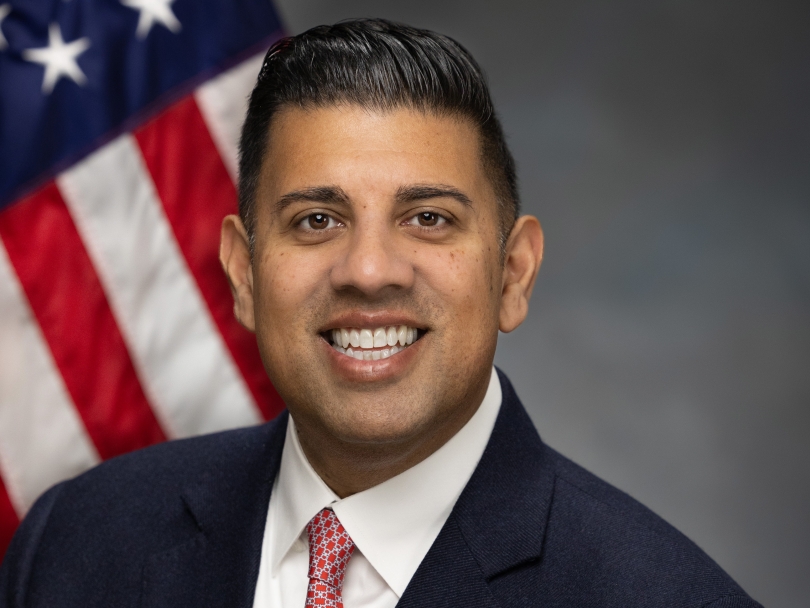
Sen. Jeremy Cooney
Sponsored bills
Maddy summaryThis bill requires that seat belts be available and used on charter buses for passengers aged 8 through 16. It defines a charter bus as a vehicle transporting a group of people for compensation under a single contract to a specific destination. The law allows parents or guardians to be issued fines for violations involving their minor children rather than the children themselves. Additionally, the bill includes legal defenses for drivers if the bus lacks seat belts or if the equipment is not visible or functional.
Aligns state and local procurement laws with federal law prohibiting the procurement of certain information and communications technology and electronic parts or products which are determined to pose a risk to state and national security.
Maddy summaryThis bill allows cannabis product distributors to choose between filing their tax returns quarterly or annually instead of being required to file every three months. Under the new rules, companies that opt for the annual schedule must submit their electronic tax filings by the 20th day of the month following December. The change applies specifically to distributors subject to the state's cannabis tax and aims to reduce the frequency of reporting for these businesses.
Maddy summaryThis Senate resolution asks Governor Kathy Hochul to officially recognize June 2024 as LGBTQIA+ Pride Month in New York State. The measure does not create new laws or change existing policies but serves as a formal acknowledgment of the community's history and achievements. It highlights key milestones such as the 55th anniversary of the Stonewall Riots and recent legal victories for LGBTQIA+ rights. The bill is purely ceremonial and affects only the state's official calendar and public recognition of the month.
Maddy summaryThis bill is a Senate resolution that formally recognizes former Senator Neil D. Breslin as the recipient of the President Pro Tempore and Senate Majority Leader's Legislative Legacy Award. The document highlights his extensive career in public service, including his 13 terms in the New York State Senate, his leadership roles in ethics and insurance committees, and his advocacy for vulnerable populations. It also lists specific laws he sponsored that improved access to healthcare and prescription drug coverage for New York residents. The resolution concludes by directing that a copy of the text be sent to Senator Breslin to honor his contributions to the state.
Relates to increasing the earnings limitation for positions of public service; increases the earnings limitation from $35,000 to $50,000 in 2024 and thereafter.
Maddy summaryThis bill modifies the composition of the state cannabis advisory board by adding a non-voting representative from the division of service-disabled veterans' business development. The change ensures that veterans' business development interests are included in the board's discussions without granting them voting power. The new member serves alongside existing representatives from various state departments, all of whom are appointed by the governor and legislative leaders to serve three-year terms. This adjustment aims to broaden the board's perspective on cannabis policy by incorporating the viewpoint of the veterans' community.
Maddy summaryThis bill updates New York's medical cannabis program by allowing patients and caregivers to use their state certifications to obtain medical cannabis in other states that have reciprocity agreements. It repeals the previous Controlled Substances Therapeutic Research Act and clarifies rules for how long patient certifications remain valid, including special provisions for terminally ill patients. The legislation also requires practitioners to complete specific training and establishes new limits on how much cannabis patients and caregivers may possess. Additionally, it streamlines the process for registered organizations to verify patient certifications and issue identification cards.
Provides that no incarcerated individual in any state or local prison, penitentiary, jail or reformatory shall be compelled or induced to provide labor against their will.