Establishes the water-based fire protection licensure act, setting forth licensure requirements for contractors engaged in the business of the layout, installing, repairing, inspecting, testing, or maintaining of water-based fire protection systems and components.
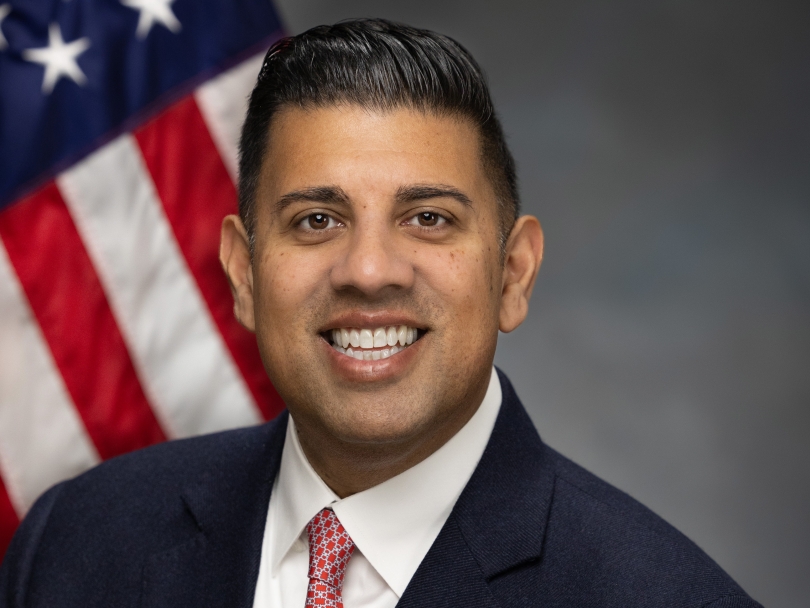
Sen. Jeremy Cooney
Sponsored bills
Establishes the teachers' fossil fuel divestment act; requires the New York state teachers' retirement system to divest the retirement system of any stocks, securities, equities, assets, or other obligations of corporations or companies included on an exclusion list of coal producers and oil and gas producers.
Relates to parole eligibility for certain incarcerated persons age fifty-five or older.
Excludes from state income tax up to $10,200 of unemployment compensation benefits earned by a resident of the state.
Relates to precluding inadmissible statements made by defendants because of false facts about evidence or because of a statement that undermines the reliability of the defendant's statement; requires data collection and analysis by the division of criminal justice services of recorded interrogations.
Prohibits the search, with or without a warrant, of geolocation and keyword data of a group of people who are under no individual suspicion of having committed a crime, but rather are defined by having been at a given location at a given time or searched particular words, phrases, character strings, or websites.
Relates to the dangers to the safety and health of the public caused by the sale, manufacturing, importing and marketing of firearms and whether such activity constitutes a public nuisance.
Relates to the amount of credit for cider, wine, and liquor produced in NYS under the alcoholic beverage production credit; provides parity with beer credit based on the taxes for cider, wine, and liquor.
Establishes the New York works progress program; provides for the repeal of such provisions upon the expiration thereof.
Eliminates court surcharges and fees and probation and parole surcharges and fees; eliminates the requirement that a parolee or releasee receiving a merit termination of sentence be financially able to comply with an order of restitution; eliminates the requirement that a person receiving a discharge of sentence be financially able to comply with an order of restitution and the payment of certain surcharges or fees (Part A); prohibits mandatory minimum fines for penal law and vehicle and traffic offenses (Part B); mandates that courts engage in an individualized assessment of a person's financial ability to pay a fine prior to imposing a fine (Part C); eliminates the availability of incarceration as a remedy for a failure to pay a fine, surcharge, or fee, lifts and vacates existing warrants issued solely on a person's failure to timely pay a fine, surcharge or fee and ends existing sentences of incarceration based on such failure (Part D); vacates existing unsatisfied civil judgments based on a person's failure to timely pay a surcharge, or fee (Part E); prohibits the collection of a fine, restitution or reparation from the funds of an incarcerated person; prohibits the payment of court fines, mandatory surcharges, certain fees, restitution, reparation or forfeitures from the earnings of prisoners (Part F); vacates existing unpaid surcharges, DNA databank fees, crime victim assistance fees, sexual offender registration fees, supplemental sex offender victim fees, or probation or parole supervision fees; repeals certain provisions of law relating to restrictions on remitting such fees (Part G).