

Directs DOCCS, in collaboration with OTDA, OMH and OASAS, to establish a 5-year reintegration pilot program for individuals being released from correctional facilities to provide supports and services to prepare for release, assist with reintegration into the community, and reduce recidivism.
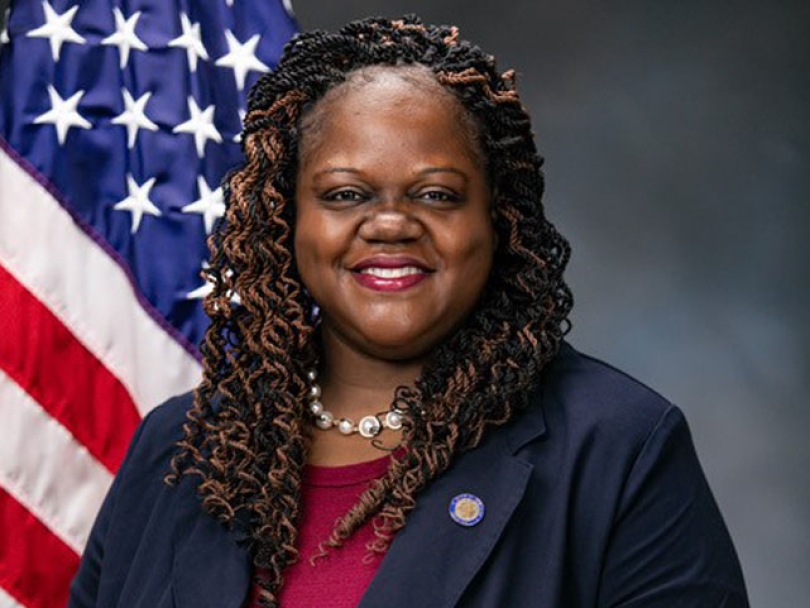
Sen. Lea Webb
Sponsored bills
Maddy summaryThis bill expands existing law to protect "regionally significant projects" when state agencies fund new building projects. It directly affects state agencies using public funds for construction, ensuring projects that attract visitors from outside the local area and create private sector jobs cannot be blocked under current rules. The key provision requires agencies to first confirm with local leaders that a project meets two criteria: an independent analysis shows community benefits outweigh costs, and the project will preserve or increase private jobs. This specifically preserves tourism-focused developments like visitor attractions that meet these standards, without changing the existing rule limiting funding for projects where retail sales facilities exceed one-third of costs.
Expands who may visit local correctional facilities to include persons and accompanying staff of the chief executive officer of a county, members of a county legislative body, mayor of the city of New York, New York city public advocate, New York city comptroller, and members of the New York city council.
Relates to the use of antipsychotic medications in nursing homes; imposes limits as to time and documentation; requires informed consent under certain circumstances.
Maddy summaryBill S 1733 creates a new program to help municipalities improve water quality in water bodies managed by lake associations within their jurisdiction. The Department of Environmental Conservation (DEC) will establish this program to identify water quality concerns, determine effective remediation strategies, and assist with best practices for maintaining water quality. Additionally, the DEC will create a grant program to provide financial assistance to municipalities for remedial actions. The department is authorized to develop rules and regulations to implement these provisions.
Maddy summaryThis bill (S 1796) requires health insurance plans to cover services provided by certified recovery peer advocates and specific inpatient treatment services for people with substance use disorders. It amends coverage rules to include these services when delivered through programs certified or authorized by the Office of Addiction Services and Supports. The key change ensures that peer advocacy support and inpatient care at certified facilities become part of standard insurance coverage, rather than requiring separate authorization. This directly affects individuals receiving substance use disorder treatment at approved facilities. The bill does not create new services but mandates their inclusion in existing coverage requirements.
Relates to preserving access to affordable drugs; provides that an agreement resolving or settling, on a final or interim basis, a patent infringement claim, in connection with the sale of a pharmaceutical product, shall be presumed to have anticompetitive effects if a nonreference drug filer receives anything of value from another company asserting patent infringement and if the nonreference drug filer agrees to limit or forego research, development, manufacturing, marketing, or sales of the nonreference drug filer's product for any period of time.
Enacts the "NY broadband resiliency, public safety and quality act" to provide for oversight of the resiliency, public safety and quality of broadband and voice over internet protocol service.
Requires contracts for insurance and medical assistance to provide value-based care for maternity coverage; defines value-based care as an arrangement that financially rewards certain positive outcomes and financially penalizes certain negative outcomes.
Designates certain employees of public utilities, municipal utilities, electric corporations, gas corporations, water corporations, steam corporations, telecommunications corporations, and cable television companies as first responders during a declared state disaster emergency.