

Maddy summaryThis is a ceremonial resolution (J 1607) requesting Governor Hochul to issue a proclamation designating March 2026 as American Red Cross Month in New York State. It does not create new laws or affect any specific group; it is a symbolic gesture to honor the Red Cross's humanitarian work. The resolution cites the organization's 145-year history, disaster response, blood services, military support, and community training programs. As a procedural resolution, it has no binding effect beyond the Governor's discretionary proclamation.
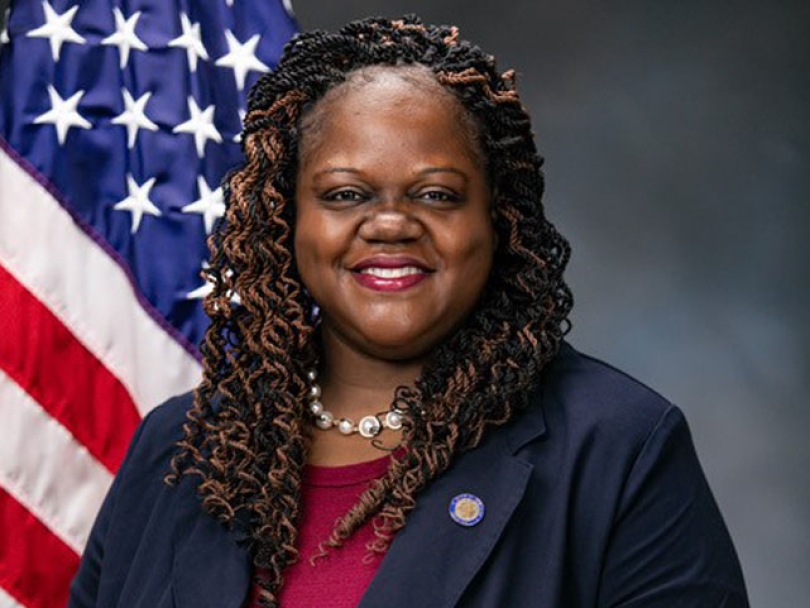
Sen. Lea Webb
Sponsored bills
Maddy summaryThis is a symbolic Senate Resolution (not binding legislation) commending Open Space Institute and Parks & Trails New York for hosting their 20th Annual Park & Public Lands Advocacy Day on February 25, 2026. It honors these organizations for their work protecting over 2.5 million acres of land and promoting 2,000+ miles of trails across New York. The resolution has no policy impact - it simply expresses the legislature's appreciation through a formal commendation. It directly affects no individuals or entities beyond the named organizations receiving the recognition.
Maddy summaryThis is a ceremonial Senate resolution (J 1620) adopted by the New York State Senate to honor the late Denis Michael Troy, a longtime Orangetown Councilman and Rockland County Legislator. It expresses the Senate's "profound regret" over his death and commemorates his 30+ years of community service, including his work on the Orangetown Council, advocacy for local services, and roles in organizations like the Ancient Order of Hibernians. The resolution has no policy impact - it is purely a formal expression of condolence to his family and community. It was adopted by the Senate on February 25, 2026.
Maddy summaryThis bill requires New York's health department to create and operate a free mobile application for individuals eligible for Medicaid who are pregnant, postpartum, or planning pregnancy. The app must provide New York-specific resources, links to state programs, and support in multiple languages, with strict privacy protections prohibiting personal data sharing. Developers must report anonymized usage data (like user numbers and engagement) to state lawmakers. The app will be available across mobile platforms and must comply with state health resource standards.
Relates to the general civil penalty of the environmental conservation law; provides that in addition to the fines, such person may be enjoined from continuing such violation and any permit or certificate issued to such person may be revoked or suspended, or a pending renewal application may be denied.
Clarifies the standard for intentional discrimination or retaliation claims by requiring a person or persons prove that an unlawful motivation was a motivating factor and not "the sole motivating factor" or a "but-for cause" of the challenged treatment.
Establishes the carbon farming certification committee for the purpose of developing a certification framework, determining qualified carbon removal practices eligible for the carbon farming tax credit, and promulgating certification standards for qualified carbon removal practices; provides for the development of educational materials to encourage carbon farming by promoting farming practices which reduce, sequester and mitigate greenhouse gas emissions on land used in support of a farm operation; establishes carbon farming tax credits.
Maddy summaryThis bill increases penalties for failing to fix building code violations, particularly for immediate safety risks like fire hazards. Owners, contractors, architects, and others who ignore repair orders for non-imminent issues face up to $1,000 daily fines for the first 180 days, then $25-$1,000 per day. For imminent threats (e.g., conditions endangering occupants), first violations carry $1,000-$5,000 daily fines, escalating to $10,000 per day for a third offense. The law applies to anyone involved in construction, maintenance, or fire safety who knowingly violates the uniform fire prevention and building code.
Establishes the safe water and infrastructure action program for the purpose of making payments toward the replacement and rehabilitation of certain existing local drinking water, storm water and sanitary sewer systems; applies to any county, city, town, village or public authority drinking water system, storm water system or sanitary sewer system within the state that is not under the maintenance and/or operational jurisdiction of a private entity.
Maddy summaryThis bill establishes a new Office of Urban Agriculture within the state Department of Agriculture. It defines urban agriculture to include community gardens, urban farms, farmers markets, and community-supported agriculture programs. The office will identify vacant public lands in urban areas, coordinate with municipalities to facilitate community access to these spaces (often at low or no cost), and develop standardized application processes for groups seeking to use them. This directly affects urban residents, community groups, and local governments by creating a dedicated state resource to expand food production opportunities in cities. The bill is currently pending in the Assembly after passing the Senate.