Increases the income eligibility threshold for the tuition assistance program.
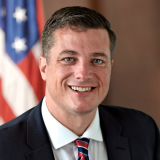
Sen. Jake Ashby
Sponsored bills
Relates to regulation of the billing of facility fees; requires notice prior to billing facility fees not covered by a patient's insurance; defines facility fees as those charged by a hospital, facility or provider designed to compensate for operational costs separate from professional fees.
Relates to the use of accrued vacation time toward student loan payments; defines terms; requires the president of the civil service commission to promulgate necessary rules and regulations.
Requires the provision of opioid overdose educational materials and two doses of an opioid antagonist to certain patients being discharged or conditionally released from an inpatient facility and to certain previously incarcerated individuals upon discharge from incarceration; requires the provision of two doses of opioid antagonists to certain patients upon discharge from a hospital.
Relates to opioid overdose prevention in college housing; requires training of resident assistants in the administration of opioid antagonists.
Requires a multi-agency study of the issues impacting the continuum of caregiving in the state; requires the submission of a report of the findings, conclusions and recommendations from such study to the governor and the legislature.
Requires a parent, guardian or person in a parental relation to a child under the age of eighteen to be physically present when any immunization is administered to such child.
Requires a caller making a report of suspected child abuse or maltreatment to the central registry to leave their name and contact information; prohibits the office of children and family services from releasing information identifying a person who made such a report.
Authorizes the participation by free association libraries in the New York state and local employees' retirement system.
Relates to youth programs sponsored by fire departments; provides that participants may respond to an emergency or hazardous activity, but shall remain in an appropriate and safe designated area that has been established by the chief or officer in charge; provides such participants cannot respond to an emergency on a vehicle using lights and/or sirens; provides such participants may not enter a burning structure; protects volunteer fire departments and fire companies from certain criminal and civil liability potentially arising from the operation of a youth program.