

Maddy summaryThis bill (S 8861) designates a specific bridge on State Route 2 in Petersburg, Rensselaer County (bridge #1000250, crossing State Route 22) as "Robert Bornt Bridge" for ceremonial purposes. It requires the state transportation commissioner to install and maintain signs stating "Bridge Dedicated to Robert Bornt" but explicitly states this does not change the bridge's official name. The bill is purely commemorative with no substantive policy changes or impacts on transportation operations. It takes effect immediately upon enactment.

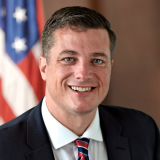
Sen. Jake Ashby
Sponsored bills
Directs the division of state police to establish and administer a purple alert program to assist in the location and safe recovery of missing vulnerable persons.
Requires public schools to follow seizure action plans developed by health care providers of students diagnosed with a seizure disorder; requires schools to provide seizure awareness training to certain employees on the recognition of signs and symptoms of a seizure and the appropriate steps to be taken to respond to such symptoms.
Maddy summaryThis bill is a Senate resolution that formally commends Aimal Zafari, a New York resident and former Afghan cultural advisor, for receiving the New York State Senate Liberty Medal. The document highlights his service as a translator who supported U.S. military missions in Afghanistan, noting his receipt of multiple awards and his subsequent severe injuries sustained while on duty. It also acknowledges his recent naturalization as a U.S. citizen and expresses gratitude for his contributions to national security and stability. The resolution serves as an official recognition of his heroism and sacrifice rather than establishing new laws or policies.
Maddy summaryThis bill prohibits businesses from displaying advertisements for kratom products within 1,500 feet of schools, or 500 feet in New York City. It applies to any business entity that places, maintains, or causes advertisements to appear on storefronts, exterior windows, or doors used for public entry. The law defines advertisements broadly to include words, pictures, symbols, or any visual content promoting kratom products. Violations could result in civil penalties of up to $500 for a first offense and $1,000 for subsequent violations. The bill would take effect 90 days after becoming law.
Prohibits the sale of products that contain 7-hydroxymitragynine at a level that exceeds 2% of total alkaloids or one milligram per serving; establishes fines for the sale of such products.
Allows a notice of dense breast tissue to be considered a determination of medical necessity for purposes of coverage of breast ultrasounds as recommended by a provider of mammography services.
Maddy summaryThis bill amends the official description of the state's arms and flag by removing the phrase "E pluribus unum" from the motto. The change specifically affects the wording on the state flag and the state arms as legally defined, replacing the existing motto text. The bill does not alter any policy, rights, or obligations for residents or government operations. It is a purely descriptive procedural change to the state's official symbols, with no impact on existing flags or arms already in use. The bill takes effect immediately upon passage.
Maddy summaryThis bill (S 6829) honors CW2 John M. Grassia III by designating a specific bridge on I-88 in Rotterdam (where Becker Road crosses the interstate) with a ceremonial sign. It does not change the bridge's official name or affect transportation operations. The bill requires the state transportation commissioner to install and maintain a sign reading "Bridge Dedicated to CW2 John M. Grassia III" while clarifying the dedication is purely symbolic. It has no policy impact beyond this commemorative gesture, as stated in Section 2. The bill is procedural and non-substantive.
Maddy summaryThis bill authorizes collaborative programs between hospitals, home care agencies, physicians, and emergency medical services (EMS) to provide community paramedicine services. It specifically allows these partnerships to develop plans for preventive care in community settings, targeting at-risk individuals to avoid unnecessary emergency room visits, transports, and hospital admissions - especially for those with chronic conditions, behavioral health needs, or disabilities. The law establishes a legal framework for these collaborations under New York's public health system, enabling state funding support like grants or rate adjustments for participating entities. It directly affects healthcare providers, EMS organizations, and vulnerable patient populations by expanding coordinated care models beyond traditional emergency response.