

Relates to the liability of landowners who permit recreational uses of their land; establishes landowners owe no duty to keep premises safe for entry, passage over premises or other recreational uses or to give warning of any hazardous condition or use of or structure or activity on such premises to persons entering for such purposes.
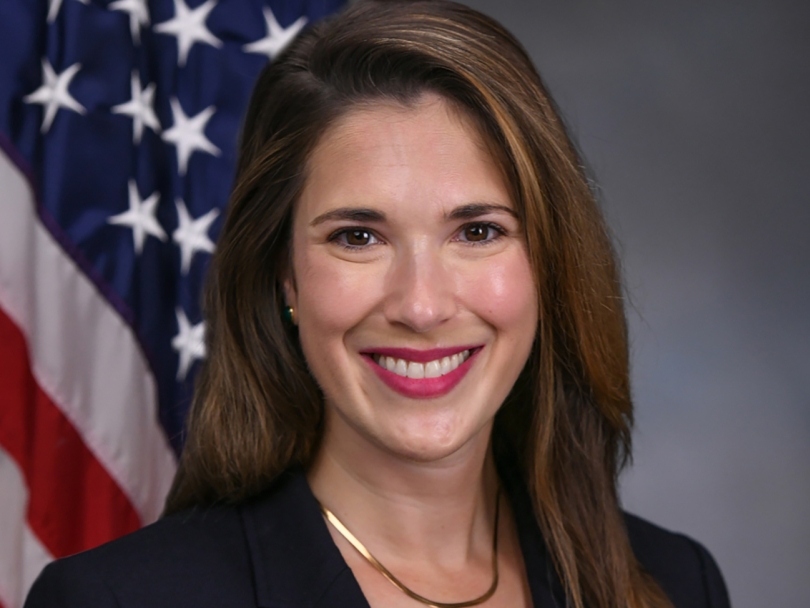
Sen. Michelle Hinchey
Sponsored bills
Maddy summaryThis bill modifies New York's tax credit for renovating historic barns, allowing taxpayers a 25% credit on eligible renovation costs for barns used for agriculture. It restricts the credit for barns previously used for residential purposes, those converted to residential use, or those with altered historic appearance. If the credit exceeds tax liability and income is under $60,000, the excess is refunded without interest; otherwise, it carries forward to future tax years. The policy directly affects New York property owners renovating qualifying agricultural barns.
Prohibits the diminution of health insurance benefits of public employee retirees and their dependents or reducing the employer's contributions for such insurance; defines employers to include the state, municipalities, school districts, and public authorities and commissions.
Establishes the New York workforce stabilization act; requires certain businesses to conduct artificial intelligence impact assessments on the application and use of such artificial intelligence and to submit such impact assessments to the department of labor prior to the implementation of the artificial intelligence; establishes a surcharge on certain corporations that use artificial intelligence or data mining or have greater than a threshold number of employees displaced by artificial intelligence of a rate of 2% of the corporation's business income base; defines data mining.
Maddy summaryBill S 1189 establishes new licensure requirements for entities providing fiscal intermediary services for personal assistance programs. Beginning April 1, 2027, these fiscal intermediaries must obtain a license from the commissioner, a process that includes an application fee and an assessment of their character, competence, and compliance. The bill also broadens the definition of fiscal intermediaries, modifies their annual reporting obligations, and creates a confidential state registry for personal assistants that these intermediaries must maintain. This legislation directly affects fiscal intermediaries, personal assistants, and consumers utilizing these services.
Permits a school food authority to attribute moneys spent on purchases of food products from New York state farmers, growers, producers or processors made for its school breakfast program to the thirty percent of costs for school breakfast, snack and lunch service programs.
Maddy summaryThis bill establishes a new progressive income tax structure for high earners in New York, replacing current tax brackets. It directly affects New York residents with significant taxable income, particularly those earning above $17,000 annually for single filers (with higher thresholds for married couples). The key mechanism uses tiered tax rates that increase as income rises - starting at 4% for lower incomes and reaching up to 24% for earnings over $20 million. The bill amends existing tax law to implement these rates, which apply to taxable years beginning in 2023 through 2027 and will be adjusted for 2028 onward.
Enacts the good jobs guarantee program to provide workforce training and opportunities for employment for residents of New York state to secure high paying jobs through the acquisition of job skills.
Establishes new targets for offshore wind electricity generation; includes the requirements that there is at least 15 gigawatts of offshore wind electricity generation by 2040, at least 18 gigawatts of offshore wind electricity generation by 2045 and at least 20 gigawatts of offshore wind electricity generation by 2050.
Requires renewable energy data resources provided by NYSERDA to include mapping of certain capital projects with a value of greater than one million dollars for purposes of providing public information on the viability of siting of solar energy arrays, major renewable energy facilities, or major electric transmission facilities.