

Maddy summaryThis bill (S 4965) requires the New York State civil service department to waive all application fees for veterans taking civil service examinations for government jobs. It directly affects all veterans applying for state or municipal civil service positions, including those who served in the U.S. armed forces, National Guard, or New York Guard. The key provision mandates that the state must eliminate these fees for veterans, as defined by law (including honorably discharged service members and certain LGBT veterans), regardless of their current employment status. This policy change removes a financial barrier for veterans seeking government employment through civil service exams.
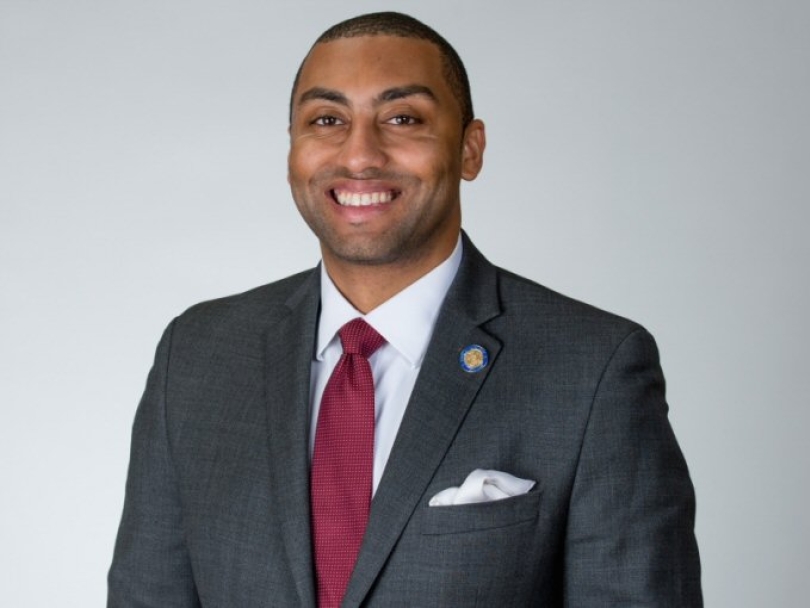
Sen. Jamaal Bailey
Sponsored bills
Maddy summaryThis bill, known as "the prison wage act," mandates compensation for incarcerated individuals performing labor in state and local correctional facilities. It requires that these individuals be paid at least one-half of the state's minimum wage for any work performed or for which a wage would typically be due. This compensation applies to various types of labor, including general facility work, tasks for nonprofit organizations, and participation in work release programs. Additionally, hourly incentive allowances for educational and training programs must also meet this minimum wage standard.
Maddy summaryBill S 1189 establishes new licensure requirements for entities providing fiscal intermediary services for personal assistance programs. Beginning April 1, 2027, these fiscal intermediaries must obtain a license from the commissioner, a process that includes an application fee and an assessment of their character, competence, and compliance. The bill also broadens the definition of fiscal intermediaries, modifies their annual reporting obligations, and creates a confidential state registry for personal assistants that these intermediaries must maintain. This legislation directly affects fiscal intermediaries, personal assistants, and consumers utilizing these services.
Permits a school food authority to attribute moneys spent on purchases of food products from New York state farmers, growers, producers or processors made for its school breakfast program to the thirty percent of costs for school breakfast, snack and lunch service programs.
Allows a U.S. citizen, who is seventeen years of age, to vote in a primary election, including presidential, if such citizen will turn eighteen by the date of the corresponding general election.
Maddy summaryThis bill establishes new regulations for on-demand pay providers in New York, which allow workers to access earned wages before their regular payday. It specifically distinguishes between "employer-integrated" providers (those working directly with employers) and "non-verified" providers (those not tied to employers). Employer-integrated providers must register with the superintendent, disclose fees clearly, and follow strict rules about user rights and data privacy, but are not treated as lenders. Non-verified providers, however, are regulated as lenders under loan laws and cannot charge more than 10% annual interest on advances. The law applies directly to workers who use these services and the companies offering them in New York.
Maddy summaryThis bill designates a specific segment of State Route 22 in Mount Vernon (between Lorraine Avenue and Lincoln Avenue) as the "Dwight 'Heavy D' Myers Way" for commemorative purposes. It is purely ceremonial, with no change to the official highway name, and requires only standard signage installation per transportation department guidelines. The bill does not alter transportation policies or affect any regulations. It directly honors Dwight "Heavy D" Myers, a local figure, without implementing new laws or impacting commerce.
Preserves the ability to appeal a violation of a defendant's right to make a statement personally at sentencing notwithstanding a defendant signed an otherwise valid waiver of appeal.
Maddy summaryThis bill raises the monetary thresholds that define certain property damage and fraud offenses as felonies. It increases the amount of property damage triggering criminal mischief (from $250 to $1,000) and raises the threshold for second-degree criminal mischief (from $1,500 to $3,000). For securities fraud, it raises the value requiring a class E felony charge from $250 to $1,000. These changes directly affect individuals or entities whose actions exceed these new dollar amounts, reclassifying lower-value offenses as misdemeanors instead of felonies.
Enacts the "faith-based affordable housing act" for development on residential land; defines terms; provides that each village, town, and city shall allow the construction and occupation of residential buildings on any covered site up to the specified densities; provides that all residential buildings constructed pursuant to this section in a town, village, or city with fewer than one million inhabitants shall set aside twenty percent of the residential floor area for households earning an average of eighty percent of area median income; outlines the densities for New York city; makes related provisions.