

Maddy summaryThis Senate Resolution honors Senator Michael N. Gianaris as he receives the President Pro Tempore and Senate Majority Leader's Legislative Legacy Award. The bill formally recognizes his decades of public service, highlighting his legislative achievements in areas such as tenant rights, criminal justice reform, and election access. It expresses the Senate's gratitude for his contributions and directs that a copy of the resolution be sent to him as a token of appreciation.
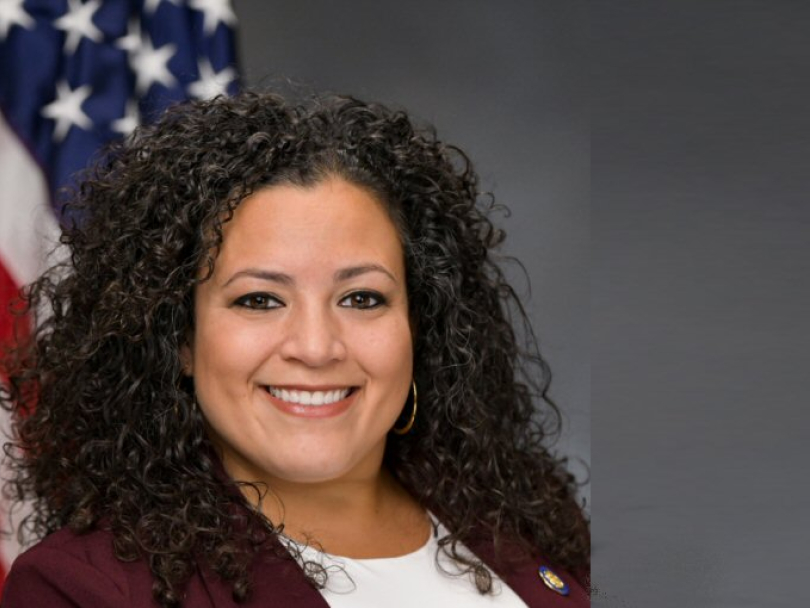
Sen. Nathalia Fernández
Sponsored bills
Requires insurers to cover the substitution of a brand name prescription drug when the federal food and drug administration has declared that there is a supply issue with a generic drug.
Maddy summaryThis bill prohibits public and nonpublic schools, including charter schools, from purchasing or using biometric identifying technology like facial recognition for most purposes. The law allows exceptions for fingerprinting prospective employees to comply with education laws, logging into digital devices for academic use, and identifying employees who have provided written consent or whose unions have consented. The bill requires the director of the state education department to prepare a detailed report analyzing privacy risks, civil rights impacts, security effectiveness, data retention, breach risks, costs, and other factors before any such technology can be authorized for school use. This report must be made public and shared with state leaders while seeking feedback from teachers, parents, safety experts, and privacy advocates through public hearings.
Relates to mandatory employer disclosures regarding employee compensation and benefits, including any non-salary or non-wage compensation and benefits.
Requires the display of certain labels and warnings on gas stoves sold, displayed for sale, or offered for sale at retail to a consumer in this state; authorizes the department of state to adopt regulations regarding the placement and format of such labels; provides for penalties; authorizes the attorney general to enforce such provisions.
Authorizes the commissioner of health to establish standards for approval of onsite overdose response services; requires nightlife establishments, sporting or event centers, theaters, concert venues, and amusement parks to maintain a supply of opioid antagonists; provides that emergency use of opioid antagonist is covered by good Samaritan law.
Relates to establishing a voluntary waiver of the right to purchase firearms, rifles or shotguns; requires the division of state police to maintain statewide records of individuals who have waived the right to purchase firearms, rifles, or shotguns and any revocations of such waivers.
Requires the commissioner to establish Asian American, Native Hawaiian, and Pacific Islander history and civic impact curriculum or instructions for school districts.
Maddy summaryThis bill requires healthcare providers found guilty of serious misconduct - such as sexual abuse, drug abuse harming patients, or inappropriate prescribing resulting in harm - to provide written disclosure to current and new patients before treatment. The disclosure must detail their disciplinary status, penalties, practice restrictions, and resources for further information. Providers must obtain a signed copy of this disclosure before the first patient visit or treatment. Exceptions apply in emergencies or if a patient is incapacitated and their representative isn’t available. The law applies to probationary orders issued on or after January 1, 2026.
Maddy summaryThis bill establishes the "Sickle Cell Treatment Act" to improve care for sickle cell disease patients in New York. It designates five "centers for excellence" (with two north of Putnam/Orange counties) and ten outpatient treatment centers based on patient populations, providing each center with annual funding ($500,000 for excellence centers, $250,000 for outpatient centers) to support specialized care, research, and equipment. The bill also modifies opioid prescribing rules to exempt sickle cell disease patients from a three-month opioid limit, ensuring they can receive necessary pain management without restrictive barriers. These changes directly affect hospitals designated as centers, sickle cell patients requiring specialized care, and healthcare providers managing chronic pain.