

Imposes a moratorium on the issuance of permits for new data centers; requires the public service commission to issue an order or orders to minimize the impact of new data centers on electricity and gas rates for residential, commercial, and industrial users; clarifies that certain provisions are applicable to the Long Island power authority.
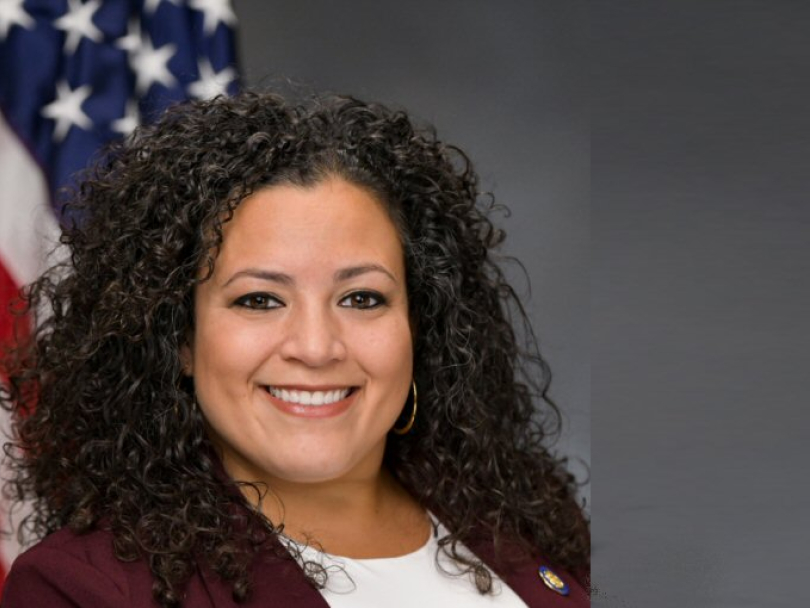
Sen. Nathalia Fernández
Sponsored bills
Maddy summaryThis bill requires employers of domestic workers to provide paid sick leave, directly affecting household workers like nannies, caregivers, and housekeepers. It mandates that employers with 5-99 workers (including those hiring domestic workers) provide 40 hours of paid sick leave annually per employee, while larger employers (100+ workers) must offer 56 hours. Small employers (4 or fewer workers) must provide 40 hours of *unpaid* sick leave unless they earned over $1 million in the previous year, in which case it becomes paid. The law applies to all domestic workers as defined by existing labor law, with no exemption for household employers.
Enacts into law components of legislation that relate to live event ticket sales; establishes an annual professional reseller renewal fee; requires professional ticket resellers to provide their New York state ticket reseller license number as a condition of utilizing an online resale marketplace to resell tickets (Part A); provides criteria for when a purchaser may obtain a full refund of the amount paid for a ticket (Part B); relates to resale requirements for tickets; requires that if a licensee or other ticket reseller doesn't have possession of the ticket, then they shall have a written contract to obtain the offered ticket at a certain price from a person or entity in possession of the ticket or from a person or entity who has a contractual right to obtain such ticket, and tickets to the event have been placed on sale by the venue or entity hosting the event or its authorized agent before the licensee or reseller can advertise the sale of the tickets (Part C); relates to unlawful charges in connection with tickets; permits reasonable charges for costs actually rendered or otherwise in connection to customer support, technological and software infrastructure, and actual operational costs for sales away from the box office; defines terms (Part D); relates to the availability of tickets for sale to the general public; defines a term (Part E); relates to paperless ticketing systems options (Part F); extends the effectiveness of certain provisions relating to tickets to places of entertainment (Part G).
Maddy summaryS 363, the "New York junk fee prevention act," requires businesses selling goods or services in New York to clearly disclose the total price - including all mandatory fees - before a purchase. It defines "mandatory fees" as unexpected charges consumers can't reasonably avoid (like default add-ons), excluding taxes, delivery costs based on consumer choice, or certain financial fees. Businesses must display total prices prominently in ads and at checkout, avoiding misleading fine print. Violations can trigger penalties up to $1,000 per intentional violation, with enforcement by the attorney general or affected consumers. The law exempts businesses already complying with federal broadband or cable disclosure rules, and certain financial service disclosures.
Requires that an assessment of the role that permit approvals for air contamination sources plays in contributing to stationary and mobile sources of air pollution be included in an addendum to the strategies for the development of community emission reduction programs; requires disclosure of last mile warehouse permits.
Relates to the establishment of emergency management release plans to be developed for use in correctional facilities in the event of a state disaster emergency declared pursuant to executive order; establishes an advisory board to provide recommendations for the development of such plans; establishes criteria to be used to determine eligibility for emergency release of incarcerated individuals.
Maddy summaryS 1209, the "Marvin Mayfield Act," eliminates mandatory minimum sentences for felony convictions by amending sentencing laws. It requires courts to issue written sentencing decisions explaining individualized findings, rather than applying fixed minimum terms. The bill also expands pre-sentence reports to include analysis of incarceration costs and increases access to these reports for defendants and their attorneys before sentencing. This directly affects individuals convicted of felonies in New York State, shifting sentencing focus toward rehabilitation and community safety over rigid minimum terms.
Enacts the manufacturer disclosure and transparency act requiring prescription drug manufacturers to notify the attorney general of arrangements between pharmaceutical manufacturers resulting in the delay of the introduction of generic medications.
Establishes through the department of health a drug checking services program to allow individuals to bring drugs or controlled substances and have them tested for contaminants, toxic substances, or hazardous compounds; requires the department to establish public health surveillance of the unregulated drug supply; provides exemptions for participants in the drug checking program from certain controlled substance offenses.
Establishes a waiver program allowing a domestic violence residential program to apply to the office of children and family services for a waiver enabling a victim of domestic violence to remain at the program's shelter for a period exceeding one hundred and eighty days.