

Relates to providing information to patients and the public on hospital rule-based exclusions; requires the commissioner of health to collect from each hospital a list of its hospital rule-based exclusions and publish such information on the department's website.
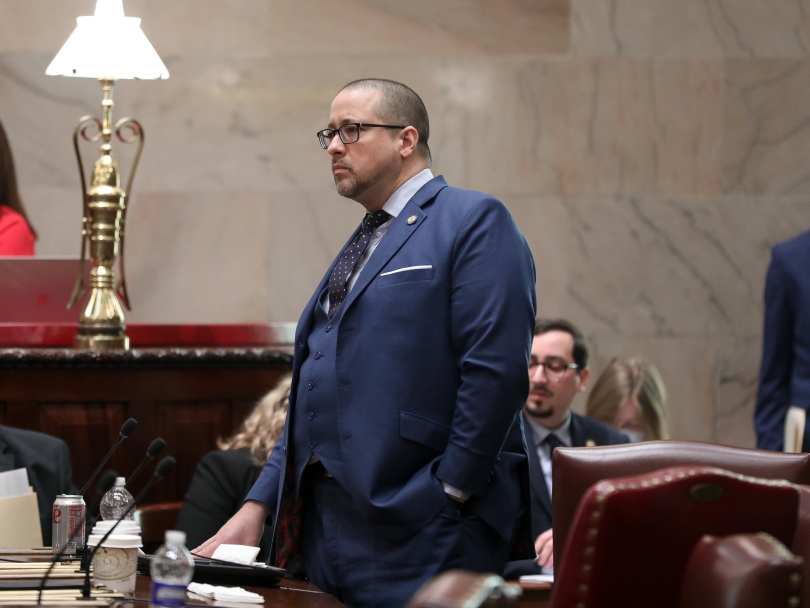
Sen. Gustavo Rivera
Sponsored bills
Prohibits drug, cannabis or alcohol testing of pregnant or postpartum individuals and newborns unless the individual consents and it is within the scope of medical care, or the testing is necessary for a medical emergency.
Maddy summaryThis bill creates a new legal framework for anti-stalking orders to protect victims from repeated, severe harassment. It directly affects stalking victims (petitioners) and alleged stalkers (respondents) by establishing specific court procedures for obtaining protective orders. Key provisions require courts to issue orders prohibiting contact (including digital communication), surveillance, remote control of connected devices (like smart home systems), and proximity to victims' homes or workplaces. The law defines "stalking" broadly to include numerous offenses under existing penal codes, such as harassment, assault, and unauthorized sharing of intimate images. These orders can be issued quickly without notice for immediate threats, with final orders requiring a court hearing.
Relates to the statute of limitations for certain deed theft actions; revives such actions otherwise barred by the existing statute of limitations and states who may bring such actions; grants trial preference to such actions; directs the chief administrator of the courts to promulgate rules for the timely adjudication of certain revived actions.
Maddy summaryThis bill restores a specific medical futility standard as a basis for Do Not Resuscitate (DNR) orders under New York's Family Health Care Decisions Act (FHCDA) and surrogate court procedures. It allows two physicians to determine that resuscitation would be medically futile - meaning it would not restore heart or breathing function or would lead to repeated cardiac arrests before death - without requiring court approval for patients lacking decision-making capacity. This directly affects patients in end-of-life situations, particularly those with developmentally disabilities, by providing a clearer pathway for DNR orders when resuscitation is deemed ineffective. The change amends existing laws to reintroduce this criterion, which was removed when the FHCDA replaced New York's former DNR law in 2010.
Maddy summaryThis bill increases short-term disability and family leave benefits for eligible New York workers. It phases in higher weekly benefit rates (from 50% to 67% of average weekly wage) and extends maximum benefit periods (from 8-10 weeks to 12 weeks) over time, starting in 2018. These changes apply to employees taking leave for disability or qualifying family care needs under New York's workers' compensation law. The bill requires employers to maintain health benefits during leave and prohibits retaliation for taking leave. The superintendent of financial services may delay benefit increases if needed to maintain program stability.
Establishes a program for specific individuals to become complex care assistants and provide private duty nursing services to certain Medicaid enrollees.
Includes both the birth family and the foster family of children in foster care, and other families receiving child welfare services from the authorized agency or the local departments of social services in the case of authorized agencies in the definition of family for purposes of services provided by voluntary foster care agency health facilities.
Maddy summaryThis bill clarifies rules for health care plans (like insurance companies and HMOs) when ending contracts with health care professionals (doctors, nurses, etc.). It requires plans to provide written reasons for termination and allow a 30-day review by a panel of three licensed peers before finalizing termination, except in cases of fraud or imminent patient harm. The bill also prohibits termination for protected actions, such as advocating for patients, filing complaints, or requesting a review. These changes apply to all health care professionals licensed in New York under current law, ensuring fairer processes for contract disputes.
Maddy summaryThis bill changes election law to require that election commissioners serving on boards outside New York City must be full-time employees of those boards. It sets a minimum of two full-time commissioners per board, with counties having over 120,000 residents allowed to increase this to four via local law. Political parties must be eligible to recommend an equal number of commissioners for appointment. The bill directly affects election boards in upstate counties and the commissioners who serve on them. It takes effect immediately upon passage.