

Maddy summaryThis bill requires gas and electric utilities to charge not-for-profit youth sports programs the same standard residential rates they apply to typical home customers in the same community. It specifically applies to programs using utilities exclusively for their sports operations, ensuring they pay the same rate as domestic single-phase service customers. The law mandates that utilities cannot charge these organizations higher rates than those paid by residential households in the same village, town, or municipality. This change directly affects qualifying non-profit youth sports groups seeking affordable utility costs for their facilities.
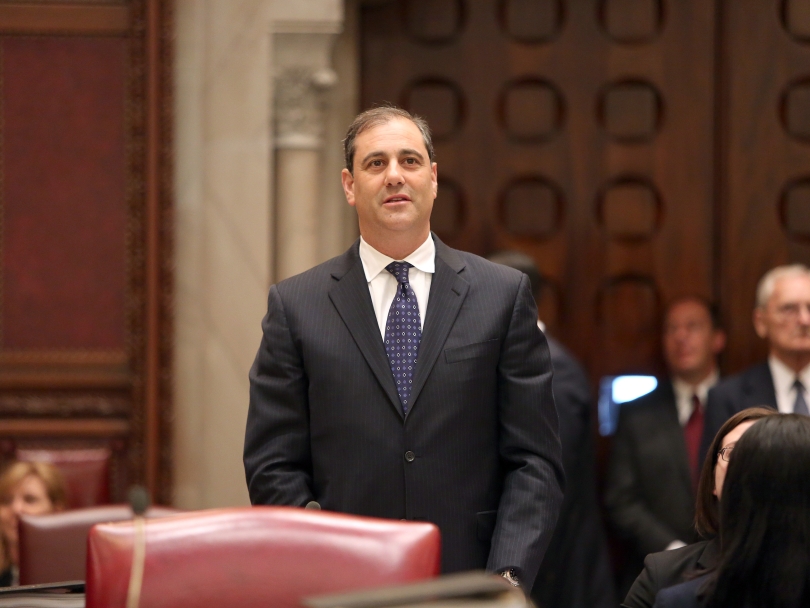
Sen. Andrew Lanza
Sponsored bills
Maddy summaryThis bill prohibits the use of automated software (like bots) to bypass purchase limits on retail websites and buy large quantities of goods for resale. It directly affects resellers and businesses using such software to acquire items in bulk, such as limited-edition products. Key provisions ban both the automated purchasing and the resale of goods obtained this way, imposing civil penalties of $500-$1,500 per violation and requiring forfeiture of profits. Enforcement falls to the state consumer protection division and attorney general, with additional penalties for repeat violations.
Maddy summaryThis bill requires architects and engineers to have their professional credentials verified by New York State before submitting building documents to NYC's Department of Buildings. It mandates that the Department checks submissions against state education records to confirm qualifications and match contact information. The law adds penalties for knowingly submitting false statements or falsified documents, allowing officials to refuse applications after a hearing. These changes directly affect licensed professionals who submit construction plans, aiming to improve document accuracy and accountability in building approvals.
Requires all state and private agencies with mandatory reporters of incidents involving vulnerable people to retrain all staff on reporting to a 9-1-1 operator and the county district attorney's office and state and private websites; requires written materials to be updated.
Maddy summaryThis bill (S 7105) increases tax credits for New York taxpayers who purchase long-term care insurance. It sets a maximum credit of $1,000 per policy annually (up to $1,500 for residents with income under $250,000), calculated as 20% of premiums paid. The credit applies only to approved long-term care insurance policies meeting state standards. It affects New York residents buying qualifying long-term care insurance, directly reducing their state tax liability based on premiums paid.
Directs the public service commission to implement rules requiring public utility companies to remove or relocate their utility poles when necessary for road improvements.
Relates to the application of special rebates and discounts to certain eligible energy users that conduct a manufacturing activity within the city which produces new goods primarily from waste paper or other recyclables collected from residential sources in the city.
Maddy summaryThis bill updates New York's health care proxy and death certificate rules. It requires health care proxies to be signed before a notary (replacing witness requirements) and specifies that agents must follow a patient's known wishes or best interests when making medical decisions. Crucially, agents cannot decide to withdraw artificial nutrition or hydration without written agreement from two non-attending doctors, and if such a decision causes death, the death certificate must note this. The changes directly affect patients appointing agents, their medical agents, and healthcare facilities handling end-of-life documentation.
Enacts the "New York city board for education policy members public responsibility act" requiring a quorum of the members of the city board to attend any hearing scheduled for purposes of allowing public comment on changes to educational plans for the school district of the city of New York.
Requires employees of gaming facilities to undergo human-trafficking recognition training which shall address the nature of human trafficking, how human trafficking is defined in law, how to identify victims of human trafficking, relief and recovery options for survivors, and social and legal services available to victims.