

Expands the type of information that is exempt from disclosure to include the name, address, telephone number, or email address of anyone who is a member of or enrolled in a program at a senior center that a public agency administers or sponsors.
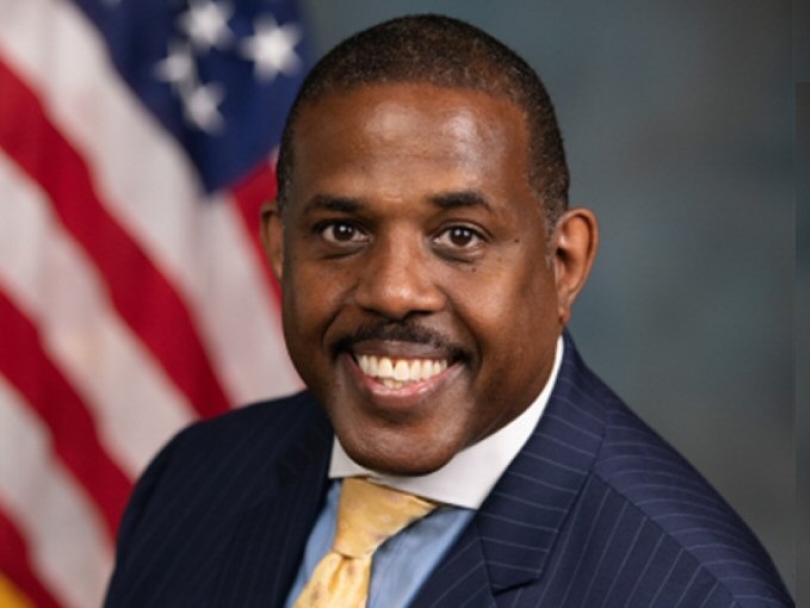
Sen. Kevin Parker
Sponsored bills
Limits the circumstances which justify the use of deadly force by a police officer or peace officer to instances when the person committed a felony that threatened or resulted in death or serious bodily injury and the officer reasonably believes that the person will cause death or serious bodily injury to another person unless immediately apprehended.
Establishes a task force to study and assess the condition of African American men in New York; provides such task force shall consist of 17 members and report its findings no later than December 31, 2026.
Maddy summaryThis bill requires textile producers (brands and manufacturers selling clothing, footwear, or home textiles in New York) to manage the end-of-life waste from their products starting in 2027. Key mechanisms include mandating producers to join or create a shared organization for waste collection, pay fees based on sales volume, establish in-store take-back systems, and report annually on recycling/reuse rates. It also requires new labels showing recycled content, origin, and environmental impact scores, while offering fee reductions for eco-friendly designs. The goal is to reduce New York’s annual 200+ million pounds of textile waste in landfills by shifting responsibility to producers and funding recycling programs through a dedicated waste fund.
Relates to residency requirements for police officers in a city with a population of one million or more; provides that any person appointed as a paid member of the police force of such city shall become a resident of any political subdivision or municipal corporation within such city within one year of their appointment and shall continue to reside within any political subdivision or municipal corporation.
Maddy summaryThis bill requires all firearm owners in the state to obtain and maintain liability insurance covering at least $1 million in damages resulting from negligent firearm use. It directly affects every individual who owns a firearm, with exceptions for active-duty law enforcement officers, police, and military personnel. Owners must secure this insurance before purchasing a firearm, and existing owners have 30 days after the law takes effect to comply. Failure to maintain coverage results in immediate revocation of firearm registration, licenses, and ownership privileges.
Maddy summaryS 1528 establishes a tax on carbon-based fuels like coal, natural gas, and petroleum, imposed on fuel distributors and utilities based on carbon dioxide emissions. The tax starts at $35 per ton of carbon dioxide equivalent and increases by $15 annually to a maximum of $185 per ton. Revenue from the tax funds a dedicated "Carbon Dioxide Emissions Fund," with 60% returned as tax credits to low-to-moderate income residents (below 115% of area median income) and 40% allocated to clean energy transition, mass transit, and climate adaptation projects. The bill requires annual reporting by distributors and utilities and mandates public reporting on tax adjustments to address inflation and climate goals.
Relates to instituting internet service neutrality; provides the public service commission with jurisdiction over monitoring broadband internet service providers; requires a certification for internet service neutrality in certain state contracts.
Relates to the state greenhouse gas emission accounting system; aligns the state accounting system with the Intergovernmental Panel on Climate Change (IPCC) accounting system.
Directs local law enforcement agencies in municipalities authorizing an auxiliary police force by local law to provide retirement service identification cards to auxiliary police officers who retire with 10 or more years of service or who are injured in the course of duty and unable to continue duty due to such injury.