Moves from the Office of Court Administration (OCA) to the Division of Criminal Justice Services (DCJS) responsibility for certifying, establishing and implementing standards for pretrial services agencies of the state.
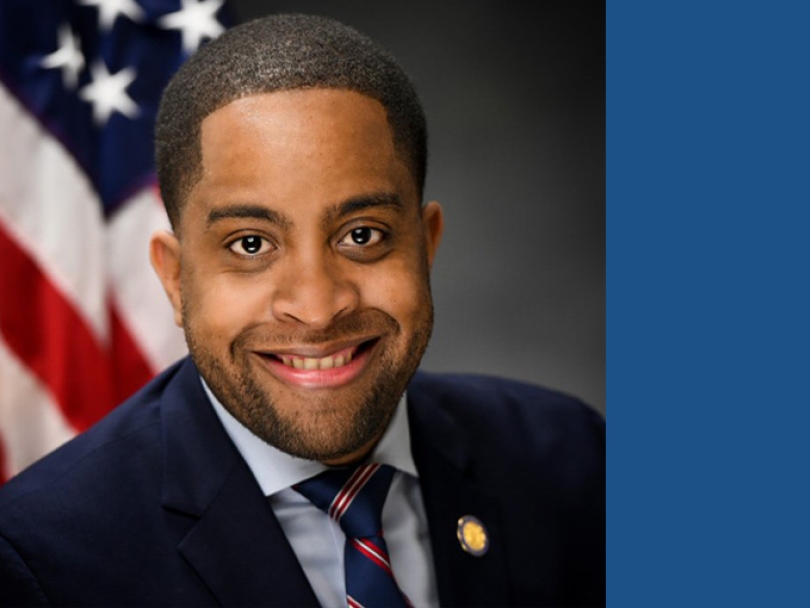
Sen. Zellnor Myrie
Sponsored bills
Provides lifetime, premium-free insurance through the New York state of health marketplace to a person who donates a kidney during the course of their lifetime; establishes the kidney donor insurance fund.
Directs the commissioner of health to make publicly available on the department of health website a report concerning access to applied behavior analysis for enrolled children diagnosed with autism spectrum disorder.
Maddy summarySenate Bill S 856 reorganizes the State Commission of Correction by expanding its membership from three to nine individuals. The bill diversifies the appointment process, allowing the Governor, Speaker of the Assembly, Temporary President of the Senate, and the Correctional Association to each appoint members. It also mandates that the commission include members with specific professional backgrounds, such as formerly incarcerated individuals, health professionals, and attorneys. Additionally, the bill establishes a ten-year term limit for commissioners and alters the process for designating the chairperson and removing members.
Maddy summaryThis bill (S 330) requires courts to review criminal sentences that are illegal or "unduly harsh or severe," even if a defendant previously waived their right to appeal. It amends the criminal procedure law to mandate that courts modify such sentences by reversing the sentencing portion while upholding the conviction. The law directly affects defendants serving criminal sentences deemed excessive by appellate courts, providing a mechanism to correct disproportionate punishments without requiring the defendant to formally challenge the sentence.
Maddy summaryThis bill, the "Raise the Wage Act," increases New York's minimum wage to $21.25 per hour in New York City by 2028, $17.25 in the city's suburbs (Nassau, Suffolk, Westchester) by 2026, and gradually across the rest of the state. It repeals current static wage provisions and establishes automatic annual adjustments tied to inflation and productivity, mirroring the formula used for upstate wages since 2022. The bill directly affects all hourly workers covered under New York's labor law, particularly in low-wage sectors like home care and childcare. This indexing mechanism aims to prevent future erosion of purchasing power, ensuring wages keep pace with rising living costs.
Establishes a culturally responsive education curriculum and standards; requires all school districts, charter schools and private schools to integrate culturally responsive education throughout the education of all students at all grade levels; establishes a pilot program in culturally responsive education; appropriates $25,000,000 therefor.
Maddy summaryThis bill, S 2710, changes retirement rules for New York City police officers by reducing the required service time for full retirement benefits from 22 years to 20 years. It specifically applies to members of the New York City Police Pension Fund, allowing them to retire with full benefits after 20 years of service instead of the previous 22-year requirement. The bill amends three sections of the retirement law to update definitions, benefits, and eligibility, ensuring NYC police officers can access normal retirement benefits at the 20-year mark. This is a direct policy change affecting NYC police officers' retirement timelines, with no broader application to other public safety workers.
Maddy summaryThis bill amends New York State law to explicitly include "temporarily erected structures" (such as scaffolding) in the legal definition of a "substandard or insanitary area." It directly affects urban renewal programs by expanding the types of areas eligible for redevelopment under these programs. The key mechanism adds these temporary structures to the list of features that can qualify an area as "blighted" or having a "blighting influence," allowing redevelopment efforts to address such structures. This change enables cities to include temporary structures in broader urban renewal initiatives aimed at eliminating blighting conditions.

Relates to paratransit services; directs that an applicant for recertification submit correspondence from a licensed physician in lieu of an in-person assessment.