

Safeguards cash accounts for people with developmental disabilities in a facility under the control of the commissioner of mental health, the commissioner of the office for people with developmental disabilities and the commissioner of alcoholism and substance abuse services.
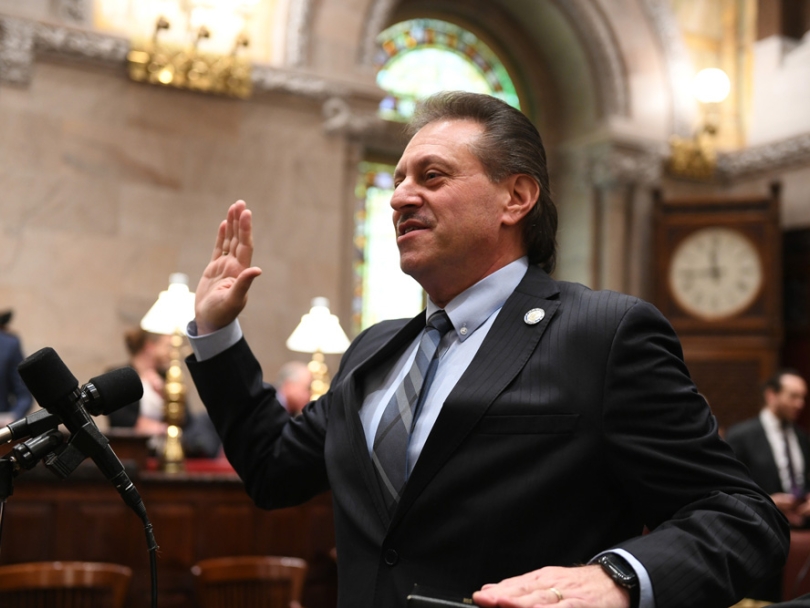
Sen. Joe Addabbo
Sponsored bills
Authorizes and directs the metropolitan transportation authority to implement a free fare program on the Long Island Rail Road for firefighters employed by the city of New York.
Maddy summaryS 3779 increases the maximum number of academic years students can receive tuition assistance under New York's program from four to six years. It directly affects undergraduate students enrolled in eligible two- or four-year colleges who rely on this state-funded aid. The key change extends eligibility periods, with specific provisions for students in remedial programs (counted as five-year programs) and those transferring due to college closures (allowing up to two additional semesters). This update aligns the program with longer degree completion timelines common in higher education.
Maddy summaryThis bill creates the New York Autism Spectrum Disorders Treatment, Training and Research Council to address gaps identified in a 2010 state report. The council, composed of 28 members including agency heads, experts, and family representatives, will develop a coordinated state policy and plan for ASD services within one year. Key duties include holding community forums statewide, coordinating existing state services, improving early screening access, and providing annual updates to the governor and legislature. The council directly affects New Yorkers diagnosed with autism spectrum disorders (ASDs) and their families by aiming to streamline care, research, and information access.
Relates to accessibility requirements in certain procurement contracts; requires contracts that include information and communication technologies (ICTs) are accessible to people with disabilities; requires that the ability of a prospective contractor to meet such requirement be considered in making the contract award.
Maddy summaryThis bill requires New York's Commissioner of Health to create and distribute educational materials for restaurant owners and staff about food allergens. The materials must cover informing customers about allergens in menu items, explaining cross-contamination risks during food preparation, and recognizing symptoms of severe allergic reactions. Restaurants must receive this information "as soon as practicable" after the law takes effect. The bill directly affects all public eating establishments (restaurants, cafes, etc.) by mandating staff training on allergen safety.
Maddy summaryThis bill waives vehicle license renewal fees for individuals aged 62 or older. It directly affects senior drivers by eliminating an annual cost for maintaining their vehicle registration. The key provision amends vehicle and traffic law to remove the fee requirement for this age group, effective immediately upon enactment. The change applies specifically to license renewal fees under the state's vehicle licensing system.
Maddy summaryBill S 358 aims to expand eligibility for personal and home care services funded by Medicaid. It removes specific functional assessment criteria, which currently require individuals to need assistance with a certain number of daily living activities to qualify. This includes removing particular requirements for those with dementia or Alzheimer's diagnoses. The bill directly affects individuals seeking to receive in-home care services through the Medicaid program by making it easier to meet eligibility standards.
Enacts "Jesse's law" to provide that a person subject to involuntary emergency admission for immediate observation, care, and treatment of mental illness shall have the right to select the hospital they are admitted to.
Maddy summaryThis bill allows school districts to create policies enabling homeschooled students to try out for and join their district's interscholastic sports teams. It requires these students to meet the same academic, health, and behavioral standards as enrolled public school students - including annual academic checks, health exams, and age requirements - and limits participation to their district of residence. Parents must provide transportation, and districts may set additional academic eligibility rules. The policy is optional for school boards, not mandatory.