

Maddy summaryThis bill requires industrial development agencies in New York municipalities to include a representative from a labor organization on their governing boards. It defines "labor organization" as any group formed for collective bargaining, handling workplace grievances, or worker protection (excluding company unions). Agencies must have 3-7 members, including at least one labor representative, a local government/business representative, and a school district representative. The law aims to ensure worker voices are part of decisions affecting local economic development projects.
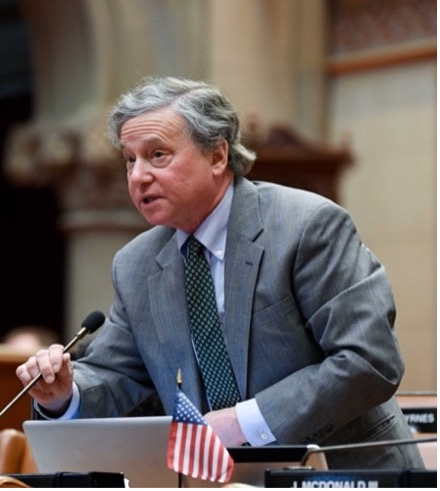
Asm. Steve Otis
Sponsored bills
Requires the New York state bridge authority, the Thousand Islands bridge authority, the Nassau county bridge authority, the Ogdensburg bridge authority, and the New York state thruway authority to develop a feasibility study to promote bicycle and pedestrian access on bridges and provide a report to the governor, temporary president of the senate, speaker of the assembly, and the public a copy of such plan.
Relates to the appointment and responsibilities of the commissioners of the public service commission; requires the commission to have a duty to protect public interest, including ensuring access to utility services for residential and business customers; prohibits commissioners from having been employed within the last two years by an electric, gas, steam, telecommunications, or water utility that is regulated by the commission.
Provides access to menstrual products in toilet facilities in public buildings owned or leased by the state that are determined to be opened to the public; requires reporting.
Maddy summaryThis bill updates New York insurance law to expand the types of lower-cost alternatives insurers can require patients to try before covering brand-name drugs. Specifically, it adds "interchangeable biologics" and "biosimilars" to the list of alternatives (alongside generic drugs) that insurers may mandate patients attempt first. It also allows insurers to move drugs to higher-cost coverage tiers only when adding these lower-cost alternatives to their formulary. These changes directly affect patients needing prescription drugs and insurers managing drug coverage tiers. The bill focuses on standardizing formulary rules for complex biologic medications without specifying cost outcomes.
Maddy summaryThis bill (A 3536) requires GPS navigation systems sold or used in New York State to display the legal clearance height of bridges and overpasses along proposed routes. It directly affects navigation system manufacturers and sellers by mandating they provide this specific clearance data - defined as the height marked on highway signs under existing traffic law - when generating routes. The key provision states systems must include this information unless they provide clear user instructions about vehicle height restrictions and the driver’s responsibility to comply. This aims to prevent accidents involving low-clearance structures by ensuring navigation tools reflect official highway signage. The bill does not alter traffic laws but requires navigation technology to align with current clearance signage standards.
Provides that the thruway authority shall issue permits for ambulances and fire vehicles exempting such vehicles from paying tolls on the thruway when engaged in an emergency operation.
Prohibits the participation of certain animals in traveling animal acts; prohibits the department of environmental conservation from issuing permits or licenses allowing participation of certain animals in traveling animal acts; excludes certain permanent performing institutions; imposes a civil penalty not to exceed $1000 for a violation.
Prohibits the use of intoxication of the victim as a defense in sex crimes where the victim is under the influence of any drug, intoxicant, or other substance to a degree which rendered the victim temporarily incapable of appraising or controlling such person's conduct and such condition was known or reasonably should have been known to a person in the actor's situation.
Maddy summaryThis bill requires the New York State Bridge Authority to install specialized fencing on all bridges it operates. The fencing must prevent climbing by using features like welded wire mesh panels, tightly spaced wires, and spike collars. It applies to all new bridge construction contracts and mandates installation within three years of the law's effective date. The measure directly affects the Bridge Authority and its contractors, focusing solely on the physical safety requirement without broader policy changes.