

Enacts the "Empowering People in Rights Enforcement (EMPIRE) Worker Protection Act"; relates to the delegation of state enforcement authority to private actors; authorizes an affected employee, whistleblower, representative organization or an organizational deputy to initiate a public enforcement action on behalf of the commissioner for certain provisions of the labor law, or any regulation promulgated thereunder.
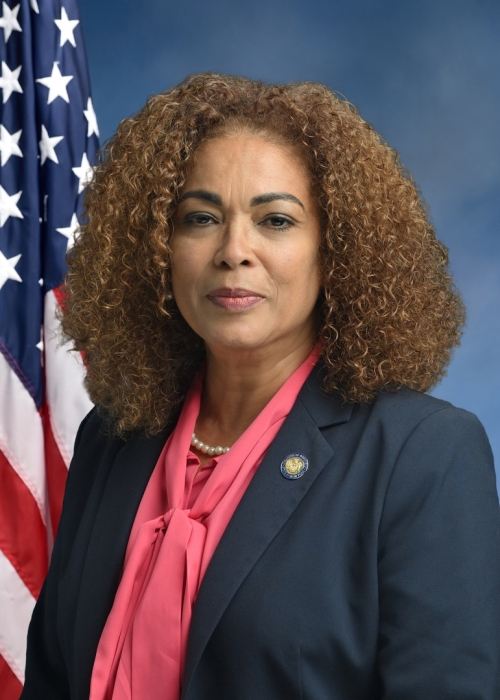
Asm. Yudelka Tapia
Sponsored bills
Establishes in the city of New York a bicycle lane safety program to enforce certain restrictions on the use of bicycle lanes and/or protected bicycle lanes by means of bicycle lane photo devices.
Maddy summaryThis bill prohibits landlords, lessors, sub-lessors, and grantors from requiring tenants to pay broker fees. It directly affects residential tenants by preventing landlords from charging them for brokerage services related to lease applications or tenancy. The law allows landlords to still charge for background and credit checks, but bans all other upfront fees like broker commissions. Exceptions apply to certain senior living communities and cooperative housing corporations under specific conditions.
Codifies the disparate impact standard in the human rights law; provides that in cases of alleged housing discrimination, an unlawful discriminatory practice may be established by a practice's discriminatory effect.
Extends paid family leave benefits to employees who perform construction, demolition, reconstruction, excavation, rehabilitation, repairs, renovations, alterations, or improvements for multiple employers pursuant to a collective bargaining agreement who shall be eligible for family leave benefits if they were employed for at least twenty-six of the last thirty-nine weeks by any covered employer which is signatory to a collective bargaining agreement.
Maddy summaryThis bill (A 565) prohibits the establishment of new for-profit hospices and bans capacity increases for existing for-profit hospices. It applies to all approvals after the law takes effect, directly affecting for-profit hospice providers and their expansion plans. The law requires new hospice facilities to operate as non-profits and prevents existing for-profit hospices from growing their services. This represents a concrete change in healthcare regulation, restricting for-profit models in hospice care.
Enacts the "Lieutenant Joseph Banish mental health act" which establishes a law enforcement peer support program to provide confidentiality for communications arising out of law enforcement peer support counseling; defines terms; provides exceptions for when a peer support communication may be disclosed.
Establishes a reproductive health services training and education grant program to train licensed providers and interns or residents who are employed by a hospital or otherwise enrolled in an accredited graduate medical education program in the performance of abortion and related reproductive health services; establishes the reproductive health training and education fund.
Maddy summaryThis bill authorizes cities with populations over one million (like New York City) to establish a minimum five-mile-per-hour speed limit on designated "open streets." Open streets are defined as segments with physical barriers, signage, or traffic calming measures that prioritize pedestrians, cyclists, and non-motorized users over vehicles. The bill amends traffic laws to ensure such speed limits comply with existing regulations but does not affect school zone speed limits or simple traffic control signs. It directly impacts urban transportation planning in large cities by mandating the lowest possible speed for these pedestrian-focused zones.
Maddy summaryBill A 2266 requires state agencies operating prisons and youth detention facilities to provide incarcerated individuals with free voice communication services (and optionally video or messaging), effective April 1, 2026. It prohibits facilities from charging inmates for these services or generating revenue from them, and mandates that communication services cannot replace in-person visit programs. The bill repeals the existing correction law section on this topic and adds new requirements for agencies managing correctional facilities. This directly affects all people confined in state correctional facilities by guaranteeing free communication access with external contacts.