

Maddy summaryThis bill restructures New York's fraud laws by creating five distinct degrees of "scheme to defraud," each with specific thresholds based on the number of victims, amount of property defrauded, or involvement of vulnerable elderly individuals. It replaces existing sections with new ones (190.60 to 190.68), classifying offenses from a class A misdemeanor (fifth degree) up to a class B felony (first degree) based on severity. The bill directly affects individuals committing fraud, particularly legal professionals or others engaging in systematic schemes, and updates references to these fraud levels in other laws like the General Business Law. It does not establish a new "harassment" crime for legal services clients, as noted in the abstract, but focuses solely on redefining fraud penalties.
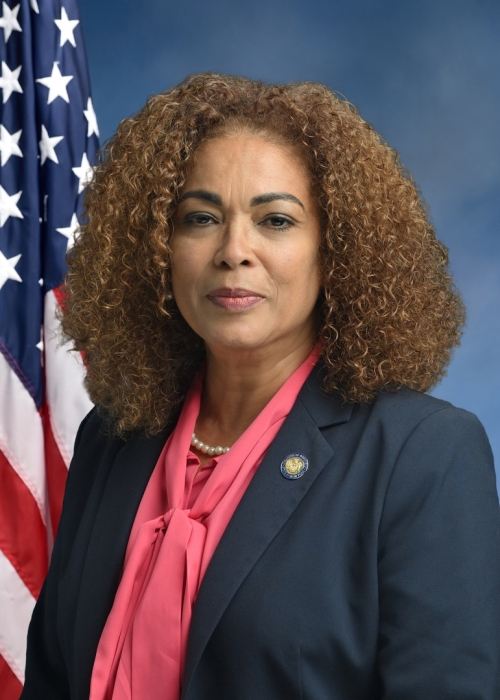
Asm. Yudelka Tapia
Sponsored bills
Provides for automatic voter registration and pre-registration for persons applying for certain department of motor vehicles documentation, and for persons applying for or re-enrolling in Medicaid; allows individuals to decline such automatic registration and pre-registration.
Adds that a person is guilty of computer tampering in the third degree when they intentionally enter or alter in any manner or destroy computer material indicating that a person did or did not receive a vaccination that is reported to the New York state immunization information system or the New York city immunization registry.
Provides that NYSERDA shall establish a program to provide new e-bikes at reduced or no cost in exchange for used unsafe e-bikes to certain delivery service workers; provides eligibility requirements to receive a reduced or no-cost e-bike under such program; requires e-bikes provided pursuant to such program be certified for compliance with certain safety standards; requires NYSERDA to collaborate with relevant agencies to inform eligible individuals about such program; and requires NYSERDA to submit an annual report on such program.
Provides that no autonomous vehicle may be used for taxi, livery or transportation network company vehicle services in any city with a population of one million or more without first being licensed by the New York City taxi and limousine commission; requires the New York City taxi and limousine commission to establish a license for use of an autonomous vehicle as a taxicab and to promulgate rules regarding such license and the operation of autonomous taxicabs.
Relates to protecting the communication rights of individuals with disabilities; provides that each person with a disability has the right to communicate in their preferred manner.
Maddy summaryThis bill establishes a legal framework for mental health clubhouses in New York State, directly benefiting individuals with serious mental illness by providing free, community-based support services. It requires clubhouses to be accredited, offer voluntary membership, and provide integrated support for employment, housing, healthcare, and social engagement. The Office of Mental Health must develop a statewide implementation plan within one year and oversee biennial reporting from clubhouses on membership, employment outcomes, housing, and crisis responses. Clubhouses must operate as non-clinical therapeutic communities emphasizing work, mutual support, and connection to broader healthcare services.
Maddy summaryThis bill (A 8829) directs the Metropolitan Transportation Authority (MTA) to rename the Burnside subway station on the IRT Jerome Avenue line to "Burnside-Bronx Community College subway station." It requires the MTA to update all signs, maps, and related materials to reflect the new name. The change affects the MTA's operational signage and subway users who travel through this station in the Bronx. The bill is procedural, with no policy changes beyond the station naming.
Maddy summaryThis bill changes how parking violation notices are handled in New York. It requires hearing examiners to provide written decisions explaining the legal basis for each ticket's outcome (guilty or not guilty) and gives drivers the option to request a hearing for each individual ticket. The bill also mandates that the state surcharge must be paid unless a hearing officer dismisses the ticket based on specific merits presented by the driver. These changes aim to increase transparency and fairness for drivers contesting parking violations.
Prohibits the use of red dye 3 as a food additive or food color additive and the sale of food products containing red dye 3 beginning January 1, 2027; provides that in an action to enforce compliance, the recognition by the federal food and drug administration of any of these substances as safe may not be alleged as a defense.