

Establishes the universal child care act to provide for the establishment and funding of universal child care in the state of New York; establishes a universal child care taskforce to help implement universal child care in the state and repeals certain provisions of the social services law relating thereto; establishes the permanent child care workforce pay equity fund; establishes a universal child care public option pilot program to provide universal child care in at least twenty locations throughout the state; makes an appropriation therefor.
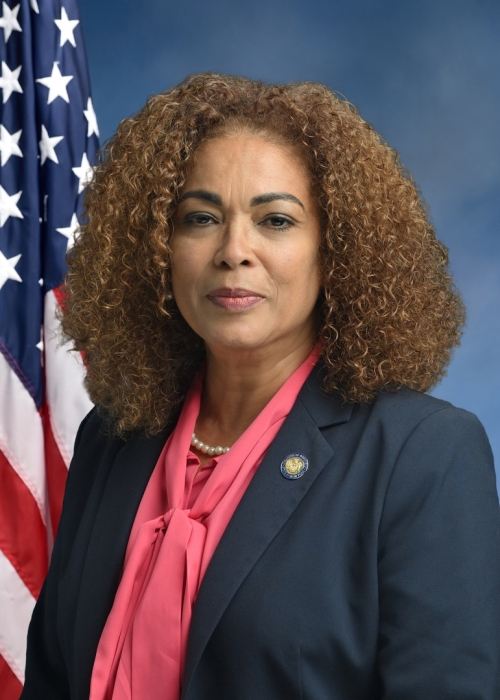
Asm. Yudelka Tapia
Sponsored bills
Provides voting membership to existing non-voting rider representatives on the MTA Board, provides for enhanced representation of MTA riders with disabilities.
Authorizes the state liquor authority to issue licenses to new premises for the sale of liquor where such premises is located within two hundred feet of a place of worship and such place of worship has given approval, or where three or more such premises exist in counties of a certain population.
Maddy summaryThis bill requires election commissioners serving on county boards outside New York City to be full-time employees of those boards. It sets a standard of two commissioners per board, with counties having over 120,000 residents allowed to increase this to four via local law. The change applies specifically to election boards in counties outside NYC, altering their commissioner employment structure without affecting NYC-based boards.
Establishes requirements for the creation and operation of limited purpose trust companies; establishes how to apply to operate as a limited purpose trust company.
Maddy summaryThis bill (A 3742) requires all high schools to keep opioid antagonists (like naloxone) available for emergency overdose treatment and to have at least one trained employee present during all school hours and after-school activities. The law mandates schools to acquire the medication, designate a staff member who completed approved training in its use, and ensure that employee oversees storage and administration. It directly affects high schools, students, and staff by establishing a concrete protocol for responding to opioid overdoses on school grounds. The bill takes immediate effect upon enactment and does not include exemptions for school activities.
Maddy summaryThis bill establishes a new health coverage option under New York's 1332 state innovation program, allowing the state to create a health plan for specific uninsured New Yorkers who don't qualify for Medicaid or ACA marketplace plans. It directly affects residents under 65 with household incomes between 133% and 250% of the federal poverty line, including some noncitizens ineligible for Medicaid due to immigration status. Key provisions include requiring coverage for essential health services (like cancer care access at Medicaid rates, dental, vision, and chronic illness support), automatic enrollment for children born to eligible parents, and continued coverage during pregnancy for one year postpartum. The program requires federal approval under the ACA's Section 1332 waiver process and operates alongside existing Medicaid and marketplace plans.
Establishes clean energy goals of reducing the annual total of vehicle miles traveled within the state by 20% by the year 2050; requires state and local highway projects to comply with reductions to vehicle miles traveled targets.
Regulates the use of artificial intelligence in the provision of therapy or psychotherapy services by prohibiting the use of artificial intelligence to assist in providing supplementary support where the session is recorded or transcribed unless the patient is informed of the specific purpose of such use and consents of such use; establishes penalties for violations of such provisions; excludes religious counseling, peer-support, and self-help materials and educational resources from such provisions.
Establishes the insure our communities act to implement climate leadership and community protection act targets for insurers; identifies and protects such communities; relates to affordability of insurance rates; assesses covered insurance companies' record of performance at meeting insurance needs; requires covered insurance companies to file statistical reports, including information on insurance coverage in specific assessment areas and disadvantaged communities.