

Establishes the reentry assistance program; provides for eligible incarcerated individuals to receive a monthly stipend upon release from a state correctional facility; makes an appropriation of $25,000,000.
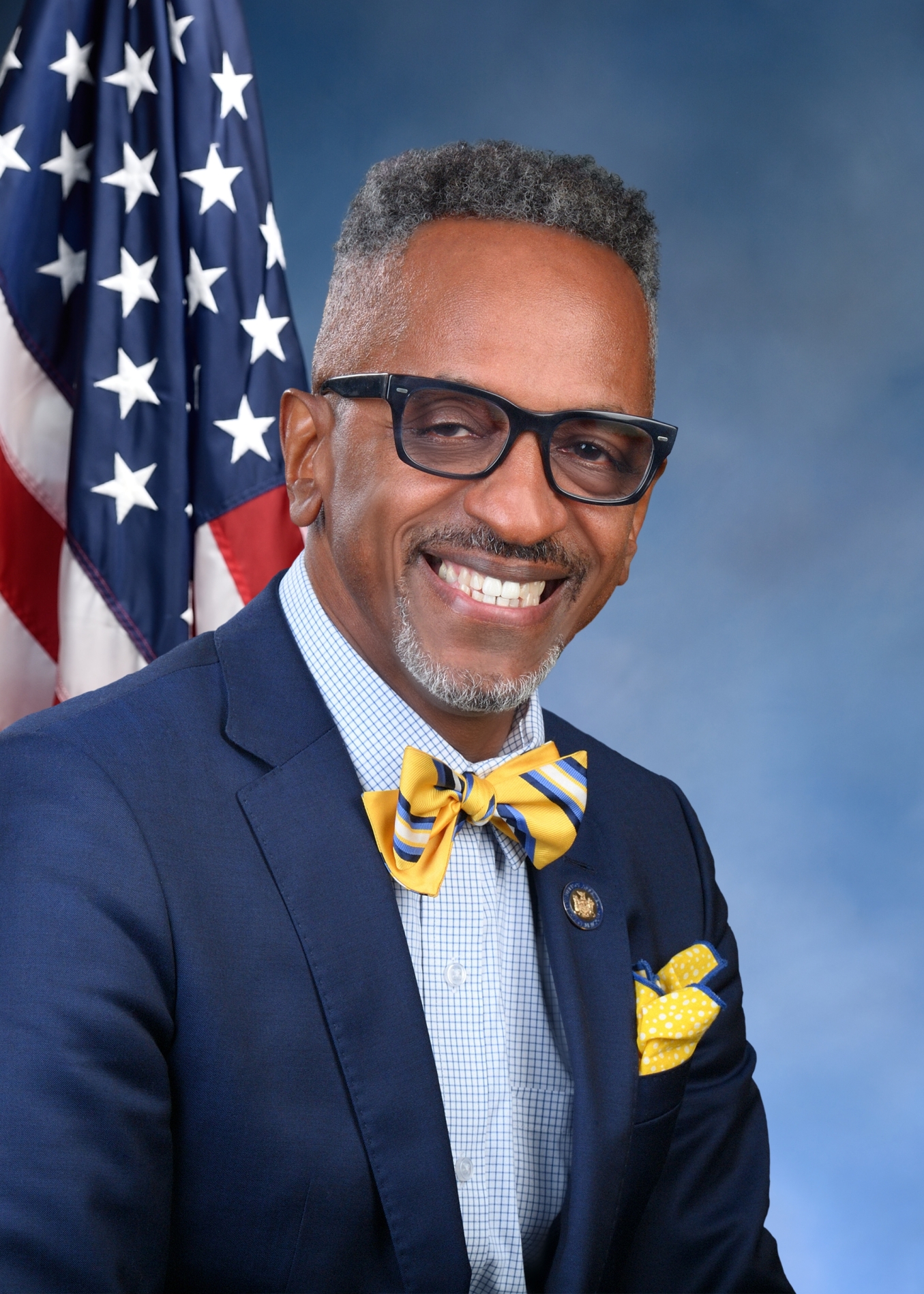
Asm. Al Taylor
Sponsored bills
Relates to women's health in correctional facilities; establishes a women's health education program; requires HIV and STD testing to be offered to incarcerated individuals; provides pregnant incarcerated individuals with access to prenatal vitamins as well as a specialized diet tailored to pregnancy needs; requires a study and report on women's health in prison.
Maddy summaryThis bill establishes a new health coverage option under New York's 1332 state innovation program, allowing the state to create a health plan for specific uninsured New Yorkers who don't qualify for Medicaid or ACA marketplace plans. It directly affects residents under 65 with household incomes between 133% and 250% of the federal poverty line, including some noncitizens ineligible for Medicaid due to immigration status. Key provisions include requiring coverage for essential health services (like cancer care access at Medicaid rates, dental, vision, and chronic illness support), automatic enrollment for children born to eligible parents, and continued coverage during pregnancy for one year postpartum. The program requires federal approval under the ACA's Section 1332 waiver process and operates alongside existing Medicaid and marketplace plans.
Maddy summaryThis bill establishes a new progressive income tax structure for high-income New York taxpayers by creating multiple tax brackets with increasing rates as income rises. It directly affects New York residents earning above certain thresholds, with the highest rates applying to incomes over $5 million (up to 24% for some filing statuses). Key provisions include setting specific tax rates for different income ranges - for example, 10.90% for incomes over $25 million and 24% for incomes over $20 million for certain filers. The bill modifies existing tax law to implement these bracketed rates, replacing previous structures.
Maddy summaryThis bill prohibits individuals who have ever acted as "foreign agents" from holding public office or political party positions. It defines a "foreign agent" as someone acting under the direction of a foreign government, organization, or person outside the U.S., or who is significantly controlled or subsidized by such entities. The law amends both the Public Officers Law and Election Law to enforce this restriction. It directly affects candidates and officeholders with ties to foreign governments or entities. The policy change is a clear eligibility requirement, not a new program or funding measure.
Imposes an additional tax surcharge on certain non-primary residence class one and class two properties in a city with a population of one million or more.
Enacts the "Velmanette Montgomery YouthBuild act"; sets program requirements; authorizes grants to eligible YouthBuild participants; establishes application requirements.
Maddy summaryThis bill restructures New York's fraud laws by creating five distinct degrees of "scheme to defraud," each with specific thresholds based on the number of victims, amount of property defrauded, or involvement of vulnerable elderly individuals. It replaces existing sections with new ones (190.60 to 190.68), classifying offenses from a class A misdemeanor (fifth degree) up to a class B felony (first degree) based on severity. The bill directly affects individuals committing fraud, particularly legal professionals or others engaging in systematic schemes, and updates references to these fraud levels in other laws like the General Business Law. It does not establish a new "harassment" crime for legal services clients, as noted in the abstract, but focuses solely on redefining fraud penalties.
Maddy summaryThis bill updates the methodology for calculating education funding by replacing outdated references to the 2000 census with current data sources. It revises definitions of "census count" and "poverty rate" to use the most recent federal decennial census data and a three-year average of small area income estimates, rather than relying solely on a single-year census. School districts, particularly those classified as "high-need" based on student poverty levels, will have their state education funding recalculated using these updated metrics. The change ensures funding formulas reflect more current socioeconomic conditions in communities. The bill takes effect April 1 following enactment.
Prohibits the manufacture, modification, sale, transfer, equipping, use, or operation of a robotic device or an uncrewed aircraft equipped or mounted with a weapon within the state.