

Requires a utilization review agent to follow certain rules when establishing a step therapy protocol; requires that the protocol accepts any attestation submitted by the insured's health care professional stating that a required drug has failed as prima facie evidence that the required drug has failed.
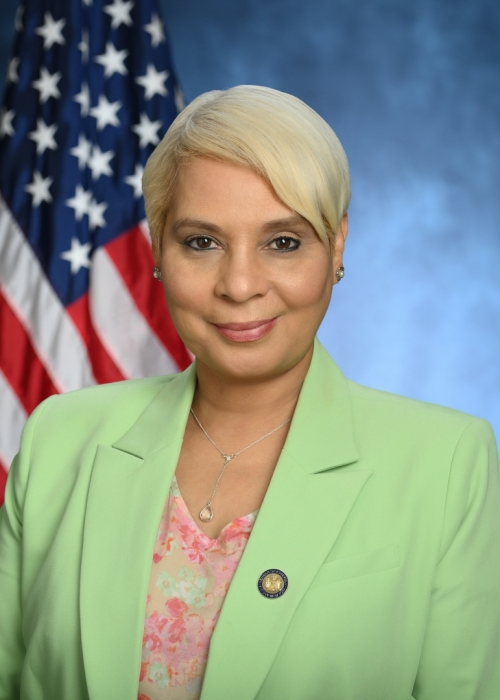
Asm. Maritza Davila
Sponsored bills
Maddy summaryThis bill restricts the presence of specific chemicals in menstrual products sold or distributed within the state. It defines "restricted substances" to include items like lead, mercury, formaldehyde, and various phthalates, prohibiting their use as intentionally added ingredients starting on the effective date. The law also establishes a timeline for setting lower safety thresholds for these chemicals, requiring the Department of Health to propose regulations within a year and review them every five years. Manufacturers of tampons, pads, cups, and other menstrual hygiene products must comply with these limits to sell their goods in the state.
Requires the display of certain labels and warnings on gas stoves sold, displayed for sale, or offered for sale at retail to a consumer in this state; authorizes the department of state to adopt regulations regarding the placement and format of such labels; provides for penalties; authorizes the attorney general to enforce such provisions.
Relates to school climate and codes of conduct on school property and disciplinary action following violation of such codes of conduct; makes conforming amendments.
Amends procedures required for the custodial interrogation of children to provide additional protections and for taking juveniles and sixteen and seventeen year olds into custody.
Establishes the mandatory reporting of child abuse and maltreatment task force to examine, evaluate, and make recommendations concerning the child welfare system and the mandatory reporting of child abuse and maltreatment; requires the task force to submit a report to the legislature; sets forth the duties of the members of the task force.
Provides that, conditions of poverty, including but not limited to, the inability to provide or obtain clothing, home or property repair, or childcare, shall not be the sole determining factor when providing notification to the appropriate police authorities or the local child protective service unless there is willful or negligent action or failure to act and a nexus to harm such that the child has suffered or there is a substantial risk the child will suffer serious physical, mental, or emotional impairment.
Prohibits correctional facilities from denying entry to peer support advocates who are certified or licensed and are participating in the provision of corrections-based substance use disorder treatment and transition services based on such advocates' prior history of incarceration.
Prohibits the use of restraints on incarcerated individuals during labor, absent extraordinary circumstances, and on pregnant persons during a custodial interrogation.
Relates to the provision of breast pumps and related collection and storage materials to all mothers who are confined in or committed to an institution or local correctional facility with or without their child subject to specific time limitations; requires institutions and local correctional facilities to provide pumps and related materials to such mothers, but not beyond the date such child reaches twenty-four months of age except in limited circumstances related to parole; allows children to remain with their mothers in a correctional institution until twenty-four months of age, or longer in certain cases related to parole; requires the commissioner of corrections and community supervision to issue an annual report on data relating to incarcerated mothers.