

Maddy summaryThis bill sought to allow licensed creative arts therapists to bill Medicaid directly for services they provide to eligible patients. The proposed change would have added creative arts therapists to a list of mental health professionals authorized to receive reimbursement from the state's health insurance program for covered care. The legislation explicitly stated that it would not alter the legal scope of practice for these therapists. Ultimately, the bill was vetoed by the Governor and did not become law.
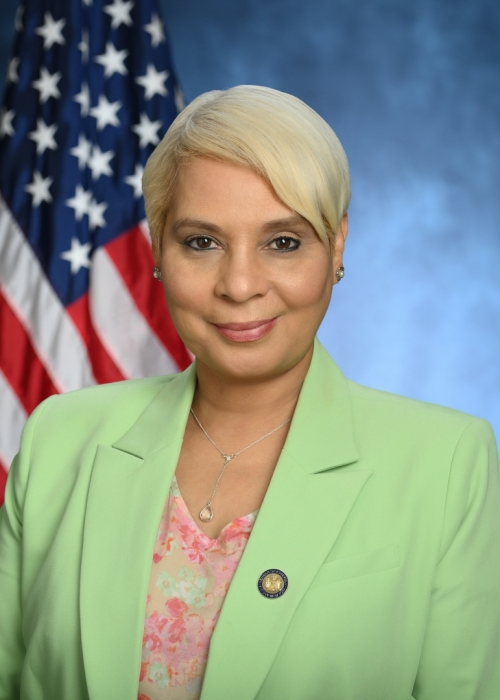
Asm. Maritza Davila
Sponsored bills
Maddy summaryThis bill designates East Harlem, also known as "El Barrio," as a cultural district by amending the state's arts and cultural affairs law. The legislation defines the district's boundaries as the area between East 96th and 125th Streets, bounded by Fifth Avenue and the East River. Once designated, the Council on the Arts is authorized to provide grants, technical assistance, and other support to cultural institutions within this specific region to promote its cultural significance. The law also allows the council to designate additional cultural districts in the future, provided they are compact, contiguous areas with a shared cultural heritage.
Maddy summaryThis bill updates the rules for issuing certificates of relief from disabilities, which are legal documents that remove barriers for individuals with criminal records. It requires both courts and the Department of Corrections to verify three specific conditions before granting these certificates: the applicant must be an eligible offender, the relief must support their rehabilitation, and the decision must serve the public interest. By codifying these requirements, the legislation ensures a consistent standard for evaluating applications regardless of whether the request comes from a judge or a state agency. The changes take effect approximately 90 days after the law is signed.
Permits the court to withhold the names and addresses of jurors in certain proceedings; sets factors for determining good cause to issue protective orders for juries.
Expands the definition of mental health care provider to include licensed mental health counselors and licensed marriage and family therapists, for purposes of certain sex offenses committed during a treatment session, consultation, interview, or examination.
Enacts the "gender identity respect, dignity and safety act"; relates to the treatment and placement of incarcerated individuals based upon gender identity; requires that incarcerated individuals in state and local correctional facilities who have a gender identity different from their assigned sex at birth be addressed and have access to commissary items, clothing and other materials that are consistent with the person's gender identity; establishes that incarcerated individuals shall be presumptively placed in a correctional facility with persons of the gender that most closely aligns with such person's self-attested gender identity unless the person opts out of such placement.
Provides that NYSERDA shall establish a program to provide rebates or new lithium-ion batteries for powered mobility devices at reduced cost or no cost to certain individuals; sets standards for lithium-ion batteries provided pursuant to the program; requires NYSERDA to submit an annual report on such program.
Provides an option for beneficiaries of NYC transit authority members to receive a lump sum equal to the pension reserve where a member who is eligible for a service retirement dies prior to filing for retirement.
Establishes a captive insurance program for commuter vans, black cars, ambulettes and paratransit vehicles, small school buses, and charter buses that are engaged in the business of carrying or transporting eight to twenty-four passengers for hire; pre-arranged for-hire vehicles and accessible vehicles; defines terms.
Maddy summaryThis bill aims to stop child care programs from requiring parents or caretakers to meet minimum wage or hour thresholds to qualify for financial help. Under the proposed change, families would receive assistance based on their eligibility status alone, without needing to prove they earn a specific amount of money or work a set number of hours. The legislation would have applied immediately upon passing, removing existing financial barriers for low-income parents seeking child care support.