

Prohibits and regulates the discovery and disclosure of immigration status; prohibits police officers, peace officers, school resource officers, probation agencies, state entities, state employees, and municipal corporations from questioning individuals regarding their citizenship or immigration status; regulates the disclosure of information relating to immigration status; prohibits an educational agency, higher education agency, school employee, school safety personnel, or third-party contractor from collecting information about a person's citizenship, immigration status, nationality, or country of origin, unless required by law or necessary to administer a public program or benefit sought by such person.
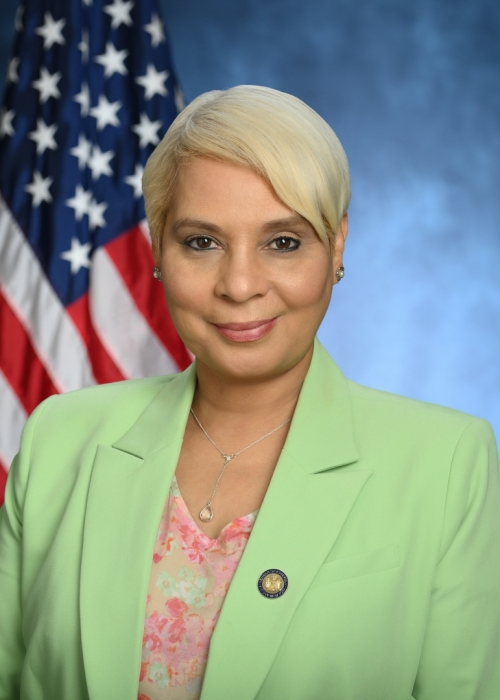
Asm. Maritza Davila
Sponsored bills
Eliminates certain court surcharges and fees and probation and parole surcharges and fees; eliminates the requirement that a parolee or releasee receiving a merit termination of sentence be financially able to comply with an order of restitution; eliminates the requirement that a person receiving a discharge of sentence be financially able to comply with an order of restitution and the payment of certain surcharges or fees (Part A); mandates that courts engage in an individualized assessment of a person's financial ability to pay a fine prior to imposing a fine (Part B); eliminates the availability of incarceration as a remedy for a failure to pay a fine, surcharge, or fee, lifts and vacates existing warrants issued solely on a person's failure to timely pay a fine, surcharge or fee and ends existing sentences of incarceration based on such failure (Part C); vacates existing unsatisfied civil judgments based on a person's failure to timely pay a surcharge, or fee (Part D); prohibits the collection of a fine, restitution or reparation from the funds of an incarcerated person; prohibits the payment of court fines, mandatory surcharges, certain fees, restitution, reparation or forfeitures from the earnings of prisoners (Part E); vacates existing unpaid surcharges, DNA databank fees, crime victim assistance fees, sexual offender registration fees, supplemental sex offender victim fees, or probation or parole supervision fees; repeals certain provisions of law relating to restrictions on remitting such fees (Part F).
Prohibits the sale of certain products that contain regulated perfluoroalkyl and polyfluoroalkyl substances; requires manufacturers of products containing PFAS to provide notice of such fact to persons that offer the products for sale or distribution; provides penalties for violations.
Maddy summaryBill A 8055 proposes to change how outpatient mental health and substance use disorder services are administered under Medicaid. It shifts these services, along with comprehensive Medicaid case management, from a managed care model back to a fee-for-service system. This change, subject to federal approval, directly affects individuals with mental illness or substance use disorder who rely on these services and the licensed facilities that provide them. The bill also requires that any savings generated by this transition be reinvested into community-based behavioral health services.
Requires training for teachers, administrators and instructors in the area of mental health response; requires office of mental health to assist in development of curriculum for training.
Establishes the climate corporate data accountability act requiring certain business entities within the state to annually disclose scope 1, scope 2 and scope 3 emissions; establishes the climate accountability and emissions disclosure fund.
Allows for justices to reside in any town, village or city contained in whole or in part within the same assembly district, county or adjoining county as the court such justice serves or in an assembly district contiguous to such municipality where the court is located, provided such assembly district is contained entirely within a single county; sets forth residence requirements where an assembly district encompasses two or more counties; authorizes towns and villages to require that any person who serves as a town or village justice be admitted to practice law in the state.
Maddy summaryThis bill establishes New York's "Medical Aid in Dying Act," allowing terminally ill adults (18+) with decision-making capacity to request and self-administer medication to end their life. To qualify, a patient must have a terminal illness confirmed by two physicians (the attending physician and a consulting physician) and make an informed decision after being fully informed of alternatives, risks, and outcomes. The process requires an oral request, a written request signed by the patient and witnessed by two non-conflicted adults (not relatives or beneficiaries), and includes the right to rescind the request at any time. The bill also mandates documentation, safe disposal of unused medication, and state reporting.
Establishes an internationally trained physician licensure pathway program to allow qualified, foreign-trained physicians and physicians trained and/or licensed to practice medicine in a territory or possession of the United States to contribute to the healthcare system through supervised practice in designated shortage areas, ultimately leading to full licensure.
Establishes the "one city act" which applies to cities with a population of one million or more and provides for an agency to disclose the personal information of individuals that would otherwise be restricted from disclosure to another agency or agent thereof for the limited purpose of providing benefits, services, or care coordination to individuals or a research study concerning the provision of benefits, services or care coordination.