

Requires the sanitation department of the city of New York to provide owners, lessees or persons in charge of a premises at which a violation of the city solid waste disposal law is alleged to have occurred with a photograph of the materials, condition or situation constituting the violation.
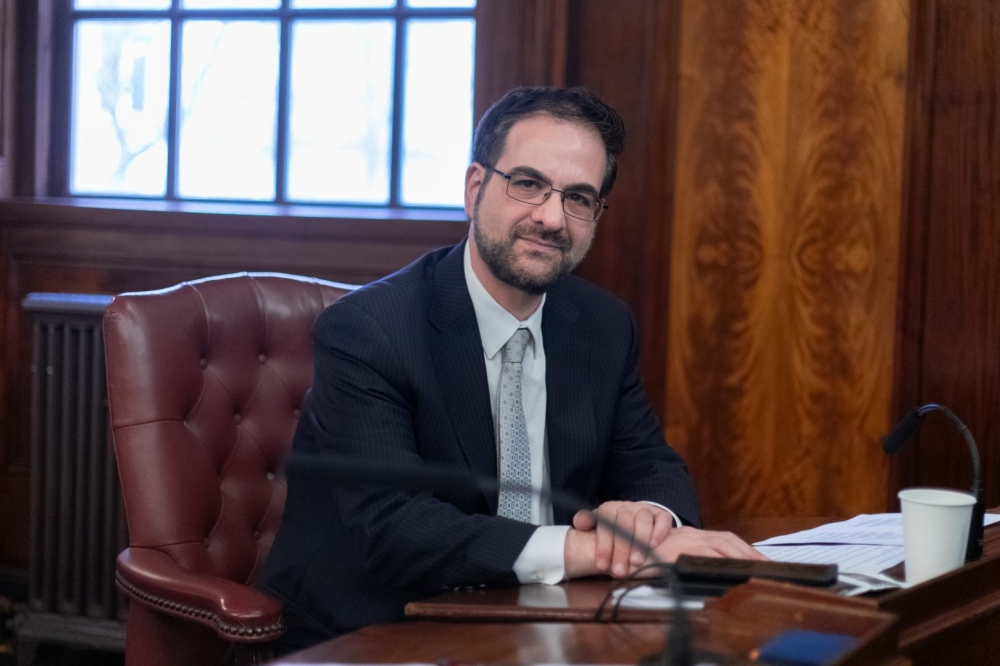
Asm. Kalman Yeger
Sponsored bills
Establishes the crimes of unlawful dissemination or publication of intimate images in the first, second, and third degree; defines terms and clarifies application of provisions relating to such crimes; extends the statute of limitations for such crimes; repeals provisions relating thereto.
Prohibits sellers of bicycles with electric assist, electric scooters, and motor-driven cycles from selling to persons less than sixteen years of age; requires valid proof of age at the point of purchase; establishes licensing requirements for bicycles with electric assist, electric scooters, and motor-driven cycles that can exceed twenty-eight miles per hour.
Maddy summaryThis bill requires New York's social services office to implement an electronic benefit transfer (EBT) system by June 21, 2027, replacing paper checks for programs like food assistance and cash benefits. It mandates using standard commercial electronic payment technology, including chip-based cards, to deliver benefits securely and efficiently. The policy directly affects state recipients of social services and the agency managing benefit distribution, shifting from physical vouchers to digital transfers. The law also requires the office to upgrade the system as soon as possible after the deadline.
Requires the registration and issuance of license plates for bicycles with electric assist and electric scooters that can exceed twenty-eight miles per hour with battery assistance up to and exceeding seven hundred fifty watts.
Maddy summaryThis bill expands an existing tax credit for farmers to cover the cost of constructing housing for farm workers. It specifically allows farmers to claim the credit for standard construction materials and labor used to build residential housing occupied by workers employed in their farming operations. The change modifies the tax law to include housing construction under the "eligible costs" for the credit, which previously applied only to equipment and production-related property. This directly affects farmers who build housing for their agricultural workforce in New York. The policy change is a straightforward expansion of an existing tax incentive, with no new eligibility requirements beyond the current credit framework.
Requires insurance coverage of sonograms and other diagnostic procedures used to detect breast cancer for covered persons with a prior history of breast cancer or who have a first degree relative with a prior history of breast cancer.
Maddy summaryThis bill makes possessing a flamethrower a class E felony under New York law. It defines a "flamethrower" as any device projecting burning fuel at least three feet, excluding inoperable displays. The law specifically excludes historical flamethrowers (built before 1966 with at least five significant pre-1966 components), those used for agriculture/construction, and flamethrowers owned before the law takes effect. It does not ban manufacturing or restoring components, only possession of active devices meeting the definition. The law takes effect 120 days after enactment.
Maddy summaryThis bill requires all operators of e-bikes, electric scooters, and motor-driven cycles to wear helmets meeting commissioner standards, regardless of age. It amends vehicle laws to mandate helmets for these vehicles during operation, specifying helmets must fit securely with straps fastened. The law applies universally - no age exemptions exist - and defines "wearing a helmet" as having a properly secured helmet. It covers all users of these devices, including adults and minors, without exceptions.
Maddy summaryThis bill exempts the purchase of specific Energy Star-certified appliances (like refrigerators, washers, and air conditioners) from New York's state sales tax. It directly affects consumers buying these appliances and gives municipalities with populations over 1 million the option to adopt this exemption for local taxes through a local resolution. The exemption applies only to retail sales of qualifying products, not rentals or repairs, and would take effect in September 2026 for local tax adoption. The bill expires on April 1, 2031, making it a temporary measure.